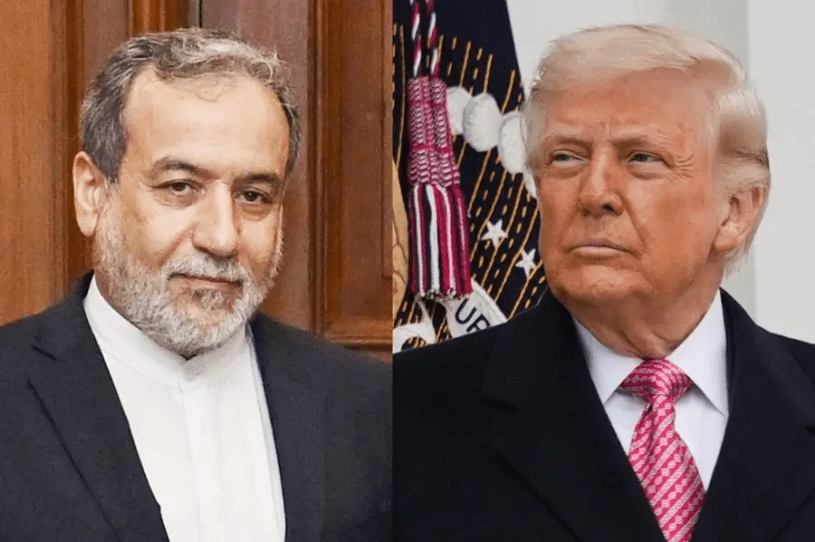
Full transcript of Iranian Foreign Minister Sayed Abbas Araghchi’s press conference at the BRICS Foreign Ministers Meeting in New Delhi, May 15, 2026.
Source: YouTube
Transcript: resistancenews.org
ARAGHCHI: In the Name of God, Most Gracious, Most Merciful. A very good afternoon to all of you. Thank you so much for coming this afternoon. I’m sorry for a little bit of delay. I’m so glad to be with you this afternoon, and would be happy to share with you some of our thoughts and to answer your questions.
Well, as you know, I’m here for the BRICS Foreign Ministers meeting. Before anything else, I have to appreciate the warm hospitality extended to me and my delegation by the Indian government and by my very good friend, [Indian] Minister [of External Affairs] Jaishankar, with whom I have very good personal and working relations. We have been in touch in the past two months when the war was going on — or better to say, the act of aggression against my country was going on. We have been in close contact and consulted with each other.
I should also thank the Indian government for excellent arrangements for this important BRICS meeting and for the success of this meeting.
We attach great importance to our relations with India. Iran and India are two ancient civilizations which have always had very good relations, and we have exchanged our cultural values. We have had very good trade and economic cooperation with each other, and very good political relations and political consultations. And we are certainly determined to continue our friendly and good relations with India for the benefit of both sides and based on mutual interest and mutual respect.
As you know, my country has been the victim of an act of aggression — unprovoked aggression — by the United States and the Israeli regime, which happened right in the middle of negotiations we had with Americans. And it was actually the second time that we started negotiation with the United States, and right in the middle of negotiations, in the middle of diplomacy, they decided to attack us. And that was very unfortunate.
We appreciate all those countries who condemned this attack. We appreciate the government and people of India who expressed solidarity and sympathy towards the Iranian people. And we appreciate the humanitarian assistance provided to us by the Indian government as a sign of solidarity. And we are so happy about that.
As you all know, we are now in the state of ceasefire. Although it’s very shaky, but we are trying to keep it in order to give diplomacy a chance, so a diplomatic solution and negotiated solution can be found.
As a matter of fact, there is no military solution to anything related to Iran. They have tested us times and again. We never bow to any pressure or threat. And we resist against any aggression, against any pressure. We also resist against any sanction. For more than 40 years, my country has been the target — our people actually have been the target — of brutal sanctions imposed by the United States against us. But it didn’t change our determination. It didn’t change our policies.
The Iranian people only answer to the language of respect, as we did in the past: anytime they approached us with the language of respect, offered diplomacy, offered negotiation, we have reciprocated the same language and we have answered positively to any diplomatic solution.
Now, after 40 days of war, when the US became hopeless of achieving any goal in their aggression against Iran, they offered negotiation. We are interested in negotiation, but only if the other side is serious and is in line of real negotiations.
We have no trust in Americans. This is a fact. And this is the main obstacle in the way of any diplomatic effort. I think all of you know that we have every reason not to trust Americans, while they have no reason not to trust us.
In 2015, we made a nuclear deal with Americans, together with other members of the Security Council and Germany — the so-called P5+1. We negotiated for more than two years, almost two and a half years. And we came to a very good deal. And the whole world celebrated that as an achievement of diplomacy. But only one year after it was concluded, the new US administration — which was the first term of Trump administration — withdrew from that deal with no justification, with no reason, while Iran was fully committed to all of its obligations in that deal, which is known as JCPOA.
And then in 2025, in June, again, we entered into negotiation with them. After five rounds of negotiation, they decided to attack us. And we had 12 days of war last year.
This year again, they offered negotiation. And we had three rounds of negotiations — first in Muscat, and then two times in Geneva. The last round was on 26 February. And the Omani Foreign Minister, my dear friend Badr Al-Busaidi, who mediated those negotiations — he posted a tweet and said that we made significant progress. I’m sure you have seen his tweet. And it’s interesting that before he posted his tweet, he showed that to both delegations, the Iranian and US delegations. And the US delegation confirmed that yes, we made significant progress today, and hopefully we can conclude a deal very soon. But only two days after, on 28 February, they made an aggression together with Israelis against my people.
So, the most important issue right now is the question of trust. We cannot trust Americans at all. So, everything should be exact. Everything should be defined very clearly before we can conclude a deal.
We have resisted in a very brutal war against my people. They couldn’t achieve any of their goals. And it is obvious that those things they have not been able to achieve militarily, they cannot achieve on the negotiation table, unless there is a win-win solution achieved. So, the current negotiation is suffering from the lack of trust. It is also suffering from contradictory messages we receive from Americans. Every day is different from the other day, from yesterday. A tweet today is different from yesterday’s tweet. Sometimes in one day we receive two different messages. And this is the problem. And it adds to the question of mistrust.
We know that there are also some spoilers who try to derail diplomacy. It’s a fact. The warmongers who want to drag the US again into another war. And I hope that wisdom and diplomacy would finally prevail, and we go in line of diplomacy to find a negotiated solution. There is no solution but a negotiated one. It’s a fact.
So, with these brief comments, I am available for any question.
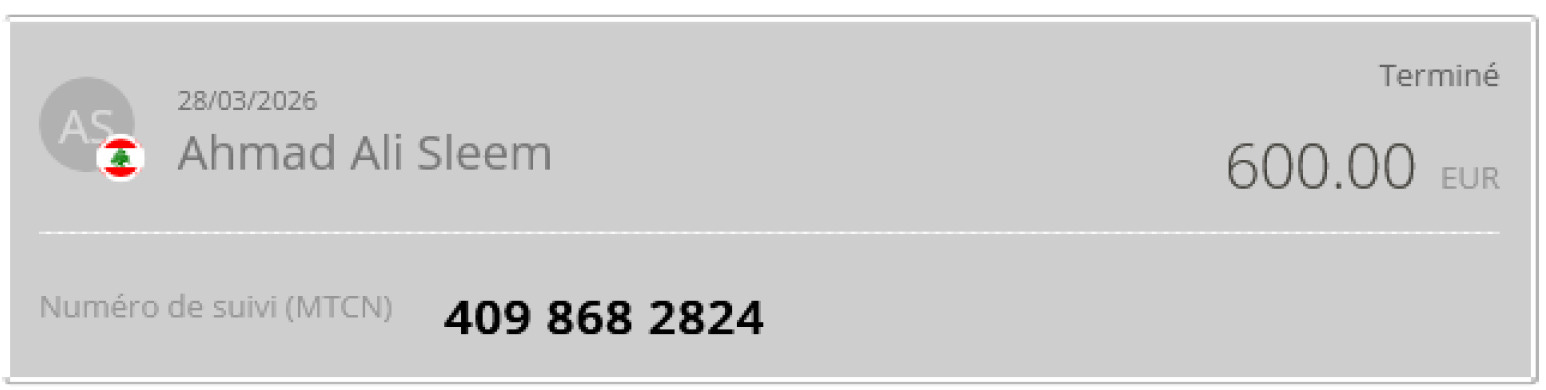
Note: Thanks to the donations received and the partnership between Resistance News, Alain Marshal, Laurent de Wangen and Le Cercle des Volontaires, an initial transfer of €600 has been sent to Lebanon to assist displaced people (Western Union receipt). It may seem like a drop in the ocean in the face of a war that has turned over a million people into internally displaced persons, but every contribution counts. All your donations will continue to be sent to our contacts on the ground.
JOURNALIST: [Inaudible]
ARAGHCHI: So, what is the question?
JOURNALIST: [Inaudible]
ARAGHCHI: Well, I — the voice is not very good, so — India has relations with so many countries, and this is actually related to India to decide for its relations. What matters for us is good relations which exist between us and India. And as I said, it is rooted in history and it is rooted in old political, economic, and cultural relations we have always had. And we are determined to continue our good relations with India.
JOURNALIST: Yesterday, Trump and Xi Jinping met. Trump stated that Iran cannot possess a nuclear weapon, and that both China and America agree that the Strait of Hormuz should be open. What do you have to say to that?
ARAGHCHI: Well, we share the same opinion. Iran has never wanted a nuclear weapon. And we have proved that when we signed the deal in 2015. And we have said times and again that we don’t want nuclear weapon, and this is not our policy. We have a peaceful nuclear program. And we have always been ready to build — to make confidence that this program is peaceful and will remain peaceful.
On the Strait of Hormuz, this is also our wish that it would be fully reopened. As far as we are concerned, the Strait of Hormuz is open and all vessels can pass, except the vessels belonging to those countries who are in war with us, who are fighting with us. Those vessels who want to pass should obviously coordinate with our military, because of the mines and obstacles which exist. So, we will guide them to pass, as we have done for a number of Indian vessels. And we helped them to pass. The safe passage of all vessels is our policy and in our interest. And we are ready to help those who want to pass safely and securely.
This is our policy. At the same time, we have the blockade by the US. We have insecurity in the region because of the US aggression. So, obviously the situation is not like the past. But once the aggression is ended, then I’m sure everything would go back to normal. And we will make sure — we will make arrangements for the safe passage of all vessels from the Strait of Hormuz, together with Oman.
As all of you know, Iran and Oman are two coastal countries on the two sides of the Strait of Hormuz. The strait is located in territorial waters of Iran and Oman. There is no international waters in between. So, everything should be managed by Iran and Oman. And this is what we are now consulting with each other on, to make sure that there would be a good administration in the Strait of Hormuz in the future, which guarantees the safe passage of all vessels.
JOURNALIST: My question is about the BRICS joint declaration, in which Israel has been called out about its aggression in Gaza and West Bank, and its illegal occupation in West Bank. But there’s a mention that a member state had a reservation about that paragraph. Can we know which member state that is? And also, we couldn’t see any reference to the US-Israel aggression against Iran. Why is that?
ARAGHCHI: Well, you have to ask the president of this meeting to answer that question. I’m not in charge to answer those questions. But I think everybody knows which country blocked anything against Israel. And that was very unfortunate. The same country did help the US and Israel in their attack, in their aggression against Iran. The same country provided the US and Israeli forces with their airspace, with their territories, with their military bases. And as far as we are concerned, they are a direct party to this aggression and should be held responsible.
JOURNALIST: My question is: what conversation did you have with the Indian External Affairs Minister earlier today? What conversation was foremost, especially given the fact that there are Indian vessels still in the Hormuz? Will they be allowed to move as soon as possible, because it’s impacting the energy prices here in India?
ARAGHCHI: Well, yesterday I had a very good brief discussion with Prime Minister Modi and today a lengthy meeting with Minister Jaishankar. We discussed about almost everything, including the Strait of Hormuz and the situation in the Persian Gulf region. I have to say that we have more or less close positions and we have the same concerns and the same interests in this important region. So, we continue to coordinate with our Indian colleagues.
As I said, the situation in the Strait of Hormuz is very complicated right now. And we are trying to help ships to pass safely. Everything would go back to normal once the act of aggression is totally and completely ended.
JOURNALIST: There is a great deal of concern about the flow of oil and gas from the Persian Gulf to India. Is Iran not willing to get into an agreement with New Delhi to allow the sustained movement of Indian ships from the Persian Gulf to India?
ARAGHCHI: Well, India has been a customer of Iranian oil in the past. And it has been stopped by India because of the US sanctions — US illegal unilateral sanctions. So, we are obviously interested to continue our oil business, energy business. And we are ready to sell our oil to India. Of course, we do understand their considerations. And we do understand the consequences of the sanctions which are imposed by the US. So we have no problem. It’s up to the Indian government to decide.
But I believe that once the sanctions are lifted, we will immediately go back to the same volume of trade that we had with each other. Before those sanctions, we used to have more than 20 billion dollars of business and trade with India. For now, it is much smaller, but it’s still in billions of dollars. So, Iran and India have always enjoyed good trade and business relations. I’m sure the capacity between the two is really high. And we can go back to the same volume that we used to have — or even higher — as soon as sanctions are lifted.
JOURNALIST: [Question about the possibility of moving Iran’s enriched uranium to Russia]
ARAGHCHI: Yesterday I had a very good meeting with Sergey Lavrov. I have to say that we have always consulted with our Russian friends. We have a very good relation, a strategic partnership, and we have always consulted with each other regarding all international, regional, and bilateral issues. I met President Putin in St. Petersburg about ten days ago, less than two weeks ago. And we discussed everything, including the question that you mentioned.
We are thankful to our Russian friends for their offer and for their intention to help the resolution of this problem. Of course, this is something that we have to decide during the negotiations. The subject of our enriched material is a very complicated one, and we have now come to the conclusion with Americans that since it is very difficult — we are almost in a deadlock on this particular question — let’s postpone it to the later stages of our negotiations. So, for the time being, it is not under discussion. It’s not under negotiation, but we will come to that subject in later stages. And when we come to that stage, obviously, we would have more consultations with Russia and we will see if the Russian offer can help or not. This is not something for the time being.
JOURNALIST: [Inaudible]
ARAGHCHI: I think I already answered that question. The most important question is the question of mistrust — or the lack of trust from our side to Americans, and I explained the reasons of that mistrust. Another problem is, as I said, contradictory messages, which has made us reluctant about the real intentions of Americans in these negotiations. We are in doubt about their seriousness. But the moment we feel that they are serious and they are ready for a fair and balanced deal, we certainly proceed in the course of negotiations.
JOURNALIST: [Inaudible]
ARAGHCHI: Well, as a matter of fact, the final statement by the BRICS ministerial meeting was blocked — or some parts of that were blocked — by a member state which has its own special relations with Israel [UAE]. And this is very unfortunate. We have no difficulty with that certain country. They have not been our target in the current war. We only hit American military bases and American military installations which are unfortunately in their soil. So, the only reason they stopped the final statement was their support to Israel and the United States in their aggression against Iran, which is very, very unfortunate.
I hope by the time that we come for the summit, they come to a good understanding that Iran is a neighbor. We have to live with each other. They have lived for centuries and they have to live for centuries to come. Israelis cannot protect them. Americans cannot protect them. That was proved during this war. The American military bases, their relation with Israel, became the source of insecurity instead of becoming the source of security. Instead of protecting them, it was a source of insecurity for them.
So, these are the realities that they should understand. And I’m sure that if they follow the line of wisdom, they will find Iran as a good neighbor and a good partner.
JOURNALIST: Yesterday, President Donald Trump in an interview said that he discussed the issue of the Strait of Hormuz and the Iran issue with Chinese President Xi Jinping. Then he said that the Chinese President is ready to help mediate some kind of solution. Are you open to that process, as the process of Pakistan-mediated solution has failed so far. And a related question: what steps are being taken by Iran to facilitate the more or faster movement of vessels that are stuck in the Persian Gulf, including eleven Indian ships?
ARAGHCHI: Well, the mediation process by Pakistan has not failed yet, but it is in a very difficult course, mostly because of the Americans’ behavior and the mistrust which exists between us. We appreciate any country that has the ability to help, particularly China. China has been helpful in the past in the resumption of relations between Iran and Saudi Arabia. We have very good relations with China — we are strategic partners to each other. And we know that the Chinese have good intentions. So, anything that can be done by them to help diplomacy would be welcomed by the Islamic Republic of Iran.
We hope that by the advancement of negotiations, we come to a good conclusion. So, the Strait of Hormuz would be completely secured, and we can expedite the normalization of traffic in that strait.
JOURNALIST: [Inaudible]
ARAGHCHI: Well, Chabahar Port is one of the symbols of cooperation between Iran and India. And we are so glad that Indians played an important role in the development of that port. It is now somehow slowed down because of the US sanctions, but I am confident that this port would be like a golden gate for India to access Central Asia, the Caucasus, and then Europe through this transit route — and also for Europeans, Central Asians, and others to access the Indian Ocean. It is a very strategic port, important for both us and India and many other countries. So, I hope that Indians would continue their work in Chabahar Port, so it would be fully developed at the service of the interests of India and other countries around.
I think India, with its good reputation, can play a greater role in this region to help diplomacy, to help peace, and to promote peace and security. India is a friend to almost — to all countries in the Persian Gulf, in the north of this Gulf and in the southern part of it. So, we appreciate any positive constructive role played by India in this region.
[Question and answer in Persian that we are not able to translate]
JOURNALIST: The conflict has triggered large-scale economic disruptions globally. As things stand today, are you hopeful of a negotiated settlement, or is there a possibility of the conflict prolonging and also a risk of resumption of military hostilities between the two sides?
ARAGHCHI: Well, both possibilities are there. First of all, this is not our war. We have not initiated this war. It was started by Americans and Israelis. That was an act of aggression. And what we are doing — and what we did actually — was the act of self-defense. So, all consequences for the international economy, at the regional level and international level, are not our fault. This is the result of aggression by Americans.
As I said, the chance for having a diplomatic settlement or going back to a full-scale war is there. I cannot say half and half. As a diplomat, I’m optimistic that a diplomatic solution can prevail, but we shouldn’t ignore the possibility of going back to a full-scale war. We, as the Islamic Republic of Iran, are prepared for both scenarios. We are prepared to go back to fighting and we know how to defend ourselves, and we proved that in these 40 days of war. And we are also ready for diplomacy and a diplomatic solution, and we also know what we want and what we can do and what we can achieve.
JOURNALIST: They say that Trump has said that he’s running out of patience. So, what would be your answer to that?
ARAGHCHI: Well, this is not my fault that he is running out of patience. He has to answer. You know, this is not a question of patient or not. We are dealing with a serious, serious question. This is a question of war and peace. So, if they want to negotiate a solution, they have to be patient, because it needs complicated, detailed negotiations in order to come to a just solution. If they want to go back to war, it’s up to them. They have tested us. They can test us again, but the result would not be any different.
JOURNALIST: [Inaudible]
ARAGHCHI: Well, there is still hope. We couldn’t achieve a deal in Islamabad when we met, mostly because of the maximalist positions by the United States and by their well-known behavior: they always shift the goalposts at the very end of negotiations. So, we are familiar with those tactics. And we cannot accept anything beyond a fair and balanced deal. This is why we couldn’t achieve a deal in Islamabad. And we are still in the process of talks, but a deal can be achieved only when our conditions are met.
JOURNALIST: [Inaudible]
ARAGHCHI: Well, I think on energy cooperation everything is clear. We are ready to provide India with energy resources if India is ready to make business with us.
Well, thank you everybody. Thank you so much. I hope you enjoyed that.,
To support our work, you can donate, share this article and subscribe to our newsletter.
 Resistance News Unfiltered