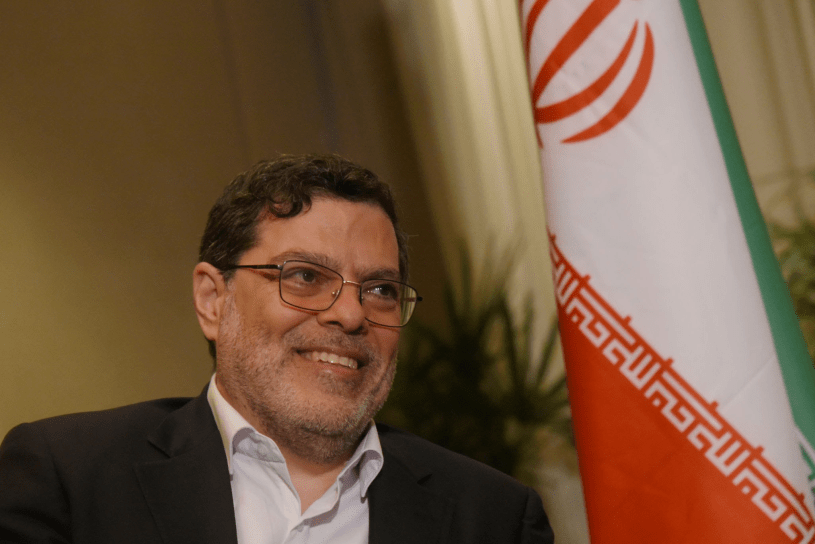
Chris Hedges Interviews Professor Muhammad Marandi on the details of the current Memorandum of Understanding, peace prospects, and the future of the Middle East, June 12, 2026.
Source: YouTube
Transcript: resistancenews.org
- Is a Sustainable Peace Agreement Close at Hand?
- Iran’s Self-Confidence and the US’s History of Violations
- Iran’s Resilience Stunned the World
- Trump’s threat to occupy Kharg Island
- How Iran’s Victory Reshaped the Middle East
- Iran: The Only Protector of Gaza & Lebanon and Last Barrier to the “Greater Israel” Project
Chris Hedges: Pakistan’s Prime Minister Shabbaz Sharif announced today that a peace deal between the United States and Iran was, “likely expected to be finalized within 24 hours”. Although the Iranian Foreign Ministry said a deal might take a few more days to formalize. Despite Iranian losses and the economic crisis the war has triggered in Iran, with an estimated 270 billion in war damage, none of the US and Israeli objectives have been met. The Iranian state has not collapsed. The new Iranian leadership, centered around the Islamic Revolutionary Guard Corps, or IRGC, remains defiant. Iran has control over the strait of Hormuz, where some 20% of the world’s oil and natural gas supplies transit. It charges as much as $2 million, usually paid in Chinese currency, for oil tankers to transit through the strait. The world economy, if the strait is not open soon, is headed for the cliff, perhaps within weeks, with strategic reserves in countries such as Japan and the United States — which have been used to buttress the oil shortages — being rapidly depleted. Rising gas and oil prices across the globe: gas prices in the US are 34% higher than a year ago, and diesel has written risen by over 50%, are compounded by shortages of vital products such as nitrogen fertilizer, aluminum and helium. Trump and Israeli allies are acutely aware that whether they like it or not, Iran holds the cards.
Iran’s basic, and I suspect largely non-negotiable, demands are:
- An immediate and permanent halt to the war on all fronts, including Lebanon.
- US commitment not to interfere in Iran’s internal affairs and to respect its sovereignty.
- The full lifting of the US naval blockade within 30 days.
- The withdrawal of US forces from areas around Iran.
- The reopening of the Strait of Hormuz within 30 days under Iranian arrangements.
- Suspension of sanctions on Iranian oil, petrochemical products, and derivatives, with full access to related financial resources.
- Reconstruction plans worth about $300 billion to be provided by the US and its allies.
- A 60-day negotiation period to reach a final agreement on nuclear issues, sanctions relief, and the removal of relevant UN Security Council and IAEA Board of Governors resolutions.
- Iran’s renewed commitment under the NPT not to produce nuclear weapons,
- No increase in US forces in the region
- No new sanctions during the talks.
- The release of 24 billion in frozen Iranian assets, with half made available before the negotiations begin.
- The creation of a monitoring mechanism to ensure implementation.
- Endorsement of the final agreement by UN Security Council resolution.
- And the scheduling of final talks only after half of Iran’s frozen funds, about 100 billion, are released, oil sanctions are suspended, and the naval blockade is lifted.
Joining me from Tehran to discuss the war and its regional and global consequences, as well as the Memorandum of Understanding (MoU), is Dr. Muhammad Marandi, a professor at Tehran University and a former adviser to Iran’s nuclear negotiating team.
So, Muhammad, we’ve had — I think President Trump has announced 39 times that there was a peace deal. Although this one, perhaps we shouldn’t call it a peace deal, but that there is some form of agreement that will allow for negotiations. The Pakistanis, of course, are quite optimistic. The Iranian foreign ministry, as I mentioned in the introduction, has said that it probably won’t be signed tomorrow on Sunday, but may take longer. Just from your perspective, from following this from Tehran, where are we?
- Is a Sustainable Peace Agreement Close at Hand?
Muhammad Marandi: Well, there is no final deal yet. There are still differences, and so when they say that tomorrow’s unlikely, it’s because those differences haven’t been resolved. The MoU, of course — even if the two sides sign the deal, or sign the MoU, it doesn’t mean that we’re going to have peace, because many things can happen in the days and weeks ahead.
And it’s already clear that the Israeli regime is trying to prevent any normalization of the situation in the region from happening. The onslaught in Lebanon has picked up pace. The killings are increasing. They’re bombing villages and towns across the south and central part of Lebanon, killing tens of people every day, men, women, children — it doesn’t really matter to them at all. And they’re doing that to flatten the entire south, to make it look like Gaza, and many places are already looking like Gaza.
So, the resistance from the Israeli regime and from the Israeli lobby may disrupt progress even if there is a signing. But at the end of the day, even if it’s not disrupted, then we go to phase two, and there, things become even more complicated, because there are the issues of sanctions against Iran that need to be lifted. Many of them are law in the United States. And of course, Iran’s nuclear program is not something that the country is willing to dismantle or to cast aside. It will not give up enrichment because it’s a sovereign right. So there’s a huge minefield lying ahead, and as we speak, the strait is still closed. We’re moving towards global economic crisis, and if the MoU is signed and we move forward and there’s disruption, then this rate can be closed again. So nothing is for certain.
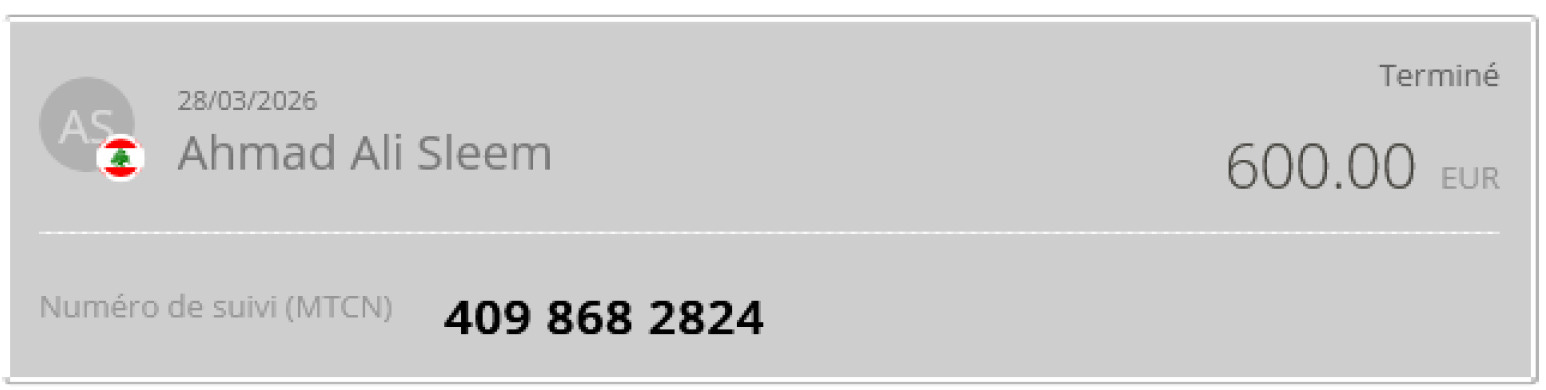
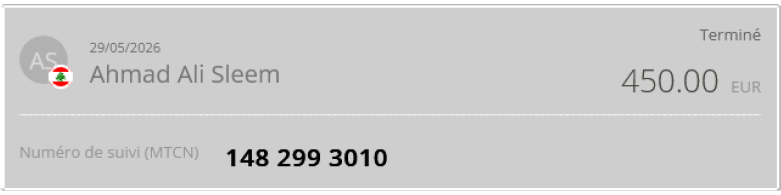
Note: Thanks to the donations received and the partnership between Resistance News, Alain Marshal, Laurent de Wangen and Le Cercle des Volontaires, two transfers of €600 and €450 has been sent to Lebanon to assist displaced people (see Western Union receipt 1 and WU receipt 2). It may seem like a drop in the ocean in the face of a war that has turned over a million people into internally displaced persons, but every contribution counts. All your donations will continue to be sent to our contacts on the ground.
Chris Hedges: I want to ask about Lebanon, because this has been — from the moment the ceasefire was announced, and, you know, it was a ceasefire that the United States violated, and Israel, of course, violated it immediately, by carrying out a very heavy attack in, I think, 10 minutes, in Lebanon. And, of course, we see it with the “ceasefire” agreement in Gaza. I think a thousand Palestinians have been killed by Israel since this was put into place. I’m wondering if this is the kind of trajectory that we’re going to stumble forward into, where it’s just periodic violations, periodic strikes, and then an utter refusal on the part of Israel to abide by one of the core demands of Iran — and that is an end to hostilities in Lebanon — the argument being that Iran will not attack US allies in the region as part of the agreement. But at the same time, Israel and the United States cannot attack Iranian allies such as Hezbollah.
Muhammad Marandi: Well, it also includes Gaza, although it’s not named, but because of the heavy air strikes on villages and towns and cities in Lebanon — Lebanon is named specifically — but that is a possibility, and that is what the Iranians are saying will prevent the deal from succeeding. The Iranians have a huge amount of leverage, and that is, of course, the Strait of Hormuz, because of its ability to block the Strait of Hormuz from being used by US allies, because Iran is not closing the Strait of Hormuz. It’s never closed it completely. Countries that were friendly to Iran during the war, or did not participate in the onslaught against the country, their ships go back and forth. They’ve been going back and forth throughout this period, except for when the Americans force the Strait to be completely closed for a few days. But, countries like the Saudis, the Emiratis, Kuwait, Bahrain, Qatar, their ships cannot go through, or ships that are linked to them cannot go through, because they participated in the war. So in this agreement, they will be allowed to go and use the Strait. But if the Israelis violate the deal, that means the Americans have violated the deal. And we saw what happened last time, and you alluded to that, after the 39 days of war when there was a ceasefire. There was an agreement for an end of hostilities in Lebanon, and, of course, the strait was going to be opened for the ships linked to these countries. But when Netanyahu began carpet bombing the country, the Iranians blocked those ships from exiting. And then Trump, of course, also put a siege on Iranian ports. So, because of that, the strait is still more or less closed for these countries allied to the United States.
The point I’m making is that this is not going to be like the nuclear deal, the JCPOA, where the Iranians, back then in 2015, carried out their commitments and the Americans decided not to in many cases. Obama really badly burned Iran and the administration back then, because he was supposed to carry out a series of commitments and he refrained from carrying out most of them, and that’s why the JCPOA is not looked upon favorably in Iran. This time around, what the Iranians are doing is they’re saying that first the United States has to release Iranian assets, the United States has to bring an end to the slaughter in Lebanon, and then we can move forward. So the sequencing is different than the JCPOA, where Iran carried out its obligations and then the Americans could choose whether to do so or not. Now, in some respects the Americans have to move first. In some other respects, they’re simultaneous.
- Iran’s Self-Confidence and the US’s History of Violations
Chris Hedges: Well, the Americans have never honored agreements with Iran. Going back to the [1981] Algiers agreement [to free the US “hostages”], which promised that it wouldn’t interfere in Iranian affairs, etc., you can explain; the various ceasefire agreements, you know — bombing Iran in the midst of negotiations; the latest ceasefire agreement, where the United States almost immediately set up a blockade of Iran. I mean, this has just been — and I think it’s important to note this from the Iranian perspective — that there’s a long history of US violations.
Muhammad Marandi: Yes, absolutely. And there are also other agreements that we had along the way, over Afghanistan, over Iraq, in Lebanon and elsewhere. And in every single instance, it was the Americans who cheated and violated the deal. And that’s why there is a lot of skepticism in Tehran. I don’t know anyone who believes that this is going to be signed, and then the Americans are going to voluntarily carry out their commitments, and then we’re going to move on to stage two, and then we’re going to have some sort of comprehensive deal. I find it personally highly unlikely, and anything can happen along the way. In fact — again, 10 p.m. on Saturday night right now — I’m still not certain that the deal will be signed. I think the chances are high because Trump is under pressure, but there’s a lot of resistance on some elements of the deal that, for Iran, is a deal breaker. The Americans don’t want the Israelis to have their hands tied with regards to Lebanon. The Iranians are saying there has to be a ceasefire and they have to go back to where things were before this war started, and they can’t have the ability to just carry out attacks on Lebanon whenever they like.
Chris Hedges: Well, the Israelis have a vested interest in sabotaging any agreement. So, I mean, this is the kind of division between the United States and Israel. Trump — of course, the pressure that Trump feels is that he’s on the cusp of a global financial meltdown. Strategic oil reserves are down to kind of sludge level. He doesn’t have much time left.
Muhammad Marandi: Yeah, that’s the main leverage that Iran has. I mean, the Iranians did very well on the battlefield during the 39 days of fighting. They felt that they won the war — not just that they won the war in the sense that they survived. They feel that they did actually do a very good job hitting back, whether it was at the Israeli regime or US bases, or assets that were linked to the United States or US allies, in retaliation to strikes on Iranian critical infrastructure and civilian targets. So the self-confidence today among ordinary Iranians is very high. When the war started, things were very calm in Iran, but not everyone believed we were going to win the war. There was a significant segment of the Iranian population that was confident we would win the war, but there was a significant segment of the population that was very worried. But it was very interesting how calm things were, even when it became clear that that Ayatollah Khamenei was martyred. You didn’t see people rushing into shops and buying food and things like that. Everything was normal, even the gas stations. There may have been some queues or lines, but nothing really extraordinary at the gas station, or in other places. So, but then gradually — after, let’s say, maybe a week, and I’m just guessing, based on my own anecdotal experience — gradually you saw people become more and more confident, and after 10 days, 2 weeks, they believed that they were winning the war. And when Iran ultimately accepted the ceasefire, after Trump shifted his position from unconditional surrender to literally accepting Iran’s 10-point plan as the framework for negotiations, a lot of Iranians were saying we should continue the war. And even now there are a lot of Iranians who are saying that we should continue the war — if the Americans don’t accept our demands, we have to go and fight. I’m not saying they’re the majority, I have no idea, but the point is that the confidence among Iranians is much higher than before. And so I think that the Iranian position is stronger than the Americans. And I have no doubt that if the Americans violate the agreement, or the Israelis violate the agreement, the Iranians are not going to sit back and accept it. And we saw that when it came to Lebanon — when the Israelis decided that they were going to bomb Beirut and flatten Dahiyeh, or the southern half of Beirut, a huge neighborhood, and with the refugees there right now, it’s probably well over a million people living there as we speak — when the Iranians decided to threaten the Israeli regime and ultimately struck the Israeli regime, I think that itself showed how confident the Iranians are about their position.
- Iran’s Resilience Stunned the World
Chris Hedges: Where do you see the economic situation going? Of course, Trump is flirting — if the strait continues to be closed, flirting with perhaps a global depression — but the effects of the war damage in Iran is significant. The economy is in trouble. I mean, inflation is quite high for basic food elements. I mean, there is a price that Iran has paid because of this attack.
Muhammad Marandi: No doubt, no doubt. Both the war — the 39 days of war — did damage, significant damage. They targeted pharmaceutical factories, the steel industry, petrochemicals, Iran’s main gas field. They targeted schools, hospitals, apartment blocks. The damage was significant. Of course, if you come to Tehran and drive around town, you won’t see anything — it’s a huge city, so you won’t see damage all over the place. You’ll find places if you look for them, but in any case, there was significant damage. And then the siege on Iranian ports has its own problems, because the Americans won’t allow Iran to export or import. So Iranian oil exports are down, and Iran is not capable of importing foods or medical supplies or medicine now from the south. They’re replacing it with routes from central Asia, from the Caspian Sea, from the Caucasus and Pakistan, and to a small degree Afghanistan. But still it’s a big problem. But so far the Iranians have shown an extraordinarily large amount of resilience, and they do feel that this is a war for their survival, and they do believe that they won the war. So it’s given them a strong element of confidence. But also Iranians are very resilient people — you know the region, Shia Muslims in general, have a very strong degree of resilience in their culture, and the culture of resistance is very much embedded in their world view. The story — the martyrdom of the grandson of the holy Prophet in Karbala, in support of the oppressed and standing up to the oppressor — that is deeply embedded, among other things, linked to their ideologies. And that’s why you see such resistance in Lebanon and in Hezbollah — among Hezbollah against the Israelis, the Iranians against the Americans — and that’s why they call it the Axis of Resistance, because it’s deeply influenced by Imam Hussein and the events in Karbala.
So, the Iranians will definitely — in my opinion, I have no doubt — that the Iranians will outlast the United States in this siege that the Americans have imposed, because this siege is a double-edged sword. They are trying to crush the Iranian economy, but simultaneously Trump is crushing the global economy and pushing the United States economy towards crisis. The difference being, of course, that — as I explained earlier about Iranian culture — but also the Iranians feel that, you know, they’re the victims and they have to be resilient against Trump, whereas in the case of Trump, the American people and others don’t see this as a war for survival. It’s a war of choice that’s been carried out for the sake of Netanyahu and the Zionists.
Chris Hedges: Well, anybody who wants to understand Iranian resistance should study the 8-year war with Iraq, which I believe you fought in.
Muhammad Marandi: Yes, I was a volunteer in that war. I joined when I was 16, and I was gassed twice — I survived mustard gas and nerve agent. Actually, a mutual friend of ours who you’ve had on your show, Alastair Crook — he wrote a book years ago, called Resistance and the Essence of the Islamist Revolution, I think that’s what it was called. It is an old book, but I think there isn’t very much good material on Iran in the English language, but that is a good book, and I think I would advise people to read that. There’s another good book by Flynn Leverett called Going to Tehran. But to discuss this notion of resistance, I think Alastair’s book is quite useful.
- Trump’s threat to occupy Kharg Island
Chris Hedges: We heard Trump threaten to take Kharg Island. One never knows with Trump whether that is just, you know, a late night musing, or something the Americans are actually considering — if things break down, which they very well may, I think, for the reasons you elucidated. Talk about Kharg Island and what that would mean. I don’t understand how, logistically — I suppose they could ferry the troops in by air, I don’t think they could bring them in by ship, the strait is too narrow — but just talk about that threat.
Muhammad Marandi: It would be difficult with ships, but they have brought in a lot of troops and equipment during the ceasefire to Kuwait, to the Emirates, and to the other countries in the Persian Gulf, and Bahrain. These three, in particular, have a lot of land troops based there, which is very difficult, because it’s summer in the Persian Gulf and the Arabian Peninsula — it’s very hot and humid. So I don’t think they’re living under ideal conditions. But if they do, in any case, attack, my understanding is that the Iranians will probably allow them to take some territory and then start hitting them in counter strikes with drones, with rockets, with missiles. In fact, during the war, when I spoke to some Iranian military officials, they wanted the United States to carry out a land attack — and I assume they still do, because they said that our strength lies in the United States having a presence on the mainland or on islands, or carrying out an operation deep inside Iran, because then we can start targeting them and they become very vulnerable.
What the Iranian military plan has always been is to hurt the United States in a way — or, let’s say, the state and the military, because ultimately the state controls the military. But I think it’s pretty clear that the Iranian plan for the United States has been to hurt Trump and the US government so badly that 6 months from now, one year from now, 2 years from now, 3 years from now, someone comes and says “Let’s go attack Iran”, and everyone says “No, let’s not go there”, you know, “We don’t want to do that again”. So they want to create enough pain so that no one again attempts to attack Iran. And people have to recognize these underground cities that the Iranians have created, which are storing not just missiles and drones and the factories — they’re storing Iranian air defense systems, Iran’s air force, all sorts of things are protected underground. And they’ve been developing this for decades, for over three decades. They’ve been preparing for US invasion for three decades, and it’s worked. But they’ve also been preparing for a ground attack during those three decades — and more, a bit more than three decades. So if the Americans have been very surprised, and the world has — you know, based on my interactions with my Chinese friends, my Russian friends, my friends across the world — everyone is shocked as to how Iran managed. If the United States attacks, carries out a ground invasion, I’m pretty sure it’ll be just as shocking for them. It will not go well. I don’t personally think Trump will do that. But Trump being Trump and the influence of the Zionist lobby being so powerful, nothing’s impossible.
- How Iran’s Victory Reshaped the Middle East
Chris Hedges: How has the war reconfigured the region, the Middle East, in terms of power relationships?
Muhammad Marandi: I think, without a doubt, Iran’s position has been enhanced tremendously: in their negotiations with the Russians, with the Chinese, the leadership in both of these countries have expressed great surprise — I should say, I would say they would put it in different terms, they would say, you know, they were very impressed. But I think that they were very surprised as to how the Iranians managed this war. And many people who I know, influentialpeople, thought that Iran would fold. They thought Iran would fold during the 12-day war, and then Iran won that war, of course, but then when the Americans came in again, they thought Iran would fold within days, just like apparently the American government thought. But Iran was very steadfast. And not for a moment during the war was there a sense that things are getting dangerous. It was just damage, death, pain, but the people were steadfast. I always thought Iran would win the war, but I didn’t think that they would perform so well, and I didn’t think ordinary Iranians would be that sort of resilient. I mean, I participated in a rally in Tehran where they fired missiles at the rally and killed a woman, and I posted — I put footage there. When the missile struck, people didn’t budge — men, women, teenagers, older men and women, they were on the streets chanting and saying, “God is greater.” (Allahu Akbar). And when the missile struck — I mean, I did multiple tweets, because different people had cameras — no one moved. I’ve never — I don’t know if such a thing has ever happened before anywhere — but it was very impressive. No one ran, not even a segment of the crowd ran off. They all just continued to chant, and the missile — you could see where it struck, it was like right in front of you, to the right, in the camera, from the viewpoint, from the video that I posted. So I was very, quite impressed — because personally I think the reason why Iran succeeded in the war was, in part, very much linked to the military strategy, which will definitely be studied in decades to come in military universities. But it was the people who held the country together. I mean, on day one they killed all those little kids and then they murdered the Leader.
And we had no Leader for a week. I mean, according to — in accordance with the Constitution, we had a little leadership council, but they weren’t the Leader. But there was calm, and people came to the streets every night during those dangerous days, where missiles were being fired all the time, and every night they were on the streets during the most difficult days of war, and that’s what kept the country afloat. It was the people who ran the country until we had a new Leader, and then things began to be better organized. Those were very extraordinary times, especially the first couple of weeks.
Chris Hedges: Well, you also saw, remember when they threatened to bomb the infrastructure, the bridges, and you saw Iranians spontaneously surround these vital infrastructure facilities.
Muhammad Marandi: My own students would contact me and ask me, like, what could they do, where should they go? And I really had no idea. I mean, I was always busy doing media, and often, when you do a lot of media — at least in my case — I sometimes did it so much that I knew less about what was going on than ordinary people, because I was constantly talking. Ironically, I would have students, like 18, 19 year olds, constantly contact me during the first few days. Actually, a number of students who I didn’t know, who participated in the riots a few months ago, they contacted me separately — they were all from my faculty, but not my own personal students — and they basically were saying, we made a mistake, how can we make up for it. And I had no idea, I just gave them ideas — go to, I don’t know, the Red Crescent society, or go to the local mosque, or go somewhere — I just gave them ideas. But it was quite — two of them were quite emotional on the phone when we spoke. But lots of students were asking, “How do we help, what do we do”. It was — the whole war, I mean, during the whole 39 days, it was quite extraordinary, but for me the first couple of weeks was something else.
- Iran: The Only Protector of Gaza & Lebanon and Last Barrier to the “Greater Israel” Project
Chris Hedges: So let’s say the memorandum of understanding is signed — I think you raised this earlier in the interview — there are so any hurdles and, you know, barricades to any kind of a full ceasefire agreement, not the least of which is Israel’s determination to sabotage it. How do you see it playing out? Are we just going to see, as we do with Gaza, as we do see with Lebanon, with Israel — is it just, you know, periodic strikes, this kind of low intensity, never-ending conflict? What’s your best guess?
Muhammad Marandi: Thank God I’m not a betting man. But, you know, the Iranians are not going to allow the genocide to continue, and in the case of Lebanon, the Iranians will definitely be very tough at the negotiating table and with implementation. Gaza is a problem because, unfortunately, all the other countries in the region, in my opinion, have betrayed the Palestinians. Turkey under Erdogan, Sisi, Abdullah (Jordan) — all of them, all of them are traitors. I mean, maybe I shouldn’t say this, but they’re all traitors. And when Trump imposed that fake ceasefire, they all went to Egypt and they whitewashed his crimes, and they put their stamp of approval on this unjust — it’s extraordinarily unjust — ceasefire. And since then, the Israelis have been going past the yellow line, and they’ve killed almost a thousand people, as you mentioned earlier, and they’ve all done nothing. They’re all in the American camp. And so the problem with Gaza is that if the Iranians say “You must do this”, the Americans will say “We have an agreement already”. So the Iran’s options in Gaza are very limited, to try to push the Americans to force the Israelis back to the yellow line. But what these governments did, and what these leaders did, by going to that circus in Egypt — and, you know, for example, Trump said “Erdogan was always there when I needed him”, and Erdogan put his hand on his chest, and then it was like one after another — it was horrible. But that has limited Iran’s options at the negotiating table with regards to Gaza.
But in the case of Lebanon, the Israelis have to go back, and if they strike Lebanon, the Iranians have leverage, and that is the Strait of Hormuz and the military means to impose their will. I don’t think that the Iranians are going to allow the United States to behave as it did after the signing of the JCPOA in 2015.
Chris Hedges: And what has this done to Israel’s project of greater Israel?
Muhammad Marandi: You know, one of the things that’s so deeply disturbing, especially after the interview between Tucker Carlson and the US ambassador to the Israeli regime, where he said if the Israelis take the entire region, that’s fine — and that, in my opinion, is US foreign policy in our region, unofficially, and the collective West would accept that. The extraordinary thing is that Iran is the country, and Yemen — these are the two countries that are least affected by a “Greater Israel”. I mean, it wouldn’t be good news for anyone’s national security in the region. But for Turkey, for Syria, for the regime in Lebanon — and the president and prime minister in Lebanon are pawns of the United States, and they were installed, and they’ve been working against the Resistance. They’ve been trying to prevent the refugees in Lebanon from leaving the south. They’ve been trying to prevent them from going into neighborhoods from other sects or other religions, at the insistence of Western embassies in Beirut and Western NGOs, and also with the support of these Arab regimes in the Persian Gulf region. So they’ve been trying to corner the supporters of the Resistance — predominantly Shia, but their supporters are from different religions and different sects — but they are trying to corner them, and they don’t allow any aid to go in. They won’t allow Iran to send tents or food or blankets, nor Iraq. They want to humiliate them. And so they shut the border with Syria. The al-Qaeda government there has blocked the border, so that Iran cannot smuggle in aid. And then the government in Beirut is doing its part, and the Israelis hammer them, but still Hezbollah is doing an extraordinary job despite all that. But in any case, the government in Lebanon, the government in Syria, the government in Turkey, the government in Jordan, Iraq, Saudi Arabia, Egypt — these are the countries whose territories will be controlled by the Israeli regime if they are able to move forward.
But I don’t think they’re going to succeed. I think that Netanyahu has failed, and this war with Iran is an important turning point. I think the war between Trump and Iran is a historical moment, and probably the most important event in world affairs in recent decades — when the godfather of the neocon (Robert Kagan) says that this is the greatest defeat the United States ever had, then it shows how big this was. I don’t think that after this Netanyahu will succeed. I don’t think that the Israeli regime will be able to, in the long run, even survive. I think that after October the 7th, Israeli regime actions have turned the world against it, and what they’re doing now — the United States, Trump, and Netanyahu — against Iran is wrecking the global economy, and the people across the world will recognize that the Zionists were responsible for this catastrophe.
And I think that, militarily speaking, while they can exterminate many, many Palestinians and Lebanese — men, women, and children — but they will fail ultimately. I think this is all going to end poorly for the Israeli regime, inshallah.
Chris Hedges: Inshallah. Thank you Muhammad Marandi.
Muhammad Marandi: Thank you very much for having me.
To support our work, you can donate, share this article and subscribe to our newsletter.
 Resistance News Unfiltered