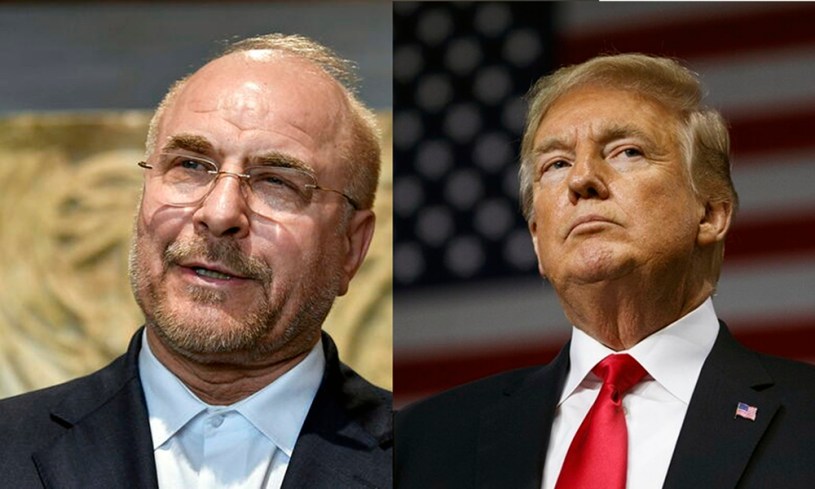
Full transcript of an interview with the Speaker of the Iranian Parliament and Iran’s chief negotiator, Dr. Mohammad Bagher Ghalibaf, on Iranian TV, April 18, 2026.
Mohammad Bagher Ghalibaf is a senior Iranian political figure, born in 1961. A former commander in the Islamic Revolutionary Guard Corps and former national police chief, he has established himself as a major figure within the conservative camp, where he is regarded as one of its pragmatic representatives.
- Introduction
- How Iran Learned From the 12-Days War
- A Victory on the Battlefield, Not a Destruction of the Enemy
- Three Fronts, One Goal: From the Battlefield to the Negotiating Table
- How the Deal Was Made: Ultimatums, Messages and the Ten Points
- Why Hezbollah Had to Be Part of the Deal
- The Strait, the Minesweepers and the Fifteen-Minute Retreat
- Setting the Record Straight; “There Were No Negotiations Before The Ceasefire”
- Mistrust, Red Lines and the Peace Ahead
Source: The Iran Talks
Transcript: resistancenews.org
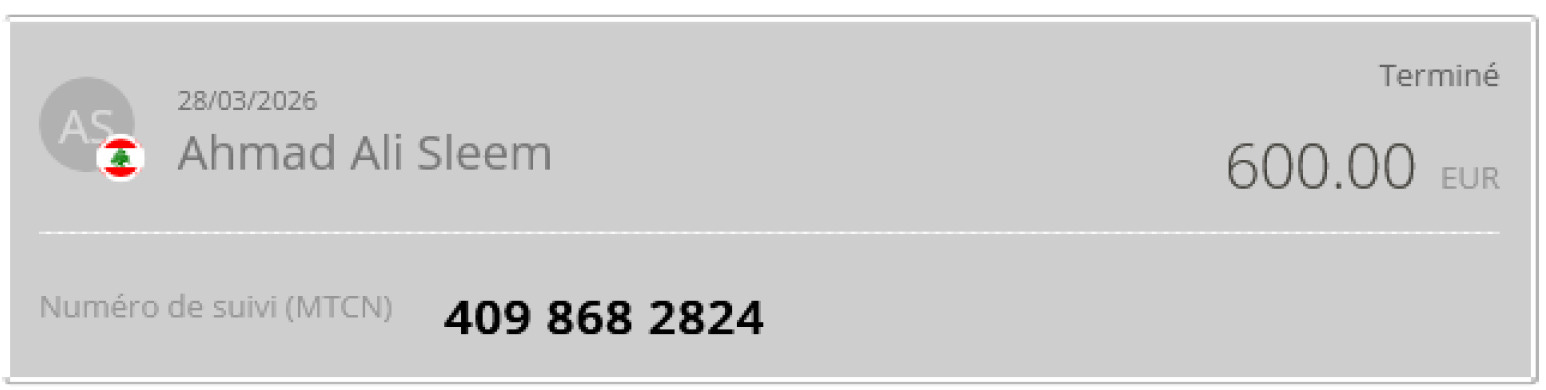
Note: Thanks to the donations received and the partnership between Resistance News, Alain Marshal, Laurent de Wangen and Le Cercle des Volontaires, an initial transfer of €600 has been sent to Lebanon to assist displaced people (Western Union receipt). It may seem like a drop in the ocean in the face of a war that has turned over a million people into internally displaced persons, but every contribution counts. All your donations will continue to be sent to our contacts on the ground.
- Introduction
Ghalibaf: “Among the faithful are men who have remained true to the covenant they made with God. Some have fulfilled their vow, and some still await, but they have never changed in the least” (Quran 33:23).
First, I offer my greetings and respect to the dear and noble people of Iran—a vigilant, perceptive, courageous, and timely nation. And I extend both my congratulations and my condolences to all the families who have lost their loved ones—their children, their spouses, their friends—and, in another sense, have gained them (as martyrs). I express my sympathy to them.
And I ask Almighty God that we conduct ourselves and act in such a way that we do not remain indebted to these dear and proud people. And for the opportunity today to speak with our dear people, I am grateful to Almighty God. But certainly, it would have been better if I had spoken to our dear people sooner. But the reality is that work demands and pressure only now gave me that opportunity.
And because I have always believed that people have an unquestionable right to know and to be informed—and naturally, especially in these circumstances, it is our duty.
Journalist: The main questions, including those you raised in the previous two sessions, have been about the war: an operational description of the situation and our wins, challenges, concerns, and discussions. War status and Iran’s stance: What does it show? Is the Islamic Republic ahead? Or is the United States in a stronger position?
- How Iran Learned From the 12-Days War
Ghalibaf: Well, look—when the war began, it was simply a continuation of the same deceit and untrustworthiness we had seen from USA. Once again, you saw that they took this step right in the middle of negotiations, and this time, as part of their plan, they martyred our commanders. This time, at the very outset, they martyred our Imam. They martyred a number of commanders during a defense review meeting. They martyred some of our security forces as well. In other words, that same criminal nature surfaced once again.
But the first point I want to make here is this: we learned from the first war. If you recall, in that first war there was roughly a fourteen- or fifteen-hour delay before we responded to the attack. But in this war, despite the fact that our Commander-in-Chief was martyred and the commander of the IRGC was martyred, and the Chief of the General Staff of the Armed Forces was martyred—which could all have caused serious disruption—we saw that our response came in the shortest possible time. It was carried out with precision.
This shows that we made use of past experience. It shows that our structure is a strong and resilient one. As our great Imam and our martyred Imam always said: “Do not think this Revolution, this Iran, this country depends on us. It depends on God; it depends on this nation. Even without us, it will move forward.” You saw that our Martyred Imam, a few days before his own martyrdom—I believe it was in his meeting with the people of Tabriz—on the anniversary of the fortieth day of the Revolution’s martyrs, when he met with them every year on that date, said that even if we are not here, God will raise up the people themselves.
Read Khamenei’s full text of his last speech before his martyrdom: An Attack against Iran Would Hasten the US Empire’s Collapse
And today, after more than forty days, all of us have truly understood the meaning of those words. That statement became a living reality. That the people themselves truly rose up, became their own leaders, became the nation itself, and were guided by God. We exactly witnessed it. That was our situation entering this war.
What I want to say is this: people would ask me again and again, both privately and publicly. And as I said in that second discussion, if war were to break out, then on the offensive side—in terms of numbers, in terms of quality, and even more importantly, in terms of planning—we would definitely be a level above where we were before. The enemy didn’t believe that, but now we’ve seen it on the battlefield.
Today our people are even more active than they were in that earlier period, and as you can see, it’s been nearly fifty nights now. These people are out in the streets every day. And about our armed forces—our technical capacity: just look at it: we brought down nearly 170 to 180 drones. We lacked that level of air defense last time. Look, all of this has happened in just seven or eight months. Great things happened in our air defense.
Journalist: Yes, yes.
Ghalibaf: Just look at it. This isn’t the time to discuss it, but I will say later what a miracle the Revolution has shown, and what remarkable foresight the Supreme Leader has shown in asymmetric warfare and in scientific advancement. In any case, everyone saw it—even the enemy acknowledged it. After all, bringing down an F-35 is not some random occurrence. It is the result of effort on many fronts: technical capabilities, planning capabilities.
I’m not going to spell it out here, but if you look closely, those who need to understand will understand what I mean. If you saw that missile explode near the aircraft —I’m not going to get into the technical details here— it exploded. They themselves understood what that capability means and where we’re headed.
- A Victory on the Battlefield, Not a Destruction of the Enemy
So what I really want to say is that between our first war and this second one, with only eight or nine months in between, when this war came around again, this planning took shape, and these capabilities were demonstrated. But I want to make one point. I’ll explain from here: this does not mean that we are militarily stronger than the United States. It’s obvious. Obviously the Americans have more money, more equipment and more resources than we do. They’ve committed so many crimes around the world, and because aggression has always been their business, they also have more experience than we do. And the Zionist regime acts as their servant and proxy in the region, advancing their interests, as was made clear during the last war and in remarks by the prior US administration, that if Israel did not already exist, they would have to create one in the region. In other words, it serves as their gendarme, it carries out their agenda here. So yes, it too has considerable power.
Sometimes I hear our dear people say that we destroyed them. No, we did not destroy them. In this war, we are the winner on the battlefield. And we were able to — look, the key point is: of course, equipment, resources and money matter in a war and can affect the outcome; but that isn’t always what determines victory. We fought them in an asymmetric war, using our own planning and preparedness, even though they had those capabilities and advantages. But they failed in how they planned and how they used them.
This is exactly what I mean when I say they make mistakes at the strategic level. Just look at it: they misread our nation, and they make mistakes in their military planning too. That’s what I meant by that hashtag (#MAGA). This US administration claims to put “America first”, but in practice, it’s become “Israel first”, because it makes decisions based on Israel’s misinformation and planning.
So here’s the point I want to make, because lately I’ve heard some of our people say—even some voices in our own national media are saying—that we’ve basically destroyed all of their military power. They say, “So let’s go finish the job; no deals.” We need to examine this carefully. We absolutely have the upper hand on the battlefield, and that’s exactly why Trump is calling for a ceasefire. We should note this.
Now look at this: why do we say we’ve been successful? Look at what the enemy’s objectives were. If the enemy fails, it has lost, clearly. We were attacked; we were not the aggressors. They had their objectives—he wanted to force Iran into submission. He said it would take two or three days. How long has it been now? Over forty days. We fought back. Now it’s been ten days of ceasefire. He has already been forced to call for a ceasefire within 40 days, so he clearly failed to make us surrender.
He also sought to topple the regime. He failed at that too. He thought Iran was Venezuela—that he could do to Iran what was done to Venezuela, then say, “Fine, we’ve taken Iran’s oil too.” Anyone wanting oil can get it from the Persian Gulf; that was yet another goal of his.
He also said, especially in the early days, that with the bombing campaign he would destroy Iran’s missiles. But over time, he saw our strikes stayed heavy and precise. They stayed undiminished. No matter how much he bombed, he saw he couldn’t destroy our offensive capability—and we had said before that this would not happen. Even before this, our launchers were vulnerable. But this time, as you saw, our firepower became more diverse.
In Isfahan, he ran into a disaster even worse than Tabas. He planned to use armed forces along our western and eastern borders, backing them. He said “I gave weapons to some of them to attack and keep us tied down there.” He tried everything and failed. He aimed to spark turmoil, pre- and post-war. We saw that. But in the end, he couldn’t really pull it off. So he decided to launch a ground attack. He couldn’t. Then he turned to the Strait of Hormuz, talking about “opening” it, meaning seizing control of the area. He urged global support. No one answered him. He asked NATO. No one answered him. So he tried to do it himself and failed.
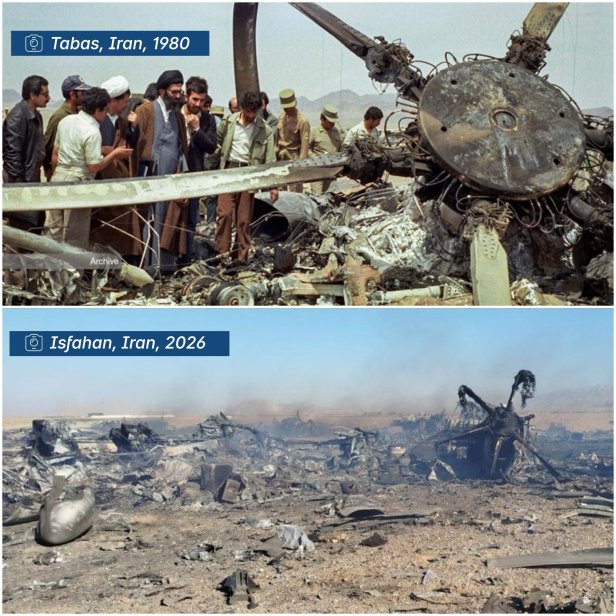
Tabas, 1980 (2 aircraft down, 8 servicemen killed in a failed mission to rescue the “US embassy hostages”) ; Isfahan, 2026 (more than 10 aircraft destroyed, casualties unknown, in a failed mission to save a US pilot and/or secure Iran’s highly enriched uranium)
There is no doubt whatsoever that we are the ones who prevailed in this arena. Even they admit it. Even the enemy admits it. This is what public global opinion says. But that’s different from claiming we destroyed their army. We won, certainly.
- Three Fronts, One Goal: From the Battlefield to the Negotiating Table
So today, the reality is that we have the combat zone, the street and the diplomacy — though I would call it diplomacy backed by strength. In my view, these should not be separated at all; they are not really three separate things. As a servant of the people, as someone with at least some understanding of these matters, I can say that today, the street, the battlefield and diplomacy are all aligned. Today, in the realm of military power and military action, with the factors I mentioned, we have achieved success.
Sometimes we need to maneuver in these areas and move in the right way. In other words, we must know that we have reached the maximum point in the military sphere. Today, it is certainly the street that has enabled us to stand strong on the battlefield, the military and the diplomats.
Today, part of what we want is to prevent the enemy from imposing its demands on us, while enabling us to secure the nation’s rights. We have achieved this in the military sphere, but legally and politically, we must now consolidate it and put it on record for today and for the future. This is where power-based diplomacy has to step in. That is its job; it has to take up that banner.
Let me also make this clear: they were definitely the ones seeking a ceasefire. And if we accepted a temporary ceasefire today, it was only so they would submit to our demands. Naturally, if they refuse to do so… The enemy’s entire effort was aimed at forcing its own demands on us. What matters is that we secure our rights and hold our ground. So this is where negotiation becomes a method of struggle. That means these methods complement one another.
My first request to our dear people is this: these three arenas, which are really one, must all be focused on securing this banner of victory and the rights of the nation as our main objective. Rest assured, there will be absolutely no surrender or backing down on our part in this arena. Within this framework, we will certainly move forward, and in my view the people of Iran have embodied the very meaning of national will and national resolve and have shown it to the whole world. They have truly revived it in the fullest sense. That capacity exists, and God willing, this victory will be ours.
Journalist: Well, from what you’ve explained, it’s clear that we hold the upper hand on the military front, and you also mentioned that the banner of the military front should be handed over to the banner of power-based diplomacy. Could you explain a bit more what made you feel that now was the time to hand the flag? You haven’t really explained the process. Please clarify: under what conditions? Did you enter from a position of weakness, or was there a process through which this power-based diplomacy came into its own?
Ghalibaf: Our people already know it well because they watched it unfold. First of all, look: as long as we were operating on the ground —in other words, on the military front— we pursued it firmly. We’re firm still. At any moment, if the enemy makes a mistake and takes action, because we have absolutely no trust in the enemy, even right now as we sit here, they could restart the war at any moment. That is the level of readiness our armed forces have. It’s not as if just because we are negotiating, the field is inactive. No, it remains just as active, as our people are, and ready to play their part. And we must remember that.
- How the Deal Was Made: Ultimatums, Messages and the Ten Points
So when the enemy failed to impose its demands on us through military force, it tried to pursue them through messages and back channels, as his ultimatums didn’t work. They saw we wouldn’t back down. We’re still firm. Let me stress again: even today, we are standing even more firmly than we were before the ceasefire. If anything happens today, we stand even firmer. No doubt.
The enemy then started sending messages back and forth. I’ll be brief. The enemy was sending a 15-point package through various countries — I won’t name them. Via several routes, they urged Iran to negotiate. This went on until the matter was raised not just informally, but officially: a 15-point proposal from the Americans was conveyed through Pakistan. In any case, Pakistan’s prime minister and its army chief, Mr. Asim Munir, passed it on to Iran, saying this was the American position. A proposal existed.
This issue was carefully reviewed in the Supreme National Security Council and in the meetings that were held. When this was being reviewed — if I want to estimate roughly — it was around the thirty-sixth or thirty-seventh day of the war. I ask people to pay close attention to this timeline, because some claim that… He issued many ultimatums but… No, they were just sending messages. We were doing our job, holding our ground on the battlefield, and responding. They even threatened to strike infrastructure in 48 hours. We said: that’s the wrong move — but if you hit our infrastructure, we’ll hit infrastructure too. They threatened to make life hell. I said, “You want to create hell?” That hell would first hit American families, and then the rest of the world. Yes, we may suffer too. We’re not saying we would be untouched — but before it reaches us, it will hit you. And we would respond.
All of this, in effect, made them back down; they couldn’t go through with that decision, and then more messages followed. Please pay attention to this: if our infrastructure is hit, what does that mean here? Or infrastructure in places where Americans are stationed across the region? At the end, our retaliation would harm regional countries. If our oil wells are to be targeted, then oil shouldn’t be flowing from anywhere else either. If the plan is to strike us so we can’t use ours, then why should the Americans be able to benefit? Why claim they’ll make this another Venezuela and seize the oil? So all of that rendered their threats ineffective.
Then there was no talk of negotiations from our side. They still had those 15 proposals. Those 15 points were then formally sent through Pakistan — through Pakistan’s prime minister and army chief — conveying that this was their position. These matters were then discussed in the Supreme National Security Council. Naturally, all of it was passed on to the Supreme Leader, and decisions were made. The conclusion reached here was that we announce 10 points reflecting our demands, with the nation’s rights and objectives included in them.
We never actually told the Americans directly. We conveyed it to Pakistan, and said: this is our position. We reject the USA’s 15 points. Our points are these 10. If Americans have comments on these ten points, or concerns to discuss, that can be negotiated. We hadn’t spoken to Americans directly. Pakistan mediated their talks with the Americans. They said the overall terms were accepted. They later returned with a nine-point proposal. In the end, we insisted on our original ten points. We said: our position is clear — if this moves forward, it must be within this framework, which they would have to accept for talks.
They also said that, in order to get this started, there should be a temporary ceasefire, which was one of the key points. I don’t want to discuss that right now. They agreed to it. They still insist that there are only three or four days left — come and finalize it. In some areas, our views were not reflected. We rejected it. Very clearly. But even at that time, we told Pakistan, which was the mediator: you did your part; we stated our position. If the US is really pursuing this, then Mr. Trump needs to announce in a tweet that he is calling for a ceasefire.
Journalist: Why?
Ghalibaf: They had to know it came from their side. We held the line in battle. That’s what “power-based diplomacy” means: the other side needs it at this point. We held the upper hand. As I explained, he had achieved none of the 9 goals he was pursuing. We’d shut him out, and we were in the strait.
- Why Hezbollah Had to Be Part of the Deal
Other issues were discussed too. As you saw, one of the points was that Hezbollah’s front would also be included in this ceasefire. Why include Hezbollah? I ask our dear people to pay attention to this — especially our friends on the ground, those directly involved, should look at this very carefully. Hezbollah has been fighting the Zionist regime for many years, but the truth is, in this latest war, Hezbollah opened this front because of the Islamic Republic. The Resistance Front aided the Islamic Republic. There had always been fighting there, but this time this happened. So if we wanted this ceasefire to take hold, it absolutely had to include them as well.
Journalist: So that was one of the conditions?
Ghalibaf: Yes, it was. What we said was that in that ten-point plan, one point was that a regional ceasefire meant Iran and the Resistance Front too. That condition was part of it. Specifically, if you noticed, in Pakistan’s prime minister’s tweet calling for a ceasefire, the words Lebanon and Hezbollah were in it. Pakistan’s prime minister included them there. So that was the logic.
Later, they returned with a different view, so it took time. As you know, when we went to Pakistan, a ceasefire was announced. But the ceasefire was not properly implemented in Lebanon. In that tweet I posted, I said you are obligated to complete and solidify the ceasefire in Lebanon for Hezbollah.
One of the things they said was that if there was a ceasefire, especially in Lebanon, and Iran’s conditions were met by the USA, Iran must move traffic in the strait back to normal. We have always sought normalization in the strait, and we still do. But if we slowed things down there for a while, it was because the ceasefire in Lebanon had not been fully implemented. Once the ceasefire took hold there, the strait was reopened as well.
Let me add this too: today, the strait is under the control of the Islamic Republic. At the same time, we want the people of the world — especially those who, in this war, are not acting on the enemy’s side and are not treating us with hostility — to be able to pass through here easily. We do not want to put pressure on people or spread insecurity. Never. It is not our goal.
- The Strait, the Minesweepers and the Fifteen-Minute Retreat
So that happened, and the next point is that you saw all of a sudden, when the United States saw this, it stepped in. Remember? They wanted minesweepers sent in to clear mines. Well, we stood firm and confronted them. We saw it as a ceasefire breach and warned we’d strike. It nearly led to direct conflict. They backed down.
Journalist: Was the conflict that close?
Ghalibaf: Yeah. While I was there, Brother Abdollahi was in touch with me. He said the USA’s minesweepers had come there and were now positioned in a place where, if they didn’t stop, our missile would definitely hit them. I told the US delegation: we’ve drawn the line; cross it and we’ll strike. They said: give us fifteen minutes, we’ll order a retreat. And they complied. Then our Commander called me. He said they pulled back within fifteen minutes.
So if traffic is still moving through the strait today, that’s under our control. I said, by God’s grace, the strait — with all its capacity — had a latent potential that has now become a reality, and I told my colleagues that. I said, this is exactly where they go wrong when they make strategic mistakes — and that is God’s grace upon us. This comes from the people’s sincerity, the martyrs’ blood, and our Martyred Imam. I said, this is exactly like the story of Prophet Moses, when Pharaoh was killing all the baby boys so that Moses would never be born. But God willed that Moses be taken right into Pharaoh’s palace, and raised there. These massive assets — by God’s grace, the enemy turned this latent power into something real for us, and that has in fact become a divine blessing now in the hands of the Islamic Republic.
Of course, let me say this: this strait must remain a waterway used by the people of the world and by the countries of the region. We understand that. We’re not America, barging in to grab everything we want. But we will not allow the Americans to say they have interests here in the strait. We are mindful of their rights and freedom of passage, but only within the protocols that we are putting in place here and pursuing.
That is why I posted that tweet last night. I’m saying it again. They’ve basically blockaded us for the last two or three days. What’s a blockade? Everyone can come and go, but not Iran. What a clumsy and ignorant decision! If this is a strait and we are here, how can everyone who wants to pass through be allowed to go, but not us? Could that be? This is all mistaken.
Naturally, I said this: if they do not lift the blockade, then traffic through the strait will inevitably be restricted, and restrictions will be imposed. Without a doubt. Yesterday I also told Mr. Asim Munir that the enemy absolutely must not take such actions if it wants to avoid undermining and breaking the ceasefire by acting against it. Each side has duties to meet, and our people should know that.
There, Mr. Vance said to me: “I came here in good faith, and I came so that we could have a lasting peace.” I replied: “Did you read my tweet?” I said, I tweeted, and he agreed. I told him: “In that tweet, I wrote that we’re coming here in good faith too — but with the utmost distrust. Even now, sitting here in front of you, I have no trust at all. The first thing you need to do is build trust.”
I said: “Trump tweeted that the negotiators who came here are only alive because the talks are ongoing. If they don’t decide in 24 hours, they may not survive.” I said: “That’s how you Americans behave. So you know we’ll stand firm till the end. Those minesweepers were over there for a while.” I said: “In any case, we were ready for war, and we still are. But we were never warmongers, and we certainly can — in fact, from the start, we made it clear we had no trust in you. We still don’t — but at the same time, in any case, when it comes to standing up, we trust our people’s power. We believe in God’s help, and we have no trust in you whatsoever.”
In fact, during the negotiations there — I’ll explain that too, if there’s time — there as well, we acted with strength and logic. If you look at it, even they acknowledged it in their own media: that the Iranian delegation stood very firmly and powerfully by its principles, and that the delegation’s main negotiating strategy was exactly in line with the guidance given by the Supreme Leader. It was the same guidance our martyred Imam gave us, and we have never pursued anything outside that framework, nor will we. As I said, negotiation too is a method of struggle — one that complements the field — to secure the rights of these people.
Our dear and noble nation must have its demands fulfilled and its dignity preserved. I assure you that we are pursuing these issues point by point. Our people fill the streets and carry this struggle forward there, and our armed forces pursue it on the military front. And I, too, as a fighter, today in the arena of talks, carry it on.
But let me say this clearly: I never volunteered for such a role. Let our people know that I am one of the remaining fighters. Without a doubt, the only honor I seek for myself is martyrdom. Know this: today, whether it’s the papers of negotiation or the map of the battlefield, they are the same to me. I am ready to give my life here, ready to sacrifice my reputation, ready to shed blood, and ready to endure heartbreak. What matters is that the rights of this nation, the rights of this proud Iran, are preserved.
Let the people be reassured, let them pray, and let all of us move forward under the leadership of the Supreme Leader, Ayatollah Mojtaba Khamenei — neither one step ahead nor one step behind, God willing. “Help from God and a victory near at hand; and give good news to the believers.” (Quran 61:13)
Journalist: That seemed like a fairly clear description of how things unfolded. I think you also answered a few of the questions people have been wondering about, but we should be more precise and add more detail. You explained the course of the talks and what happened in the final days, and where the negotiations were. There was one big question at the time: Trump was saying very plainly that talks were underway, while you were saying there were no negotiations. Then all of a sudden a ceasefire agreement came out, and people felt that Mr. Ghalibaf wasn’t honest. You mentioned it; now explain it more precisely.
- Setting the Record Straight; “There Were No Negotiations Before The Ceasefire”
Ghalibaf: Let me make this point. If we had been negotiating with the US, then what were all those ultimatums about? Why did Trump say 2 or 5 days? Why wasn’t he saying: “Tomorrow I’ll strike”?
I truly have to say this: I was in awe of the insight, the courage, and the honor of the Iranian people — let me be clear, and no offense to the men — Iranian women showed even greater courage than men. They humbled me. The day they said they were going to strike key bridges, power plants, and vital centers, I saw a scene where a family — a young woman holding her children’s hands — came and stood on the bridges, and everyone formed a human chain. That’s the kind of nation… I don’t know how the ignorant rulers of America can say Iran is like Venezuela. How can they say that? Why don’t they understand?
I told J.D. Vance: Iranians are a cultured people, a dignified people, a brave people. In the history of Iranian civilization, you do not see Iranians giving up their independence. That is what gave us this victory — that in these international wars that have taken place in recent centuries, even though Iran has said it had no role in these World Wars, just look at how many millions of people in Iran were massacred by them, were killed, and were lost, whether in famine or in war. The point of pride here existed and exists: that this nation managed to bring both the superpower and the brutal Zionist regime to a standstill.
So on this point, the fact is that no negotiations whatsoever took place up to that time — that is, until 24 hours before the ceasefire. And of course, as you’ve seen, Trump is a master of lying and, in short, doing things that are improper. Some call it psychological warfare, but we’ve seen it. Yesterday he posted eight tweets at once; seven were lies. As I said, just look. The spokesman of the Foreign Ministry, Mr. Baghaei, who is also the spokesperson for the negotiating team, explained this correctly last night — and explained it precisely.
So to be clear, the talks only began when, after the Pakistani prime minister’s request, Trump posted that tweet accepting it and agreeing to it — in other words, requesting a ceasefire. That was when this process actually began.
Journalist: Even during that 48 hours there was no negotiation?
Ghalibaf: No, it was just mediation — just like I mentioned before about those letters, the 15-point proposals. In the end, after a decision was made and finalized by the Supreme National Security Council, and after the Supreme Leader approved the basis and conditions for the talks, we sent the ten-point plan. All of that happened in the final 48 hours.
Journalist: Did you negotiate or just message?
Ghalibaf: We sent messages. There were no negotiations at all. We sent messages through the mediator. Our actual negotiations began on Saturday. We arrived in Pakistan late Friday night, or around 12 AM of Saturday. Talks happened on that Saturday, just in the roughly 30 hours there. There were no other negotiations besides that. Only in that same 48-hour period — our very first official statement was the foreign minister’s tweet saying we had agreed to the ceasefire, after Trump’s ceasefire request.
Journalist: Another issue you mentioned — you explained it, but I think some still ask whether the Lebanon ceasefire was meant to count. You included it among your conditions, but they ask: then why did you go to the talks at all? Why not refuse? As they broke terms, we shouldn’t have talked. Or they say, if they attacked Lebanon, then why didn’t you strike back? The question is: if the Lebanon ceasefire had not been implemented and nothing had changed, why did you enter the talks?
Ghalibaf: Look, I’d ask that this whole Twitter-driven narrative be clarified — that our position be made clear. There is no doubt that Hezbollah was part of this agreement. Of course, on the other side, some people said certain things — you saw in Lebanon that the president, the prime minister, and those aligned with the US made certain statements and pushed certain lines. On the other hand, Lebanon’s speaker of parliament, Mr. Nabih Berri — whom I spoke with twice — Hezbollah itself, and then a large segment of the Lebanese people, all had their own things to say about the Zionist regime. I don’t want to get into that right now.
The point was that we told them: so from the moment we decided to go, it was settled that the issue related to Hezbollah and the issue related to those blocked funds absolutely had to be on our agenda. Before entering the talks, if those issues were still unresolved, we would not move on to the ten-point framework. Those had to be settled before the ten-point plan. Keep this point clearly in mind.
And you saw that from the very first meeting with the mediator, Mr. Asim Munir, the whole discussion was about one thing: what was happening with the ceasefire with Hezbollah? That alone took about two hours and fifteen minutes. In their first meeting with the American delegation, this was also the main focus, because I said that until this was clarified, we would not move on to the ten-point agenda we were supposed to pursue.
If you look back, they were pursuing the ceasefire from that very day. Trump followed up, Netanyahu spoke, and the ceasefire began. But it wasn’t complete. If you remember, one day they bombed there and a number of people were martyred. We said right then that if the bombing continued, not only would we stop pursuing this ceasefire, but there would also be a strong response. If you look at that day, the aerospace forces had announced they were ready to strike, and the Zionist regime announced that nine more locations should be evacuated. They intended to strike Beirut and the south. When Israel announced that, we told both sides that any attack after the evacuation order would be met in kind, meaning the truce would be over. We may not have made this public, but as you see, the truce was fully enforced.
Journalist: If you hadn’t gone to the talks, would the Lebanon ceasefire have gone into effect? Some people say: “Well, you shouldn’t have gone to negotiate in the first place!” If you hadn’t gone to the talks, would the Lebanon ceasefire have gone into effect?
Ghalibaf: No. Look, I believe in the same point I mentioned before: there’s a saying that if you can untie a knot by hand, don’t use your teeth. In any case, a ceasefire was established there, but incomplete. What I meant was that we were telling them: if you don’t uphold the ceasefire, then we won’t uphold it either. That means we restart the war and break off the negotiations — both at once. They were only observing the ceasefire halfway. One of their ploys. But we stood firm. Eventually, they agreed. We even closed the Strait of Hormuz for this. We even told them explicitly that we would close the Strait of Hormuz. We used every tool available in the war, and we were able to impose our will and our demands. Yesterday we made it clear: if the blockade stays, the strait will be closed.
What I want to say is that in the trilateral negotiations, we stressed this point very heavily. That is, the American delegation came to understand that we truly do not trust them, that there is complete distrust. We made that absolutely clear in statements and discussions. And on the issues they raised, we stated our demands firmly. Even now, there are still several issues where differences remain, and they have certain views on the nuclear issue, as well as on matters related to the strait and so on, and we stand on our positions. Of course, the whole point of negotiations is for both sides to reach an understanding. But what has always mattered most to us is this mistrust I mentioned. We are acting in good faith. What we want is a lasting peace — one with guarantees so this situation is never repeated. Because over 40 years, with Israel and the US, we’ve seen endless cycles of war, ceasefire, and peace. This happened to us twice this year. This vicious cycle has to end. The first principle is that this peace must be lasting and backed by guarantees that the aggression will not happen again — not by Israel or the US.
There are details to this that we have to pursue, and in essence, to build on the victory we have achieved. Thank God, in putting together the delegation, we also tried to ensure that — because I believe that today, more than ever, we need unity — the delegation was composed in a way that truly reflected different viewpoints and perspectives, both in terms of expertise and national representation. It was absolutely not driven by partisan motives. The point was to show strength, logic, and firmness wherever necessary. We bore that in mind.
We were fully alert to the fact that, after all, there was mistrust. We raised this several times during the negotiations, and the talks moved forward properly. I repeated it at the end too. I said that these negotiations did not resolve our mistrust, but I think both the American delegation and ours, given the background I had from previous negotiations, came away with a more realistic understanding of each other. For instance, what happened was that sometimes misunderstandings would come up in the discussions — in other words, the same issue could be interpreted differently. But since the talks were trilateral and the mediator was present, it would be discussed right there and clarified: that no, this is what was meant, not that. For instance, there was a discussion about releasing something so it could be used for a certain purpose — then it was clear the funds were meant for that purpose. Given how delicate and precise these matters are, that’s how the process went on.
In any case, look — what matters is that we must not lose sight for even a moment of the point I mentioned: the battlefield, the streets, and diplomacy all serve one goal. And that goal is securing the rights of the nation and safeguarding the country so that no one dares attack it again. That is our top priority. Each of these arenas has its role, of course, though naturally the streets are the main pillar — strengthening both the military sphere and the armed forces, as well as the diplomatic front, and helping move things forward. And without a doubt, we believe that the people’s national presence, their all-out resistance, and the presence of our people in the streets can clearly help both the military front and, in fact, the diplomatic front. All of these are forms of struggle, just through different methods.
- Mistrust, Red Lines and the Peace Ahead
Journalist: Regarding the talks, have they advanced, and might there be another round soon? News says Sunday, Thursday… they keep saying talks will happen on this or that date.
Ghalibaf: Well, look — yes, some issues have been settled, while others haven’t. There have been other ideas too. But we’re still some distance away from a final agreement. In other words, there are certain points on which we insist, and by insist, I mean these are not places where we can simply compromise on our demands. Right? We have such points. They also do — maybe just one or two, of course. They also have certain views in some areas, what you might call red lines, and that’s what’s being worked through right now. But if I want to sum it up overall, we have made progress, but there’s still a significant gap, and some fundamental issues remain unresolved. We must know this.
And what the Americans need to understand is that the United States has to make a decision to earn the trust of the Iranian people. That is the most important step the Americans need to take. If they truly want to respond in good faith, they need to abandon this one-sided approach to dialogue and the mindset that they can impose something on us. They’ve already seen that this won’t work, and our policy is a step-by-step approach. Our principle is commitment for commitment: they take a step, and we take a step. We can’t keep commitments alone. We have acted with those lessons in mind, in that same mistrust.
In closing, the point I want to make is that we must remember: the enemy has not given up its hostility. The enemy is still lurking, certainly still looking for ways to harm us, and has not given up on that. Every day, it comes up with some new plot or act of malice. We absolutely have to keep that in mind. One of the key things is that all its efforts are aimed at breaking this unity, this public presence, this solidarity. Just look — nearly 30 million people, men and women, signed up to fight on the battlefield. You saw yesterday how, for hours, women came out all the way, a long distance. This public presence — when they threaten to strike infrastructure, people still take their children there.
Today, it is our duty to show our appreciation for this. These people are our strength. Without a doubt, we all remember the words of our great Imam, who said that the cornerstone of unity in our Islamic society is the leadership of the Supreme Jurist (Wilayat-e-faqih). Today, if we want our country to remain unharmed, we must stand behind the Leader. That is our duty today, and God willing, we officials naturally bear an even greater responsibility than the people to work for this consensus and this unity. There must be cohesion among the officials themselves, and we must also make sure our conduct does not, God forbid, create division.
And I ask all our dear people to pray for all the fighters — for those on the front lines of the fight, whether in the military arena, in the diplomatic arena, and for the people who are in the field day and night. These are our strengths. God willing, the soul of our great Imam, our martyred Imam, will be pleased with us. The martyrs, these people, these families who gave their loved ones for Islam, for Iran, for Iran’s pride, Iran’s dignity, the ideals of the faith, the honor of Muslims, and the security of other parts of society — God willing, we’ll repay them. Let us strive, and they ask everyone for their prayers.
To support our work, you can donate, share this article and subscribe to our newsletter.
 Resistance News Unfiltered