
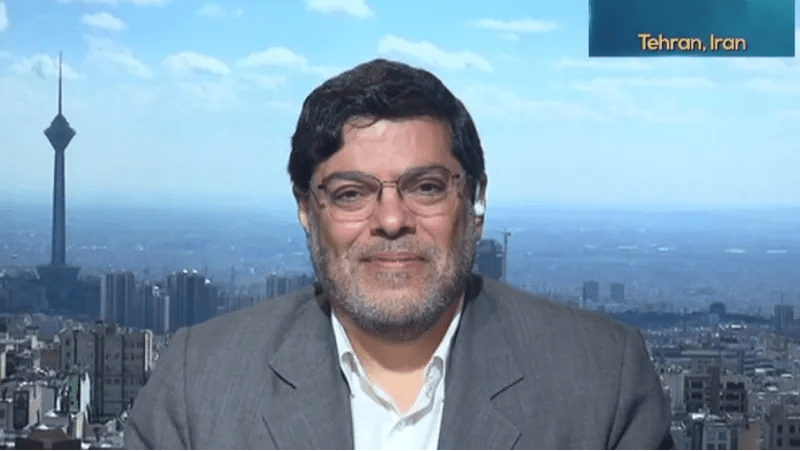
Interview with Professor Mohammad Marandi by Cyrus Janssen on March 29, 2026.
Source: YouTube, March 29, 2026
Transcript: Resistance News
Note: As long as the war persists, all donations to our blog will be sent to Lebanon in order to help refugees.
“I don’t think the Iranians are worried at all. Actually, I think they would prefer a ground invasion to take place because they want this war to be the last war. And so they want to hurt Trump and the Trump regime in a way in which he and the political establishment in the United States never again think about attacking Iran — because we had the war 8-9 months ago, Iran had the upper hand, Israel asked for a ceasefire, ultimately the Iranians accepted a halt in hostilities, and then here we are again with a much bigger force. The Americans are here in full force to strike. So the Iranians are saying we have to end this war in a way in which no one ever again thinks about invading the country. So even though there will be casualties, even though war is horrible, I think the Iranians prefer a ground offensive and they are confident that Trump will fail.”
- The U.S., Israel, and the Gulf States: Strategic Miscalculations
- Could a Ground Invasion Achieve Anything?
- What Options Does Trump Have?
- Is Iran Ready to Negotiate with the United States?
- What Are Iran’s Conditions for Ending the War?
- Life in Iran Under Bombardment
- What Is Public Sentiment Toward Iran’s Leadership?
- Could Nuclear Weapons Be Used Against Iran?
Cyrus Janssen: Well, everyone, we’re very honored to welcome in the one and only Professor Marandi into the interview today and we’re so honored to have him back as he is coming live from Tehran to give us the latest updates into the war. Professor, how are you today?
Prof. Marandi: I’m very good. Thank you very much for inviting me. It’s always a pleasure.
- The U.S., Israel, and the Gulf States: Strategic Miscalculations
Cyrus Janssen: Well, professor, I think we have seen an unprecedented response from Iran the last month. The New York Times has now reported that for the first time in history, all 13 of United States bases have been attacked and been deemed unusable. Now, what are your thoughts of the response from Iran right now and how they’ve been able to uphold this pressure from the United States?
Prof. Marandi: I think one of the mistakes that the United States has made is that ironically their military is still living in the 20th century. And so aircraft carriers and bases that are close by to our borders are obviously going to be very vulnerable and useless, and in future if there’s any conflict it’s easy to strike those bases. I don’t think really the United States for its own interests would continue to remain in the Persian Gulf, and I think that the era of aircraft carriers is also coming to an end as well.
The problem is not just US aggression that is being carried out at the behest of the Israeli regime and the Zionist lobby. But it’s also the fact that countries in the region have acted as proxies for the United States. And so Kuwait, Saudi Arabia, Qatar, the Emirates, Bahrain — these countries in particular, they have hosted US bases. So has Oman, so has Turkey, and so has Jordan. But these countries that are alongside the coast, their bases have been very openly conspiring against the Iranians. Their airspace has been used to bomb Iran. Their territory has been used even outside the bases to fire missiles at Iran. So from the Iranian perspective, they are fully complicit in the murder of Iranian citizens.
And since they’re so close by and since they’re so vulnerable — because these countries are literally completely dependent on natural resources, on oil and gas — they don’t have, for example, Iran has extensive agriculture, it has an industrial base, but these countries are more or less dependent, and they’re very small as well. So they have huge amounts of armaments bought from the United States and Europeans, but they can’t use them. Qatar, which has a population of 350 to 400,000, doesn’t even have the manpower to be able to use those sort of weapons. And the same is true in Kuwait and the Emirates and Bahrain as well.
So this was a major miscalculation. The Americans miscalculated. The Israeli regime miscalculated. But the Israeli regime is willing to sacrifice everyone else for itself — that’s how it’s always acted. The global economy is in a mess. The Israeli regime doesn’t care. They don’t care about Indians and the rise in the price of oil and gas, or Europeans, or Latin Americans and so on. So they miscalculated. But they really don’t care what happens to others.
These countries in the Persian Gulf that have allowed the United States to use their territory to conspire against Iran — they are being hit very hard. They’re very vulnerable. They are guilty and they’re being hit. And the Americans, I think, underestimated what the Iranians are doing. Some say that — well, Trump said he never thought this would happen. Others say that the American armed forces predicted this. At the end of the day, what is clear is that we’ve been saying this for years. We’ve been saying that if there’s an attack and these regimes are used against Iran, they’re going to pay the price and ultimately they may pay the ultimate price.
So this is a catastrophic situation for the world. It’s not a war that the United States can win. And it’s quite possible that the United States may launch a military attack on Iran, a ground offensive tonight or tomorrow night — we don’t know. But since it’s the weekend and the markets closed, I think it’s quite possible, especially since Trump gave another extension of 10 days for striking Iran’s electrical power plants, which is a crime against humanity and no one in the West and western media seems to care, or among Western elites.
But that extension — I think it’s obvious that he knows that the Iranians will strike back hard. But it also, in my personal opinion, it may be that he wants to deceive Iran and carry out a ground offensive tonight. It’s just a possibility. I have no idea whatsoever. But the fact that we negotiated with the Trump regime twice in the last year, and on both occasions as we were negotiating, Trump and Netanyahu carried out a blitzkrieg attack against the country and waged war twice against Iran, trying to use those negotiations to deceive Iran into not being prepared for war — I think it’s quite possible that this 10-day extension has much more sinister elements to it than appears. But again, this is just sheer speculation on my behalf.
Cyrus Janssen: I think for our audience out there, what’s been interesting is originally Donald Trump said, “Okay, Iran, you have two days.” There was no real response from Iran. He then extended it to five — again, no response. Then extended it to 10. But you definitely are correct to worry about this because the last two times that Iran was chatting with the United States about something, this is when an attack happened.
- Could a Ground Invasion Achieve Anything?
I want to go to Kharg Island because this is what we’re hearing right now — for example, the 82nd Airborne Division paratroopers are coming in. We’ve heard talks here in the United States that a major ground-scale invasion could in fact be launched. I’d actually like to know: is that even logistically possible? You know, for example, where would these men and women be deployed? How is it actually even possible for the United States to put troops on the ground? Where could they stage them? Where could the entry point be? Is this just an impossible mission for the United States if they were indeed trying to launch an invasion?
Prof. Marandi: Well, it would be very difficult. I don’t think the Iranians are worried at all. Actually, I think they would prefer a ground invasion to take place because they want this war to be the last war. And so they want to hurt Trump and the Trump regime in a way in which he and the political establishment in the United States never again think about attacking Iran — because we had the war 8-9 months ago, Iran had the upper hand, they asked for a ceasefire, ultimately the Iranians accepted a halt in hostilities, and then here we are again with a much bigger force. The Americans are here in full force to strike. So the Iranians are saying we have to end this war in a way in which no one ever again thinks about invading the country. So even though there will be casualties, even though war is horrible, I think the Iranians prefer a ground offensive and they are confident that Trump will fail.
With regards to logistics, obviously these Arab regimes are going to have to be central to this, and that of course reinforces the argument that they are part of this war. Also, it could be the case that the United States is using deception again and probably or possibly bringing in forces into the region that are not being reported. We’ll have to wait and see. Again, this is my speculation that there may be an attack tonight. I have no intelligence or connections with the military, but I think based on history it’s quite possible.
Cyrus Janssen: Talk about the importance of Kharg Island. I believe that there’s a figure out there saying that around 90% of Iranian oil exports are coming from this island. It’s an island that is the staging where all of these oils are put onto tanks and this is where it is. So the theory here in the United States is that if the United States — if we can put in our Marine Corps troops there, take that island — essentially we cut off Iran, the war’s over, the United States is in control. Is that even possible though? I mean, do you think that — is this something that Iran in the back of their mind would be worried about at all?
Prof. Marandi: Well, as you rightly pointed out, Kharg Island does not have any oil itself. It is where the oil is transported to tankers. If the United States takes the island, nothing happens — okay, let’s say they block Iran’s oil exports. Well, they can block all of Iran’s oil exports now from outside the Persian Gulf. That would only drive the price of energy higher. And if they take the island, obviously that’s going to be an escalation and the Iranians are going to retaliate by destroying the infrastructure — oil and gas infrastructure — on the other side of the Persian Gulf. So that is only going to make the crisis much worse, because what is now to a large degree a short and medium-term crisis, if there is an escalation and oil and gas assets and infrastructure are destroyed, then it becomes a permanent crisis or a very long-term crisis.
It’ll create a global economic depression that will impact everyone across the world — you, me, people across Africa, Asia, Latin America, Europe, and North America, everywhere. So taking Kharg Island doesn’t achieve anything. There’s nothing significant about such an act. But I think the Iranians are pretty confident that their islands are all well protected. Any attack on any of them will bring about great difficulty for the United States and they’re not going to achieve anything.
Let’s say that ultimately the United States takes an island or two islands or three islands — Iran will keep the Strait of Hormuz closed. The Strait of Hormuz is not closed by the Iranians through soldiers who are standing on the shore. The Iranian capabilities come from underground missile bases that are hundreds of kilometers away from the Persian Gulf. And Iran has access to the entire Persian Gulf and the Sea of Oman. So they can fire missiles and drones from anywhere and strike tankers. They can strike oil and gas facilities. So taking a couple of islands is only going to make the situation worse and it’s going to lead to the Trump regime losing soldiers. It doesn’t make any sense to me, but Trump is a gambler and he is, I think, increasingly desperate.
Cyrus Janssen: Absolutely. I think it’s remarkable because what we’re hearing here in the United States is obviously Trump trying to certainly project that the United States has the upper hand, that the United States is winning this conflict. He has said that we have blown Iran into smithereens, you know, and there’s nothing that Iran can do about that. But as you had pointed out, the Strait of Hormuz remains closed, Israel for example is still being attacked with missiles right now, we still see a tremendous amount of instability in the region
- What Options Does Trump Have?
Where do you think Donald Trump can go from here as far as his strategy? I mean, obviously a ground invasion is one option, what other options is Iran preparing for right now, and again in the future?
Prof. Marandi: I can only think of three general things.
One is that he escalates. We have a ground invasion and it only makes things worse, because that will lead to Iran destroying the infrastructure on the other side of the Persian Gulf, and then that’s the end of the oil and gas trade and petrochemicals and fertilizers from this region for the years to come. And I think that will have a dramatic impact on the global economy and the US economy.
The second is for him to continue with what he’s doing now and carry out strikes, maybe carry out a few very heavy air strikes against Iran, intensify the campaign for a couple of days if they can bring in more ammunition. But that is only going to lead to the escalation of the crisis because oil and gas still won’t be getting through the Strait of Hormuz. So he can keep bombing, but the real issue is the Strait of Hormuz — that’s where Iran has Trump by the throat.
And the third is for him to do what he did in Yemen: to declare victory and walk away, whereas he had failed in Yemen. He can walk away with regards to Iran, but that still won’t resolve the problem because Iran says we’re not going to go back to this former status quo. And Iran is going to change the political relationships that exist in the Persian Gulf region, because it will no longer allow these tiny Arab family dictatorships to be staging grounds for assaults on Iran. And Iran will demand reparations from them. So there’s no easy way out of this. All of them, I think, will ultimately lead to Trump’s humiliation and his fall.
Cyrus Janssen: Well, certainly if a ground invasion is launched and a lot of US casualties are seen, I think that would be an incredibly unpopular move in the United States. I think geopolitically we’re already seeing Donald Trump and the Republicans are already losing a lot of re-election campaigns in local elections — basically the Democrats are sweeping. So it kind of gives a preview potentially of the midterms that are coming up, where I think the Republicans are in a lot of trouble right now.
- Is Iran Ready to Negotiate with the United States?
Let’s talk about these talks. There’s been a lot of speculation that, for example, Iran and the United States are going to be potentially meeting to talk about another ceasefire. I believe that those talks are said to be taking place in Pakistan. What are your thoughts on that? Any update that you can share with us? Is this something that the Iranian government is even considering — considering that previous ceasefire talks actually resulted in more military action? Do you see Iranians actually meeting with the Americans and talking about a potential ceasefire?
Prof. Marandi: First we had the JCPOA of course, and Obama never fully implemented it. He violated the deal regularly, but then Trump tore it up. And then of course, as you rightly pointed out, we had two negotiations 9 months ago and it was used as a tool to deceive Iran — and the same is true with the recent negotiations. So I don’t think Iran is interested at all in negotiating right now. There are no plans at all to meet the Americans.
What happened was that the Americans sent a text or a message to the Iranians, which is not new. Messages have been going back and forth between Iran and the United States for decades. Sometimes they go through one country, sometimes they go through another, sometimes they go through multiple countries. In the past, messages have come from Oman, from Qatar, from Pakistan, of course, from Turkiye, from Russia, from the Swiss embassy — so messages do go back and forth, this is not a new thing. I think Trump hyped this up in order to bring down the price of oil, to manipulate the market. Iran said they’re not interested in this and they declared what needs to happen for an end to the hostilities.
Iran has said that we don’t want a ceasefire because a ceasefire basically will allow Trump and Netanyahu to regroup, to rearm, and to carry out another attack 6 months from now, a year from now. And there’s nothing to stop them. The political regime in Washington, the media — when it comes to Iran, they’re all more or less in the same camp. Unless things go south, then they go after Trump. But it’s not as if they care about the Iranian people. It’s not as if they care about the slaughter of children at an elementary school that we saw on the first day of this assault.
So the Iranians are saying, “We have to change the facts on the ground,” as I was saying a bit earlier. And those facts on the ground basically would mean that Kuwait, the Emirates, Qatar, Bahrain, Saudi Arabia, and Oman would never again be able to be staging grounds for an offensive, and they would have to pay reparations. I think that if that happens, automatically it becomes much more difficult for the United States ever to attack Iran, because they need these countries and the airspace and the territory — and of course the money — to carry out these acts of violence.
- What Are Iran’s Conditions for Ending the War?
Cyrus Janssen: So I’d like you to educate our audience here on exactly what are the Iranian demands as of right now. I think that we’re looking at how does a conclusion come to this conflict, because I know for example investors are very worried about the global economy — but certainly even just consumers, you know, here in Las Vegas where I’m recording from right now, I saw a gas station yesterday at $5.09 for unleaded gas, just about a month ago it was [inaudible] and 40 cents, and again, we’re still very early into the conflict and the gas prices have already risen to this level. I can imagine that if, like you had said, if there’s a movement on Kharg Island or the strait remains closed for another month, this could really wreak a huge effect on the global economy that I think investors have not really realized.
You did point out market manipulation — this is something where Donald Trump will go on air and say something along the lines of “Okay, we are chatting with Iran right now, the end to this conflict is coming near,” and then the stock market goes up one or two percent, oil immediately falls by 10%. So there’s definitely some market manipulation, and by the way also insider trading by a tremendous amount of people here. But I’d like to know from the Iranian perspective: what is ultimately going to be the way that this conflict can come to an end, and what are those demands that Iran has?
Prof. Marandi: You’re absolutely correct. And even if the Strait of Hormuz is miraculously opened today and there’s some deal that hypothetically the two sides can agree upon, the crisis is just beginning.
I mean, it’s going to — even now, if they open the strait, things are going to get a lot worse before they get better. And the longer the Strait of Hormuz remains closed — or what would be a lot worse is if the infrastructure in the Persian Gulf is destroyed — then the Strait of Hormuz literally becomes unimportant because there will be no oil and gas or tankers to be taken from this region.
So I would imagine that things are going to get a lot worse and I don’t think the war is going to end anytime soon. The future really depends on the route that Trump takes. And this is not a situation that the Iranians want. The Iranians did not want this war. They are the victim of this aggression. And this war is not in the interest of the United States, as Joe Kent in his resignation letter and his subsequent interviews pointed out. I think it’s something that you and I and many of your viewers — I’m sure if not all of them — knew this beforehand: that Iran was not a threat, Iran was not developing a nuclear weapon. And more importantly, this war was brought about because of the Zionist lobby and the Israeli regime. So Americans are sacrificing for this apartheid regime, and the sacrifices are going to increase. And I think it’s going to create a huge problem in the United States, but it’s going to create a huge problem for every country on this planet, because it’s going to increase poverty, it’s going to cause factories to shut down, businesses to shut down, it’s going to make people a lot more poor.
Yes, those who own the oil industry in the United States will make a huge amount of money, but that’s not going to be of any use to ordinary consumers in the United States or anywhere else in the world.
So I’m not optimistic. I think that probably — and I may be wrong — probably the United States will escalate before anything else happens. But I have no doubt that Iran is going to persevere. The Iranian population is firmly behind the armed forces and the state and the Constitution and the leader. We’ve seen that in gatherings across the country every night and on many days under missile fire and air strikes. I’ve been witness to one at a rally in Tehran. They fired missiles at the rally and a woman was killed. And they’ve done this in other cities as well. But people did not stampede. They didn’t run away. I mean, I put footage of this online — of people continuing to chant as if nothing had happened. It was quite stunning for me.
This was a colossal mistake. The only, the best solution is for Trump to leave right now and to end this. But I can’t see that happening.
Cyrus Janssen: I think there’s a bit of a face issue there for Donald Trump as well. I mean, I think it’s become very clear inside the United States that up until this point — I mean, we’re coming up to a month of war and there hasn’t really anything strategically been accomplished by the Trump administration. And I see a lot of our media, a lot of fellow politicians are just asking: look, the Strait of Hormuz was open until we launched the war, and now in fact it is closed. So we’re trying to dig ourselves out of a hole that we dug ourselves. And Donald Trump does not have a solution for that. So I think your predictions for it getting a lot worse before it gets better is certainly true.
- Life in Iran Under Bombardment
You do touch on something very interesting — I want you to let our viewers know about the sentiment there in Tehran. I mean, Tehran is a major city, millions and millions of people there. Talk to me a little bit about the daily life there and what is actually going on. How is society functioning right now? Like during the day — how is the daily life in Tehran for the ordinary people right now?
Prof. Marandi: Well, the war and the assault on Iran began during the month of Ramadan. And on the first day, the United States bombed an elementary school, killing 168 little girls and a couple of dozen teachers and school staff. After that, the government closed schools and universities and asked people, if they don’t have anything important to keep them in Tehran, to leave the city if possible. So the population in Tehran decreased a lot and when you would go out the traffic would be light.
Now, it is — six days ago was the Iranian New Year. The first day of spring, Nowruz, is the first day of the Iranian New Year. And so during the past five, six, seven days, Tehran continues to be — not empty, but the traffic has died down. A lot of people are still outside of the city, but because it is a holiday and it will continue to be more or less a holiday until next week, Tehran will remain half empty — I can’t say the percentage, but a lot of people will remain out of the city.
But we’ll have to see what happens when schools open, in about a week, in about eight days from now I think. So then a lot of people will be coming back in, and that worries me a bit, because the United States and the Israelis have been carpet bombing Tehran and a lot of civilians have been killed. I actually put footage of an instance when a woman survived the first strike and then it was a double-tap attack and she died as she was filming when it happened. If people come back, then these carpet bombings will create a lot more casualties than what we’re currently seeing.
But it is quiet. It is calm. You can go around. Tehran is a very safe city — it’s much safer than Western cities. A woman, for example, can walk around in almost anywhere in Tehran at 11 p.m., 12 p.m. alone and feel pretty safe. I’m not saying everywhere or always, but it’s much more safe than, let’s say, London or New York or Paris or anything like that. So it’s safe now. People go out, they’re out at 2:00 in the morning, 1:00 in the morning, midnight. There are checkpoints, though, which we’ve never had before. That’s about it.
Cyrus Janssen: What about the situation as far as daily needs like food, water, logistics? I mean, is the city still able to function there? There was some speculation that there might be a humanitarian crisis — not getting access to the basic necessities that we need in life. Are we still seeing those capabilities still going on as normal?
Prof. Marandi: Yeah, the supermarkets are all full. Gas stations — I mean, gasoline in Iran is about 1 cent a liter.
Cyrus Janssen: Wow.
Prof. Marandi: Which — yeah, it’s very different from the rest of the world. And so gasoline is very cheap and right now there’s no problem accessing gasoline. So in that regard things are normal.
Of course, if Trump begins to carry out his threat to commit crimes against humanity and start striking electrical power plants and that sort of thing, then things would obviously change and it would become more difficult. But at the moment, if you came to Tehran and you didn’t hear the sound of aircraft bombing neighborhoods or things like that, you would feel that you’re in an ordinary city.
But that’s Tehran. People have left Tehran and gone to other cities, especially now that it’s a new year. So other cities are actually quite crowded. And some of the cities that the Americans and the Israeli regime have been bombing severely — including civilian targets — are these cities. So they’re crowded right now, more crowded than usual, and they’re being targeted.
Cyrus Janssen: That was going to be my next question. I mean, when we’re looking at other cities in Iran — how extensive are the attacks from Israel and the United States in other cities? Are we looking at the entirety of the country? Cities all over every single region — are they all being attacked? Or is the United States and Israel predominantly focusing on just a couple of cities? Are there cities that have not been hit yet, for example, in Iran? Or is this a nationwide attack?
Prof. Marandi: Well, because of Iran’s missiles and drones, the US and its Israeli regime allies have to have their planes based very far away. So when their planes fly towards Iran, they all have to be refueled, and then they get refueled going back. That of course causes trouble for the planes themselves — long flights and so on — but also it decreases the number of air strikes that they can carry out because of the sheer distance. And it also makes it more difficult for the planes to go deep inside Iran because they will have a shortage of fuel. So the east of the country is mostly untouched. The northeast of the country — completely untouched.
Cyrus Janssen: Wow.
Prof. Marandi: Other cities have had infrastructure destroyed. They bomb villages — they just fired a missile at a small village in a somewhat far-off place and killed people in that village for no apparent reason.
Cyrus Janssen: That’s amazing that you’re saying that the eastern part and the northeast are relatively untouched because of just the distance there. I think that’s a big piece of information that a lot of people in the West don’t understand — just how big Iran is. I think it’s four times the size of Iraq. It’s a very large country. So it totally makes sense that there could be those limitations as far as missiles and the refueling being such a big factor here.
- What Is Public Sentiment Toward Iran’s Leadership?
Again, we’re kind of coming to the end of our time and I always want to be respectful of your time. Thank you so much. From the Iranian leadership perspective — we’ve certainly seen the Supreme Leader was assassinated very early in the time of the war, his son has now come to power — what is the public sentiment towards the Iranian leadership and what the country is going through right now?
I think again it’s very hard to understand the situation because in the West we hear something that, for example — I was in a debate against a former US ambassador who said, “Iran doesn’t have a leader right now, and we’re excited because there could potentially be a new government, you know, maybe a democracy, Iranians voting for a leader at some point.” And I pointed out to this former ambassador that, well, actually the Supreme Leader’s son is in charge now, and there’s certainly a leader in Iran and I think the regime is intact because it is certainly moving forward. The Strait of Hormuz is closed. But what is the public sentiment towards the Iranian government and the leadership at this moment?
Prof. Marandi: Well, there’s a lot of support and you see it on the streets. You see people — even that minority of people who used to be opposed, their views have shifted. Because a lot of young people, like 18, 19-year-old kids, they are influenced by Western narratives and propaganda, and some of them participated in the violent riots in the past. But they’re seeing how schools are bombed and the United States won’t even apologize for it. They see ambulances bombed. They see hospitals bombed. They see neighborhoods bombed. So the worldview of even this minority of people has changed.
Polls have always shown that the Islamic Republic has had a high degree of popular legitimacy — and even polls carried out by credible Western institutions like the University of Maryland have always indicated this. Now that popular legitimacy has risen.
And one thing that they don’t understand in the West is that in Iran we have a Constitution, we have checks and balances, the new Leader was chosen by an elected body. The president is directly elected. Members of parliament are directly elected. City council members are all directly elected. And the very fact that we didn’t have a leader for a week — of course, in that week, according to the Constitution, there’s a three-man leadership: the president, a representative of the Guardian Council, and the head of the judiciary — but the very fact that under war and after the murder and martyrdom of the leader, the country held together so well, the armed forces began striking back, and we had no chaos, there were no queues or lines for food or anything like that — I think that shows the degree of popular legitimacy. In other words, during that initial week, it was the Iranian people more than anyone else that kept the country together until a new Leader was elected.
And I think that the problem really is with Western propaganda, Western narratives. They believe their own propaganda. And a lot of that propaganda comes from what I would call the Epstein class. They own and control the media. They produce these narratives. And those narratives end up influencing how policy is devised. And then when the policy is devised and implemented, they hit a brick wall. And they do it again and again and again. Why? Because they do not comprehend the reality of Iran. They carry out policies that are based on an imaginary Iran, and based upon that imaginary Iran those policies should work. But the real Iran is something very, very different — and that’s why this war failed, that’s why the previous war failed, that’s why all the sanctions have failed, that’s why the armed insurgencies have failed. Because the Islamic Republic has popular support and because it has sophisticated state institutions. And we saw the armed forces within less than an hour starting to retaliate after the initial strike.
So until the United States and the West changes its mode of thinking, I think that they will not be able to make decent decisions when it comes to Iran or our region.
- Could Nuclear Weapons Be Used Against Iran?
Cyrus Janssen: Professor, I’ve got one final question for you and this is a serious one. Because I think, as this situation continues and Israel is continuing to be hit with missiles, the thing that I worry about the most is: is there an option here where a nuclear weapon could potentially be used? And what are Iranians thinking about that? Because we do know that Israel is a nuclear state. It certainly has a number of nuclear warheads. When I was in that debate, the former US ambassador said to me on air — we were actually on live television on Saudi Arabia’s TV — and she said, “In a war, we must keep all options open, including the nuclear option.” And I said, “Shame on you for even bringing that up because that is the biggest threat to humanity.” I think it’d be the worst tragedy of all time. But what is the Iranians’ thinking about that potential use of a nuclear weapon? Is that something that people are potentially chatting about or in the back of their minds as a huge threat?
Prof. Marandi: Yes, it is something that is sometimes discussed. But the very fact that you raised this question indicates how inhumane these people are — that you can actually envisage a situation where these people would carry out that sort of mass murder. I mean, after what they did in Gaza, no one should be surprised. But the very fact that you even raised this question says a lot about who these people are, whether in Washington or in occupied Palestine.
But the Iranians are not going to be intimidated, because at the end of the day this is a war for their survival, regardless of what sort of threats are made. If they back down, then that is the end of their country. So they will continue to fight. But if the United States seriously moves in that direction, then I think first of all the world will be outraged and nuclear countries will have a lot to say about what happens. And the entire world, the entire region — countries big and small — they’ll all move towards nuclear weapons.
Cyrus Janssen: Right.
Prof. Marandi: Everyone will, and in an age where we have AI, they are far more easy to obtain than they were just a few years ago. So — the end of life on this planet [is at stake].
Cyrus Janssen It’s a very sobering reality that we’re now looking at. Professor, I want to say again thank you so much for your time. Thank you for the continuous work that you do to help people here in the West really understand what the reality of the situation is. I mean, sitting down with you for 40 minutes today, you have provided us so much insight that frankly is not available at all in Western media and just challenges the entire narrative that we hear.
But of course I think many people are now waking up to that in the United States, realizing that our media and our government is certainly full of propaganda. And like you mentioned, the problem is that they’re believing their own propaganda. I heard another analyst say that he doesn’t believe that Donald Trump is a liar — he actually just believes that Trump actually believes what he says, which is actually a more dangerous situation, because what’s in his mind is what he thinks is reality. But unfortunately for the world, that’s not the situation on the ground.
And so I want to say again thank you for your time today and thank you for bringing us the truth of that. I can’t wait to bring this to YouTube and share with our community. And please — to you and your family — keep safe and continue doing the work that you do.
Prof. Marandi: Thank you very much for having me. It’s a great pleasure.
Cyrus Janssen: All right. Thank you, sir.
To support our work, you can donate, share this article and subscribe to our newsletter.
 Resistance News Unfiltered