
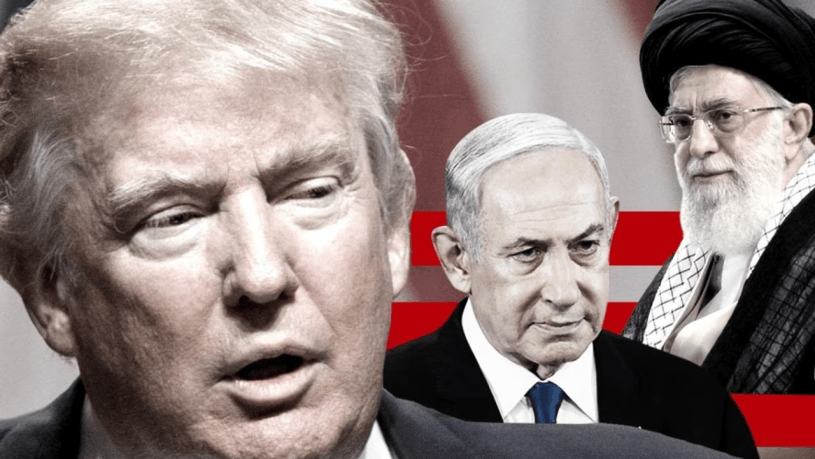
CGTN Interview with Jeffrey Sachs, American economist and public policy expert, professor at Columbia University, March 14, 2026.
Source: Youtube
Transcript: Resistance News
Question: Jeffrey, we have just heard from the Supreme Leader of Iran, Ayatollah Mujtaba Khamenei. His statement was the first since he was elected by the Assembly of Experts. It was read on Iranian television. He called for unity among Iranians and said the martyrs will be avenged. He also called on all US bases in the Persian Gulf to be closed immediately or they will continue to be attacked. He said the Straits of Hormuz, that vital sea route, will remain closed. It seems like he’s taking a very hard line, not in the mood for any kind of compromise or negotiation. Given that, where do you see this heading?
Jeffrey Sachs: Well, what kind of negotiation? Iran tried to negotiate twice. Both times it was bombed by Israel and the United States. Iran is under an absolutely brutal attack. It’s under carpet bombing. The US and Israel are destroying infrastructure. They murdered this man’s father and the leaders of the Iranian government. They are killing thousands of people. So exactly what is to be negotiated? This is a brutal war of aggression by Israel and the United States, and Iran is responding. And it’s not surprising that they are responding. They’re under threat of conquest.
Basically, that was what Trump said: that he would pick the new leader, that Israel and the United States would run Iran. Well, the Iranian people have a different view. Clearly, they’re showing up by the millions to say that they don’t want to be run by the United States and Israel.
Question: Right. And President Trump is also claiming that the United States has won this war. That’s what he says. Yet we see the missile attacks continue by Iran, by Israel, by the United States. Do you envision any scenario in which the United States can declare victory when we don’t even know what its objective is?
Jeffrey Sachs: Well, yes, I see a scenario where they can declare victory. Trump does. He says things for the immediate moment, or for show, or because he believes them. We’re never absolutely sure which it is. But is there a way to real victory by the United States? No. This is a disaster for the United States. It is a disaster for the whole world.
The US and Israel have thrown the entire world into turmoil, perhaps into World War II. This was a brazen, violent, ill-thought-out move, to say the least, by these two countries. And now we’re all suffering the consequences of this.
Question: You say we could be in World War II. There are already more than a dozen countries involved in this conflict, most of them in the Persian Gulf. Do you see it expanding to other parts of the world as well?
Jeffrey Sachs: Well, the United States is at war in many places. It is at war in the Western Hemisphere. It invaded Venezuela. It’s talking openly about invading Cuba, which it’s currently blockading. Trump just met with Latin American leaders and talked about other military operations in the Western Hemisphere. Trump has threatened to invade Greenland. The United States is still heavily engaged in war with Russia in Ukraine. We have war spreading through the Middle East. Israel is invading more countries. We have the war of Pakistan and Afghanistan taking place. We don’t know. But it could be that when we look back, even in weeks or months, we say: “Yes, World War III has started.”
The United States is so reckless, so irresponsible, and led by such a delusional president right now that I’m sorry to say that anything is possible.
Question: There are more than 1,500 Iranians who have been killed in this conflict so far. But we’re also facing another crisis, which is an energy crisis. The world is facing an energy crisis right now. Oil prices are spiking. Energy experts say the full impact of this is yet to come. And we’ve just heard from the International Energy Agency, which says that this is the worst energy supply disruption in history. How will this affect and impact the global economy?
Jeffrey Sachs: The way it’s going, this year will be an economic catastrophe if this continues, and it looks like it will continue. We know that there are massive disruptions of oil supply. That’s the point that the International Energy Agency just made. We know that only selective tankers are passing through the Strait of Hormuz, those that Iran is allowing to pass through for China and reportedly for India [a limited number of tankers has been reportedly allowed in exchange for Iranian sailors]. But we know that there is a dramatic decline in the availability of both natural gas and oil. And history has shown, especially in the 1970s when there were two such oil supply disruptions, that the consequences for the world economy are extremely severe, sharp, and relatively rapid in arriving. So I think we’re in for a very, very significant global crisis brought to you by Israel and the United States.
Question: One strategy the Iranians are using, and some call it an asymmetric strategy, is to hit US Persian Gulf allies, many of which host United States bases. Of course, Iran is hurting their economies by targeting their oil supplies and oil infrastructure. It’s also targeting vital energy industries. What do you make of this strategy by Iran and its effectiveness?
Jeffrey Sachs: Well, Iran has been hit repeatedly by the United States and Israel, actually for decades. We can go back to 1953, when the United States deposed a democratically elected prime minister and brought in a police state for several decades. We can go to the war that the United States supported against Iran by Iraq in the 1980s. We can go to a long list of assassinations by Mossad and the CIA in recent years. What Iran is saying is: we are under attack. This is existential. And the countries in the Gulf, by hosting the enemy of our country that is trying to destroy us, are part of this war against us.
Now Iran has said, and the new Supreme Leader has said, that this is not a war against the neighbors. It is a war against the United States, which is trying to destroy Iran. Just listen to any of the words of Trump or Netanyahu. It’s not hidden. It’s very brazen. Who will run Iran—Trump or the Iranians? This is what’s at stake.
So from the Iranian position, this is existential. If the world stood up and told Mr. Trump, “Go home. You’re not going to pick the Supreme Leader,” and said to Netanyahu, “Live within your borders. Stop making so many wars in the region,” it would help us get past this very dire crisis.
Question: To what extent did both the Prime Minister of Israel, Benjamin Netanyahu, as well as President Trump, underestimate the Iranian military—not just its battlefield effectiveness, but also the strategies that it is using? It is taking on two countries, both nuclear-armed countries in this conflict, with vastly superior military forces.
Jeffrey Sachs: The United States, during my entire lifetime—which is getting on—has underestimated its adversaries from Vietnam onward. The United States repeatedly has declared victory in days or weeks, only to find that the wars extended years or decades, with the United States crawling back home afterwards, having failed in all of its stated objectives, having squandered trillions of dollars, and having cost hundreds of thousands of lives.
So this is very common. Yes, they completely misjudged Iran. They said this would be one decapitation strike, that people would come out on the streets against the regime, and that Trump would pick the new leader.
This is the fantasy world of American leaders, especially Trump, who has the most delusional perspective of all. But we’ve had many presidents who are quite delusional in this regard. They are so drunk with military power that they completely misjudge the rest of the world.
Question: As I mentioned, more than 1,500 Iranians have been killed in the conflict so far. That also includes 168 school children who were killed in perhaps the most egregious of those attacks, when their school was attacked in the south of the country. Preliminary investigations indicate that the United States was responsible for killing those children. It was one of its missiles that landed on that school. We look at South Lebanon, where the Israelis have been bombing the Lebanese there. Two hundred children have been killed there. I was wondering: to what extent, or how great is the risk, the likelihood that we could see Israel do to Tehran and Iran what it has done in Gaza?
Jeffrey Sachs: Yes. Israel has committed a genocide in Gaza because its doctrine is to kill its adversaries: kill them in mass numbers, kill the civilians, kill the women, kill the children. This is the Israeli doctrine of war. They don’t discriminate between civilians and military targets. They leveled Gaza. They destroyed all its infrastructure. They destroyed all the schools, the clinics, the mosques, the hospitals, the housing, the water, the sanitation.
We don’t know the full death toll, but it almost surely is in the hundreds of thousands. If you take not only the bodies that have been collected—which come to around 80,000—and those under the rubble, but also people who have died of exposure, of lack of safe water, of nutrition, lack of access to health care, and so forth.
This is a brutal regime. I’m sorry to say it. It’s terrible. It is a rogue, brutal regime. It’s doing the same in Lebanon now. And it’s doing the same with its carpet bombing of Tehran in Iran.
The world needs to stand up and stop accepting this as something even remotely normal or acceptable. Israel needs to go home and live within its own borders and get its head together again, because it’s acting in a completely insane way. It needs to stop this.
This is mass murder with US complicity. This is something that absolutely needs to stop.
Question: Jeffrey, as you point out, the world needs to stand up and stop this. But when we look at the number of children, for instance, that have been killed—and the fact that it’s not receiving wide attention in the media—is there also a danger that the killing, the murder of children in this way, mass murder as you point out, is being normalized?
Jeffrey Sachs: It has been normalized because, at least in my country, the United States, and in much of Europe—and thanks to CGTN for telling the news as it really is—our so-called legacy media, or mainstream media, do not report the truth.
We are subject to so much propaganda all the time, so much normalization. It’s beyond imagining for me.I attended a UN Security Council meeting a week ago, the day that the bombing started. What did all the Western countries do? They attacked Iran for being bombed. This is propaganda. This is so-called narrative control.
So yes, mass murder has been normalized. You’re told, “Oh, if you say that Israel committed a genocide, that’s anti-Semitic.” It’s not only not anti-Semitic; it has nothing to do with anti-Semitism. It is the grim reality that needs to be understood so that it doesn’t continue to happen.
Question: President Trump is not discounting the option of a land invasion, and of course this recalls the Iraq invasion. But if we look at Iran, Iran is much bigger. It’s a mountainous country. It will not be an easy country for anyone who invades on the ground. This could result in massive US casualties, couldn’t it?
Jeffrey Sachs: I don’t believe it. I think Trump is full of it in general, and I don’t believe this can happen. When the Iraq war happened, the American people were lied to relentlessly. We know it wasn’t an error of judgment or doubt. It was direct lies—propaganda that there were weapons of mass destruction that needed to be taken out. That was the excuse for war. At that time, the American people supported the war.
Now the American people are completely against what Donald Trump is doing, and that opposition will rise over time as their gas prices go up, as their incomes go down, as their jobs disappear, and so on. So for Trump even to think about putting troops on the ground—the political explosion that would happen in the United States would be absolutely enormous. He’s facing the fact that every miscalculation has come to pass because he’s delusional, because he has no strategy, because the whole group of them has no strategy.
But I do not believe that there will be boots on the ground because, as you say, it would be a disaster, and it would start with the stark opposition of the American people.
Question: When we look at the US history of military assaults, invasions, assassinations just in the past 25 years, it has left a trail of mass death and destruction. How would you describe the damage and destruction the US has left in the wake of what has been referred to as the “American forever wars”?
Jeffrey Sachs: Thirty years ago, Benjamin Netanyahu, when he became Prime Minister of Israel with his American advisers, launched a project called Clean Break. The idea of Clean Break, which everyone should understand, was to permanently prevent a state of Palestine alongside a state of Israel. It is based on criminality, because international law requires that there be a state of Palestine alongside the state of Israel. The purpose of Clean Break was to say: any government in the Middle East, North Africa, or the Horn of Africa that supports the Palestinian cause and supports resistance—we’re going to overthrow.
That is why there are so many wars. The Greater Israel delusion of Netanyahu, and American complicity, has led to wars in Libya, Sudan, Somalia, Palestine, Lebanon, Syria, Iraq, Yemen, and now Iran. That’s part of the doctrine. And it’s crazy.
Instead of just having a Palestinian state alongside the state of Israel, according to international law, we have wars across the Middle East that have claimed hundreds of thousands—most likely millions—of lives and have gone on for thirty years now.
Question: Professor Jeffrey Sachs, thank you for joining us.
Jeffrey Sachs: Thank you.
To support our work, you can donate, share this article and subscribe to our newsletter.
 Resistance News Unfiltered