
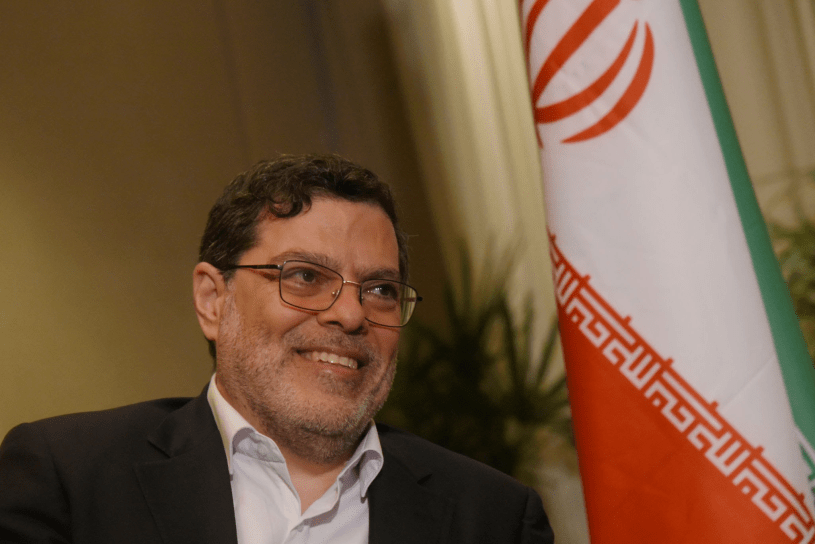
Full interview with Mohammed Marandi, Iranian intellectual and political analyst, professor at the University of Tehran, conducted by Glenn Diesen.
Source: YouTube, March 10, 2026
Transcript: Resistance News
- Iran’s War Aims
- A War of Terror That Demands Reparations
- The closure of the Strait of Hormuz: an existential threat to the Gulf petro-monarchies and the West
- Iran’s escalation ladder
- False flags?
- The role of Russia and China
Glenn Diesen: Welcome back. We are joined by Sayed Muhammad Marandi, a professor at Tehran University and a former adviser to Iran’s nuclear negotiation team to discuss the updates of the war being launched against Iran. So thank you for coming back on.
Muhammad Marandi: Thanks to you Glenn. It’s always a pleasure.
Iran’s War Aims
Glenn Diesen: We see now Trump arguing that the war could end soon and according to the Wall Street Journal, Trump’s advisers are recommending that he puts a quick end to this war. It’s still unclear what the US demands are. But what do we know about Iran’s demands? Because it’s been attacked twice now in surprise attacks during negotiations only within the last year and, seemingly with the intentions of regime change and the destruction of Iran. I don’t think this has changed, which begs the question: what is it that Iran wants, what are its war objectives now that again this war is going on?
Muhammad Marandi: I think by now it’s becoming clear that the things that we’ve been saying for over a year now have all turned out to be true and that the assessments made by Western think tanks, Western pundits, Western media and Western regimes have all turned out to be false. And this is the story of the last 47 years. And it’s not just Iran. Remember, Hezbollah was literally destroyed. But now we see Hezbollah hitting the Israel regime very hard. So their assessments are based on wishful thinking.
Now after almost two weeks of war where the United States has brought its firepower to the region and alongside the Israeli regime, and using its assets in the Persian Gulf and in Turkiye and the Jordan, it’s waging this all-out war on Iran. They failed.
I think we already see clear signs that the United States is heading for a defeat. The Iranians are not going to accept a ceasefire. Ceasefire is not an option. This war will continue until Iran’s demands are met. Iran will no longer accept a situation in the region where the United States can threaten it again. That’s over. Iran will no longer allow regimes in the Persian Gulf to be bases, to act as bases for the United States to threaten Iran. And Iran will demand and it will get full compensation for the slaughter and the destruction. And the longer that this will last, the more compensation Iran will take from the regimes in the Persian Gulf or whoever else. What Iran will receive is compensation. That is inevitable.
We have seen how the Iranians have emerged stronger. Yes, they’ve destroyed our civil infrastructure. They’ve bombed many apartment buildings. They’ve massacred school children. They’ve destroyed hospitals. They do what they always do. I mean, this is not new for the regime in Washington, nor for the genocidal regime in Tel Aviv. We’ve seen it in Afghanistan, in Iraq, and Libya, and Syria. We’ve seen it in Cuba. We’ve seen it, of course, in Gaza. But the Iranians are emerging stronger. There’s no doubt about that. And we’ve seen people in huge numbers come to the streets every night and sometimes during the day from the beginning of the war in support of the (Supreme) Leader, in defiance of Trump and the Trump regime and under fire, under missile fire, under the threat of being murdered. Yesterday in a gathering in Tehran that I participated in, they bombed Tehran as huge crowds were in central Tehran but no one budged, no one moved, there was no panic.
So I think that when we take all this into account, the fact that Iran’s missiles and drones are striking US assets across the Persian Gulf region and the fact that the Israeli regime is being pounded day and night and the fact that the Resistance in Lebanon and Iraq are actively hurting the regime, and the fact that Yemen is prepared to carry out its offensive actions against this aggression of this this Epstein coalition, it just indicates that it’s only going to get worse for the United States and worse for its proxies in the region.
A War of Terror That Demands Reparations
Glenn Diesen: This sounds a bit like the idea of the ceasefire is not acceptable because they will only come back again, that there’s a need for a different status quo or a political settlement. It sounds a bit also like the war in Ukraine, that is with the Russians not wanting simply NATO to regroup, replenish and then have another go at it. But I wanted to ask what is happening on the ground there, in Iran because what we’ve seen over the past few days is the attacks on its fuel depot, which has caused this toxic rain that apparently burns the skin, destroy lungs. Also it’s a bit of an ecological disaster if I’m not mistaken, as it produces cancer and other diseases, possibly for decades to come. We’ve also seen the destruction of the desalination plant that cleans the water, which is considered yet another war crime, oil tankers being attacked. How are you assessing this? Is this the US and Israel not able to defeat Iran on the battlefield, so they go after population? But also how would Iran retaliate, because this is an escalation once the civilian population is the target.
Muhammad Marandi: Yes, I think it’s pretty clear by now that the United States has failed on the battlefield. It has failed to stop our missiles and drones. So since they cannot destroy Iran’s underground facilities and its factories that produce missiles and drones, it is taking it out on ordinary people. It is trying to slaughter people to create panic and fear among society. It is destroying key infrastructure to make Iranians worry about the days and weeks ahead.
And of course the air strikes on the refinery and the massive fires that that were caused and which burned quite a few people alive, that has spread across Tehran and beyond. And if you look at my car, it’s covered in oil. It’s oily. If you drive across the city, you’ll see automobiles, many of them those that were parked outside in the open, that they face the same situation. When you go out and touch something, your hand becomes dark. It becomes oily, it becomes dirty.
And of course, our children are inhaling this. Our grandchildren are inhaling this. Men and women are inhaling this. Elder people are inhaling this. People like myself who were victims of chemical attacks by the west through Saddam Hussein, especially the German regime which was key in providing those chemical weapons, we are at risk. Messages were sent to all those who were victims of gas attacks to take extra precaution. But how can you take extra precaution? There are things you have to do. So this I think is clearly an act of desperation. It does seem that Trump is desperate. It does seem that he is not doing well.
Over the past few hours, he’s been saying all sorts of crazy things. And at one moment, he speaks about the war coming to an end. Then he speaks about destroying the Iranian nation. And you don’t see any outrage in the West. You don’t see European leaders outraged when he talks about destroying the Iranian nation. You don’t see CNN or the BBC or Fox News or the Guardian outraged when he says that he will attempt to destroy the nation. This is extraordinary, and it shows how morally bankrupt the elites in the west are from any of these major political parties and entities that are controlled by the oligarchs and the Epstein class.
But even those threats and those inconsistent, constantly changing statements coming from Trump, they’re not going to affect Iran. Iran is going to keep the Strait of Hormuz closed. He can try his best to talk the markets down. It will work for a couple of days, but the fact is that there’s going to be a shortage of energy. Every day. 20 million barrels of oil: at the and it could increase if Iran punish the regime in Baku, the Republic of Azerbaijan, or if the Yemenis strike the Saudi oil pipeline that goes through the Red Sea and so on. It would get worse.
But for now, 20 million barrels of oil a day are disappearing from the marketplace, and every day an extra 20 million is added to it. So he can talk down the market for a couple of days and the western media and western governments can help him do that, and then they can release their reserves, but the reserves as far as I know that the the G7 have can only last two months. They can only compensate for two months. They have two months’ worth of reserves, and I don’t think that Iran plans to open the Strait of Hormuz anytime soon. So, we’re heading for a global economic crisis and this is something that we discussed. You and I discussed this multiple times, and I’m sure you and your other guests have discussed this many times before as well.
So, the fact is that the west is ignorant. They could have listened to your show, western elites, and they would have discovered that 6 months ago what would happen under the current circumstances. They brought this upon themselves. And again I constantly think or remember what Trump said early on. He said, “We didn’t expect Iran to attack its assets in the Persian Gulf”. The amount of ignorance that exists in Washington is just beyond belief. Why would they not have expected it? It was 100% certain that that would happen. But so it shows that Washington is blind to reality. And I don’t see any reason why that blindness has suddenly been cured. So I don’t believe that they’re going to make the decisions now that are realistic either. But in any case, whether Trump’s aides want him to succeed in having him look for a off-ramp or not, Iran is not going to accept a ceasefire. That’s out of the question. Conditions will have to be met and those conditions will be met. And these Arab family dictatorships in the Persian Gulf, first and foremost, are the ones who are going to have to obey and accept Iran’s conditions. Iran is now talking about controlling the Strait of Hormuz from now on and receiving money for allowing ships to pass through.
This is what these Arab regimes have brought upon themselves. these dictatorships. They thought that they could have their cake and eat it too. That they could have US bases and threaten Iran and have Iran bombed and then Qatar, and the Emirates and the regime in Bahrain, Kuwait and the Saudis, they could say that we’re neutral and get away with it. That’s not happening. Right now, they’re paying a price, but even when the war ends, they will continue to pay a price. They have to compensate all, for all the things that they’ve done against Iran. We’re living in a new reality, Glenn. Iran is much more confident now about itself. And great harm has been done to its people by adversaries. And Iran sees its strength. The people see their strength. The people on the streets recognize their strength. And this is a reality that the Americans are going to have to deal with for now on.
Glenn Diesen: I think what you alluded to is one of the key weaknesses. I think we see in the west now, which something that I’ve definitely warned a lot about, that is I think we’ve been captured by our own narratives, as you said. The people I’ve spoken to on this program here, there’s always almost been a complete consensus that if the US would attack, then the first thing Iran would do is to knock out all of its bases in the region. So it should have been predictable. I think the reason why it wasn’t predictable is because the governments and their lap dogs in the media, they organize around these narratives, which means they all have to explain why one side is good and the other is evil. So the kind of narrative they land on is this is all about liberating Iranians. “We want to liberate the women of Iran from an oppressive regime.” And if you buy into this premise, then it is possible to elevate, escalate the costs on Iran, and then it will make concessions and… A little bit like the Afghanistan thing. Apparently, NATO occupied Afghanistan for 20 years so girls could go to school. It’s not okay for adults, grown adults to believe this. But that’s essentially the consensus. But this is a problem. Then if you don’t accept the world as it is, then you end up with these very silly expectations.
And it’s not that different from how we trapped ourselves in narratives with the Russians as well. This is something I spoke a lot about with the former CIA director for Russia analysis, George Beebe. He was making this point as well, that we got captured in narratives. Because if you argue that the Russians invaded, (that) it was unprovoked, all we have to do is send some weapons, elevate the cost and then they will see that it’s not worth it and back down. But again, we’re not allowed to say that “Hey NATO started it”, that is an existential threat (for Russia), which means that any escalation will be met on the Russian side. And I think as I always say same with Iran, a poor analysis leads to poor politics, and the fact that this wasn’t predictable is… honestly it’s frightening. But we see the narratives continue: Trump made a speech where he said that Witkoff had told him that the Iranians had told Witkoff that they would continue to develop a nuclear weapons no matter what. I mean this is just really wild. Even the hardcore MAGA people can’t buy into this. I mean this is just really, really too much it seems.
The closure of the Strait of Hormuz: an existential threat to the Gulf petro-monarchies and the West
But you did mention the Strait of Hormuz, and we now hear from France that they’re sending possibly an aircraft carrier and some warships, and they’re going on a defensive mission to reopen the Strait of Hormuz, while Trump says that if Iran doesn’t permit it, they’re going to hit Iran 20 times harder, which is oddly specific. How do you assess the possible entry of France into this war?
Muhammad Marandi: I think from what we’ve seen in Ukraine, it’s quite clear how powerful the French armed forces is. The entire European Union has been spending everything it has and doesn’t have to defeat the Russians and they failed. And it’s going to get a lot worse now because a lot of their resources have been sent to the Persian Gulf region and have been wasted and lost. Because they’ve been firing off anti-missile systems day and night. So the situation in Ukraine is going to deteriorate. That is going to be even more painful for the EU and the British in the days, weeks and months ahead. And I think the Russians obviously are going to be very much empowered. They are selling oil at a much higher price, they no longer have to give discounts. And their enemy in Ukraine is being severely weakened. So I think that that will lead the Russians to take advantage of this situation, to push their advantage.
I have no doubt that the French have no capabilities that would impress Iran [smile]. And the United States is already doing whatever it can against Iranian people, slaughtering people. Just a couple of hours ago, they carried out air strikes in Tehran and bombed highways, bombed civilian targets, slaughtering more people, just like they did last night. Last night they carried out multiple massacres in Tehran. So what more can they do? If they want to destroy Iran’s key infrastructure, that’s a possibility. But then Iran will destroy all key infrastructure in this region. Everything. All the oil and gas installations in the Persian Gulf region and in the Caucasus will be gone, finished. They won’t be damaged. They’ll be destroyed. And that will mean that the key infrastructure of the United States will collapse. The world will collapse, because we will enter a severe global economic depression.
If that’s what the United States wants, that’s what it will get. But the world will know that it’s the United States that did this. It will know that the Zionist did this. It will know that Netanyahu did this. Because Iran does not want war. Iran does not want to expand the war. We want to live in peace. We want the rights of Palestinians and the Lebanese and the people of Syria to be restored. That’s a very normal expectation.
But if war is imposed upon us, we will respond with counter measures. we will punish the enemy. And now the United States has lost everything in the Persian Gulf region. And the damage that has been done to the United States is far greater so far than to Iran, because the Persian Gulf region is… All of these are American assets. The oil that is sold, I mean think about this Glenn, and I’m sure you have and I’m sure your audience also knows this because they’re very politically aware. But let’s think about this: this oil is not being sold. What is it sold in? It’s sold in dollars. That is one. Two, a lot of this money goes to the US stock market, and for bonds: there’s no money, so it’s not going to go there. And huge damage has been done to these regimes. It’s not just the drone or the missile that hits. It’s the entire confidence that used to exist about these regimes, where huge amounts of money from across the world would go, to the Emirates for example, just as one example. That’s disappeared.
So these are all US assets, and they’re huge consumers. The amount of consumption that these Arab family dictatorships in the Persian Gulf have is the equivalent of maybe the African continent or the Latin American continent. I can’t say with specifics, but they are huge consumers. Huge consumers. They’re not consuming anymore. So, they’re not selling oil. The price of oil is going to go up. There are no dollars from those exports going to US stock market and less dollars are circulating, that makes the US dollar less important as a global currency.
None of this is… and of course the worth of the entire western side or southwestern side of the Persian Gulf has collapsed. It is no longer a place where in future you can invest in, or you can have confidence in. And as I said, this area is controlled by the United States. So the damage done to the United States and the West through its own aggression against Iran, and of course the Israeli regime, which is being hammered day and night. What fool is going to invest in the Israeli regime in future?
This is the second time Iran has been pounding it in the last eight-nine months. So all of these are huge. We’re the country that’s sanctioned. We don’t have foreign investors. Any investment is carried out by individuals in Iran and the government. That will continue to be the case. But I think for the United States, this is this is a sea change.
Glenn Diesen: It kind of points to how much is at stake here, because if the United States would be successful, in terms of as they keep saying on Fox News, to seize control over Iran and its oil, then essentially, China would be cut off from Iranian energy, and the US would have a strategic advantage against its main peer rival. However, if it’s unsuccessful, then the petro dollar is essentially under threat; this would then impact things like the funding of the AI bubble in the US, which would then end the race for dominance in high-tech industries in artificial intelligence, robotics.
Iran’s escalation ladder
So there’s a lot at stake here and yeah, as we see, Iran is of course bearing the brunt of this. But given all that is at stakes, and we know that the US will likely intensify the pressure on Iran, that is to escalate, what is it that possible for Iran to do if it want to go up the escalation ladder? The Iranian government said that they have some surprises coming. I know they’re not whispering in your ear, but what kind of surprises do you think this could be? What what is the next step on the escalation ladder? It’s not just the US bases that are vulnerable, as you inferred before, all these Gulf nations ‘s energy infrastructure is also very exposed and vulnerable. Is this the kind of thing the Iranians would go after?
Muhammad Marandi: I think it depends on the pace of escalation and the type of escalation. And of course not only are there capabilities that Iran has, but Yemen has not yet entered the war and it is preparing itself. It is upgrading its capabilities. And the resistance in Iraq, while it has been active and it has been doing a lot of damage to US interests, it can expand a lot more.
But as you know, every day that goes by, Glenn, every day, 20 million barrels of oil do not go to the market. And that number just increases. So over let’s say the last 10 days no oil has lapsed, that’s 200 million barrels. The entire stock stocks of the G7, they say is 1,200 barrels. So if this just continues for a few more weeks, then imagine where the prices will go.
So already Iran is escalating just by keeping the Strait of Hormuz shut. But as you know, Iran has not yet used its most advanced technology. Over the last couple of days, it has used fewer drones than before, but almost for the entire first week and a bit after, we’re almost exclusively using old drones and old missiles. And as we speak, the Iranians have refrained from using their newer technologies.
So there’s a lot that Iran can do if damage is done to Iran’s infrastructure. If the United States takes a further step to destroy more of Iran’s oil or gas or energy installations, then the same will happen in areas controlled by the United States in Kuwait, in the Emirates, in Saudi Arabia. If they strike our desalination plants, we don’t need them the way they do. If we destroy the desalination plants in the Persian Gulf region, everyone will have to leave. They’ll have to drive across the Arabian Peninsula to Syria, Jordan, Iraq. It will be over. Because these are countries that are deserts.
As for Iran, you’ve been to Tehran. The mountains above Tehran right now are full of snow. I know we haven’t had, Tehran hasn’t had an extraordinarily good year. We’ve had droughts. Large parts of the country have had good rain this year. Tehran is a bit excluded, but we still have snow. We have water. Today it rained, as I was telling you before the show. It’s raining I think as we speak. So we are not like these Arab regimes. We have our own (water). We have 15 neighbors through which we can do trade. We have agriculture. We have our own indigenous industries. But they (only) have oil and they have gas, and if there are no desalination plants, they won’t be able to stay, even with those assets intact. But everything can be destroyed. And as I said, these are American assets. These are not Qatari assets. Qatar is a country of 400,000. The ruling family is stealing a lot of money, giving handouts to its own people, not the indentured servants and the slaves and so on that are there. And then the rest goes to western companies and corporations. The World Cup, they spent some say almost $200 billion on the World Cup just paying to build hotels and the stadiums that are now all empty, that have been empty before the war. So these are not real countries. They’re completely dependent on oil and gas, they’re American assets they’re western assets. So their destruction means the destruction of American assets, their weakness means American wealth is diminished.
So they can hurt us, but we can hurt them far more than they can hurt us. Especially since the West is so financialized and it no longer has a production base. High prices of fuel would be enormously destructive, but the wealth and assets that they’ve accumulated in this region, that will all be gone as well.
I should add something. The Americans don’t export anything anymore, but they do export very expensive weapons. These Arab regimes in the Persian Gulf always buy weapons, and they don’t even have the pilots to fly the planes. They just buy the weapons to give the Americans money, give the Europeans money, and to give kickbacks to Western senators and their own princes. That’s basically how it works.
That’s gone. There won’t be money anymore. There won’t be money to buy American jets and American missiles that they’ll just put somewhere in some bunker because they don’t have anyone to use them. So the United States is losing in all respects. And this is the huge weapons market for the United States. But when they don’t have money, then what are they going to buy?
False flags?
Glenn Diesen: I want to ask about what has been referred to as, or suggested could be, false flag attacks. We have seen Iran take credit for all of the retaliatory attacks with some exceptions. They said the attacks on the oil facilities in Saudi Arabia were not them, if I’m not mistaken. The same with the attack on Azerbaijan; it was said that wasn’t Iran either. And of course there was one ballistic missile heading toward Turkey which was brought down, and Iran said that was not them either. What I thought was interesting is that (it seemed at first that) Azerbaijan would retaliate, but instead it announced that it will be sending humanitarian aid to Iran. What is happening in this regard? Has Iran cleared the air with some of these countries, or is it possible that they will enter the war as well?
Muhammad Marandi: The ballistic missile over Turkey, I don’t know the details. If you remind me later to ask, I’ll get back to you on that. I think it was probably heading for Israel and was downed, and maybe it strayed over parts of Turkey. But Turkey is helping Israel. The radar base in Turkey is being used to feed information to the Israeli regime. Erdogan is clearly helping Israel. There’s no doubt about that. But that aside, I don’t think Iran targeted anything inside Turkey. I think NATO downed the missile that was probably heading for Israel. But I’ll look into this and get back to you later on that if you remind me, because I’m very forgetful.
With regard to Azerbaijan, no one takes the drone strike in Azerbaijan seriously. If Iran wanted to hit Azerbaijan, it wouldn’t be with a small drone. Iran would destroy its oil and gas infrastructure if it wanted to, especially after what Azerbaijan has done to Iran, what the regime has done. You know Glenn, many Iranians believe that Azerbaijan belongs to Iran, and most Azeris in Iran believe that Azerbaijan belongs to Iran. As you know, this is not the policy of the state by any means. But if Azerbaijan pushes and continues helping the Israeli regime against Iran with the United States, the regime will not last. Iran will not tolerate this, and Iran has many supporters in Azerbaijan. All their leaders are in jail. They’ve been in jail for years now. If they push, the regime will be destroyed and a new government will come to power which is friendly to Iran, very swiftly. It will take just a few days at most. The Aliyev regime started making some threatening statements, and then he spoke again. I guess he got the message from Iran that we are not in the mood. He has changed his tune.
The same is true with the Kurdish groups in northern Iraq. If they attack Iran, Iran has told them that it will destroy them. They will destroy the regional government in the north of Iraq, and so will the Iraqi resistance. That can be done very easily. Iran and Iraq will no longer tolerate an autonomous regime in northern Iraq. That will be brought to an end. These groups are exposing themselves. These Kurdish groups are exposing themselves to Kurds, to ordinary Kurds, they work with the CIA and Mossad. I don’t think Kurds in Iraq, and definitely not Kurds in Iran—although the Kurds in Iran are not very large in number—are the sort to cooperate with the CIA. But everyone has exposed themselves. Erdogan has exposed himself as being an asset of Trump and the United States for over two years. This is important, Glenn, because the Islamic world and beyond, and people in Latin America and Africa, are seeing who is standing up for the Palestinians and who is colluding with the enemies of the Palestinians.
This is having an enormous effect. There’s a sea change in attitudes taking place toward Iran across the region, on the streets and beyond. Not just in the Islamic world, not just among Sunnis, but among people everywhere, because they see and are recognizing that these 47 years have been filled with antagonistic narratives toward Iran. They are now questioning everything and they see Iran as heroic.
This is something I feel when I’m in contact with intellectuals, thinkers, and activists abroad. When I’m active online and see the responses, it is clear that there has been a very substantial change in the way people see the world they live in. These regimes that have been pretending to support the Palestinian people and pretending to be critical of the Israeli machine have all been exposed. They are now naked in front of everyone.
And I think that is going to facilitate even greater change in the coming months and years.
Glenn Diesen: I remember when I was a student back in 2003, when the Americans invaded Iraq. It was almost common sense at universities in Australia that after they were done with Iraq, if Iran could be taken out, this would essentially bring peace. The presentation of Iran—the very demonized version of it—was accepted by everyone, I think.
After the 12-day war back in June, the narratives began to shift dramatically. I haven’t seen anything that could be even be interpreted as empathy for Iran, unless it is about regime change—saying we want to help its people free from the government. But empathy for Iran’s position—I had never seen this before really until 2025. So something definitely has changed.
The role of Russia and China
My last question is about the involvement of China and Russia. As you know, there are a lot of comments now about satellite photos coming from China, and of course the American and European media are full of accusations that Russia could be assisting Iran with intelligence for possible targeting. There is no reflection at all that this is what Americans and Europeans are doing to Russia in Ukraine. Be that as it may, how do you see this? What do we actually know about China and Russia being involved? The Kremlin doesn’t want to comment on any of this, but I guess it’s common sense they’re involved in some regard. It’s very unclear to what extent.
Muhammad Marandi: I don’t know the details, but what I do know is that the Chinese, the Russians, and the Iranians have moved closer to each other. This has been ongoing for years, but after the 12-day war they’ve moved even closer.
As I said earlier, Iran has 15 neighbors. It’s a large country. Iran is a bit larger than the UK, Germany, and France combined. It’s not a small country, and it has many neighbors. It’s a crossroads. That’s why all the transit routes really have to go through Iran in Asia to connect West Asia and East Asia, and the Persian Gulf to Europe, the Caucasus, and Central Asia.
The ability for Iran to receive weapons or anything that would help with the war is there. It could be done through its eastern borders or its northern borders, and there would be nothing the United States could do about it. The Chinese and the Russians can easily use these routes to trade with Iran and for Iran to receive what it purchases.
You hear about certain weapons, air-defense weapons and so on that Iran has purchased. Again, I don’t know the details. But I think it’s clear as day that the Russians do not want the United States to succeed in West Asia, and the Chinese obviously don’t want it either.
Aside from Zionist expansionism and what the US ambassador to the Israeli regime said—that if they take West Asia, if they take the region, that’s fine—and of course he also said they’re the most moral army in the world. So they can slaughter everyone across the hundreds of millions of people across the region and take the land, and that’s fine with the United States.
The ambassador has never been rebuked. He hasn’t been removed. He hasn’t been punished. So we can assume that this is unofficial US policy, and it always has been, and European policy as well. I think it’s fair to say. It’s just like the West Bank: they always spoke about the two-state solution, but they always facilitated the colonization of the West Bank. The unofficial policy was to support Israeli expansionism, while the official policy was to say no-no, we have to have a two-state solution.
Obviously this is a threat to China, because Zionist expansionism would basically mean further empowerment for the Trump regime and the United States. They would have control over all the oil—oil that is no longer leaving the Persian Gulf as we speak—but they would have control over everything, and that would put China in a very, very dangerous situation.
It’s only natural to assume that the Chinese and the Russians are going to cooperate with Iran more. But aside from cooperation with Russia and China, what the United States has done is cement the relationship between Russia, Iran, and China for years to come. They cemented it.
That small minority that rioted, that small minority that supported the riots in Iran, they were a small minority. Many of them have changed. I don’t know if I told you this before, but three students from my faculty contacted me. Each of them separately said they were involved in the riots. I assume not as the people with guns who were killing police officers and burning hospitals or clinics, slaughtering and burning ambulances. I didn’t ask. I didn’t want to know. But I assume they were on the streets and probably burned a few things. They hang out with these people, for whatever reason. They wanted to make up for what they did. They asked me: “How can we help? What can we do to defend the country?” A couple of them were quite emotional.
The United States has destroyed itself. It has destroyed its image across the world. It has shown itself to be brutal and ruthless, and so has the entire Western political elite, and so have their proxies across our region. But they have also united Iranians in a way that even during the 12-day war I had not seen. In addition to that, the self-confidence of Iranians is extraordinary. This is quite fascinating to see.
And again, a lot of this goes back to the fact that it’s a civilizational state, but even more important is the religious culture and the impact of the grandson of the Prophet in Karbala (Imam Hussein) and the stance that he took against oppressors and in support of the oppressed, and his martyrdom there. If Western analysts were smart and studied this in particular, and if they had done so, they would have recognized that Iran is a bridge too far.
Glenn Diesen: It looks like the war planning wasn’t done very well, nor the study of what Iran actually is. I always make the point that this is the problem of this relentless war propaganda. One ends up believing one’s own nonsense, and we end up in these situations. Thank you as always for taking the time, and I hope you and your family stays safe.
Muhammad Marandi: Thank you, Glenn. And thank you for all the extraordinarily important work that you do. It’s quite heroic.
To support our work, you can donate, share this article and subscribe to our newsletter.
 Resistance News Unfiltered