
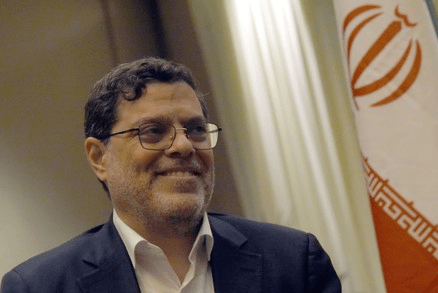
Transcript of key excerpts from Mohammad Marandi’s interview on Rock the Cradle, hosted by Sharmine Narwani, January 24, 2026.
- What prevented Trump from attacking Iran?
- Iran’s support for Palestine is the core issue
- Alliances shifting in West Asia (Middle East)
- Iran’s relationship with Russia and China
Source: The Cradle
Transcript: Resistance News
You can see the full interview here:
Sharmine Narwani: […] Let’s welcome Dr. Mohammad Marandi, an Iranian academic, intellectual, and political analyst and professor of English literature and orientalism at the University of Tehran.
But he is more than that. Mohammad sometimes seems like a one-man disinformation corrector when legacy media and malign political actors go off on the Islamic Republic of Iran. When the war drums are beating, he is on most major networks and all throughout independent media setting the record straight. Mohammad Marandi, welcome to Rock the Cradle. Let’s dive right in.
A funny thing happened in the last week. The US was going to bomb Iran for reasons entirely unknown to the sane mind and then it stopped. Yes, we know this is only temporary, but why do you think Trump and Netanyahu pulled back so suddenly when it looked like they were going for gold?
Dr. Mohammad Marandi: It’s difficult to say. It’s as you pointed out, it is quite possible that they will still strike, and Iran is preparing for worst case scenarios, but it seems that a couple of things happened that made the US change its calculations.
One is that the rioters — they did not succeed to maintain the chaos. They were unsuccessful in keeping the country in a chaotic situation.
So the United States, they manipulated the currency, as the US Treasury Secretary just admitted a couple of days ago in Davos. And when it fell by 30–40 percent, I suppose, we saw peaceful protests by shop owners and business people and they — nothing happened. The police did not intervene. There were no arrests. There was no harassment. This happened for a couple of days. The protests weren’t very large either.
Then on day three, we saw the rioters come in very well-organized, very well-trained. They started appearing in different cities and in different neighborhoods and bigger cities. Then by Thursday and Friday night, things became very bad. The rioters started killing lots of police officers. Up to between 300 and 400 police officers and volunteers on the streets were murdered by these people, and many innocent people were massacred. Fifteen people were burnt alive by them. There were beheadings.
They destroyed hundreds of public buses across the country. Many fire engines in Tehran. One quarter of the ambulances were destroyed. They didn’t want the injured to be taken to hospital and they didn’t want the burning buildings to be saved, because the objective was chaos. A woman nurse was burned alive in a clinic that they burned down. They burned down entire markets in different cities. It was really horrific.
But yet the Iranians cut off the internet on Thursday night and I think that was unexpected. And then the Iranians did something even more interesting, and that is that they gained access to Starlink and were able to find all those people who are using it and also to be able to use the link to their own advantage.
And that, these two — the cutting of the internet and gaining control of Starlink — devastated the rioters, the professional rioters and the terrorists. And within 28 hours, late on Friday night, things died down, but there was an extraordinarily large amount of devastation and many deaths.
I think the fact that it ended on Friday night — last Friday, meaning two weeks ago [January 9] — came as a surprise to the United States. They were hoping that it would continue and there was talk that air strikes against Iran were imminent. I think that’s one reason why it didn’t happen.
The second was the anti-riot protest that took place across the country on Monday. Not this last Monday, but the Monday before [January 12]. Pro–Islamic Republic, pro-Constitution, pro-State institutions, anti-riot, anti-terrorism. Those rallies were extraordinary. In Tehran, we had up to 3 million people, between 2.3 to 3 million people. I was there. When I was leaving after the program finished, people were still trying to get there. They were stuck in traffic. A lot of people made it — it was very difficult. Getting there took a couple of hours for me and getting back took another couple of hours.
But a lot of people came during a working day. So a lot of people, especially in the private sector, working class people, they had to take a day off, make sacrifices, just to be there and make a political stand.
So I think those numbers, and the fact that there was international media there — CCTV, CGTN, RT, Al Jazeera English and Arabic, Al-Mayadeen, among others, Turkish media, and of course Iranian media — all with rolling coverage throughout the day, meant this was nothing the Americans could hide, even though apparently Musk and others were trying to hide the reality of this extraordinary gathering of people in all the cities in Iran. It was not in one city. It was across the country.
And I think probably Trump was informed about the public support for the State inside Iran and the collapse of these terrorists. These two may have had an impact. I think they probably did.
But there’s also a third factor, and that is that in messages that have been going back and forth between Iran and the United States, the Iranians have told the Americans that it will pull no punches if there is an attack on Iran. And Iran’s missile and drone capability is very great. And Iran is much more prepared today than it was during the 12-day war. But more importantly, Iran’s capabilities against the United States are much greater than its capabilities against the Israeli regime.
Why is that the case? First of all, Iran won the 12-day war. That’s why the Israeli regime sought a ceasefire. But Iran’s capabilities have always been directed towards the United States, not the Israeli regime. Ever since the US took Afghanistan and Iraq and began threatening Iran, Iran began building underground missile bases and drone bases across the country. But the particular focus has been on the Persian Gulf and the Indian Ocean.
And so Iran has many more medium-range and short-range missiles and drones than they have long-range missiles and drones. So the firepower that Iran can direct towards the Persian Gulf and on the other side of the Persian Gulf is much greater — much, much greater — than the firepower they can direct towards [occupied] Palestine.
And of course the Persian Gulf is one of the most, probably the most vulnerable place on the planet. Tiny Arab family dictatorships that could be swept away very easily, with a lot of oil and gas coming from this region. And if there’s war, that oil and gas will stop, including in the Caucasus and Iraq and the Arabian Peninsula. And so that would create a global economic meltdown.
Iran does not want that. Iran does not want a global depression worse than 1929. But if it’s an existential war, then there’s no option, especially since these Arab regimes in the Persian Gulf — these family dictatorships — they host American bases, and that makes them complicit.
So I think that is what is making the US think carefully about what it wants to do. But we have to keep in mind that the White House is full of Israeli firsters, and so are the US government and the regime in Washington. And for them, the interests of the American people are not of great importance, nor the interests of Canadians or Europeans or anyone else. It’s the interests of the Israeli regime that are important.
So when we take all that into account, even though it would seem that an attack on Iran would be insane for the reasons that I explained, but because of the nature of Washington and the White House and Trump, I think that an attack on Iran is quite plausible.
Sharmine Narwani: You make a very important point, and I think most viewers and readers really don’t know this. We’ve written about it, but it’s something that needs to be repeated ad nauseam, because it is fundamental to Iran’s strategic military buildup over the decades. Iran has planned for a direct war with a superpower — with the United States. When people were wondering about Operation True Promise 1, 2, 3, they were wondering whether Iran can beat Israel. What they failed to understand is that’s not where Iran’s head is at. It has been in anticipation, and then structurally in other ways built up towards a potential war with the United States, should the US take aggression against Iran directly. And not just that — it’s planned for a protracted war. Iranian officials have said “We’re ready to go at this for months and months.” Israel couldn’t take more than a few days.
So US military planners surely understand this — that this is where Iran’s head is, and everything it has done militarily for the past decades to target the US. It’s a very important point to bring up. And for anyone who doubts Iran’s capabilities, imagine what a country like Iran — a middle state — would have had to have planned for and stockpile its arsenal to take on the world’s superpower, leading military force and for a protracted period of time.
Having said that, I also want to go back to something you mentioned. This is certainly a big subject on social media — Starlink. Starlink was supposed to be the ace in the hand, or up the sleeve, of Western warmongers, allowing them to coordinate events in adversary states even if the internet was shut down. We’re going to put up a tweet on the screen. This is from Global Insight Journal. It says:
“Iran delivers a crushing blow to Musk and Israel. Starlink shifts from a communication tool to a tracking trap.”
It goes on to reportedly quote Iranian military media saying:
“In a carefully executed scenario, we cut off the internet in Iran, left Starlink temporarily operational to use it as a tracking tool, monitored the users, identified and arrested them, and then permanently shut down Starlink.”
To the best of your knowledge, Mohammad, is this true? What can you tell us about this?
Dr. Mohammad Marandi: I am not a technical person. What I can say is that the Iranians were able to, through its own young engineers and experts, they were able to use Starlink to their advantage and it was not an asset for the rioters nor their handlers abroad. It became a liability.
Sharmine Narwani: Very interesting. There will be a lot more pondering over that question because that does in fact remove a vital communications tool that the US military was relying on in its future conflicts.
Let’s go back to this point about war or no war. I mean kind of this last week, a lot of people have, you know, been very satisfied that it looks like the war was called off. But I think for close watchers of Iran and this region, we understand that this was at best a temporary lull.
Now suddenly there is a lot of reporting on war being back on with various flourishes about US and allied military movements in West Asia growing. What’s that about? You think there’s anything going on behind the scenes in terms of diplomatic outreach that would explain sort of this public façade, you know, that may be created for leverage, right? “We’re on again, unless (you do) X…”.
Dr. Mohammad Marandi: Well, obviously the Jordanian regime is a tool of the United States and is an asset for the Israeli regime and Zionism. And no one is surprised that the United States is taking a lot of military hardware to Jordan to potentially use against Iran, because Iran is the only real supporter of the Palestinian people.
And this is something that people really have to understand, especially some people — those people who made the catastrophic decision to support the dirty war in Syria for whatever reasons. These people, after 2011, they were taught to hate Iran and to hate the Resistance through Al Jazeera, Al Arabiya, and other media outlets that are part of the US camp.
I mean, no sane person would ever believe that Qatar is independent from the US camp, nor Qatari assets, nor Saudi assets, nor Turkish assets. That’s just fantasy, and we’ve seen that for a very long period of time. None of these entities have ever supported the Palestinian people — the Resistance, the real Resistance — or provided them with weapons or technology. Some of these regimes and their well-funded supporters have tried to negate this, but it’s obvious.
The reason why the United States is targeting Hezbollah, AnsarAllah, the Iraqi resistance, the reason why they destroyed Syria, and the reason why they’re trying to attack and destroy Iran is because of Palestine. There’s no other reason for that.
And there’s a reason why none of these regimes in the region are sanctioned by the United States. Whether it’s the Jordanian regime, the Emirati regime, or the Qatari regime — they’re all in the American camp. They may not like each other, but they’re all in the American camp. And of course Turkiye is part of NATO.
And we saw all of them in Egypt when Trump went there for that comedy show. How all of them were basically literally kissing his feet and kissing his hand. Trump called Erdogan his friend who was always there when he needed him. Erdogan had his hand on his chest. I mean this nauseating, you know, the images that came out of Egypt I think will be remembered for years to come.
But the point is that none of these entities have ever been sanctioned. All of them continue to either transport oil or do trade or have political ties [with Israel]. They’ve done nothing substantial to support the Palestinian people.
So Iran is targeted because of Palestine. There’s no other reason for it.
If Iran was to behave like Turkiye or the Emirates or Egypt or Jordan or Qatar, there would be no sanctions and there would be no problem with Iran. Of course, all these countries are inherently weak, and Iran would be weak too because it would be a pawn of the United States.
We recall in 2014 — I think it was 2014, I may be wrong about the year — when after the coup, Erdogan arrested an American pastor and he was put on trial and sentenced. Trump threatened Turkiye, and the economy went downhill very fast, and Erdogan had to hand him over to the US. That shows how powerful the United States is and how deeply influential it is in all of these entities.
So the reason why Iran is targeted is because of Palestine. The reason why Syria was destroyed was to help Israel. And those people who believed the Qatari narrative, Erdogan’s narrative or the Saudi narrative back then — and Saudi Arabia today is a bit different, Mohammed bin Salman’s policies are different from the policies back then, that is a distinction that needs to be made — but in any case… So Syria was destroyed and undermined to help Israel and weaken the Resistance. And now today, the United States is confronting Iran because of Israel. There’s no other reason for it.
So if we look at this from a rational perspective, the United States would not go to war with Iran because there is a sort of MAD here — Mutual Assured Destruction. If the global economy goes downhill, the United States could not sustain a war with Iran. It would be over very swiftly because the US economy would collapse, and so would economies across the world collapse. And you’d have millions of people on the move from Latin America, Africa. It would be devastating.
But because of Israel, because of the Israeli regime, Washington would quite possibly sacrifice the US economy to do what the Zionists want them to do. Right now, behind the scenes, nothing is happening. There are no negotiations between Iran and the United States. The reason being that the United States has put preconditions on negotiations that Iran says are utterly unacceptable.
Messages do go back and forth, and Iran has said in those messages that [if there is an attack], you should expect all-out war. Why ? Because an attack on Iran would be an existential threat, and therefore Iran would have no choice but to carry out an all-out assault.
And the countries in the region, none of them are going to stand with Iran, just as they never stood with the Palestinians — except for the Axis of Resistance. And I think that’s very important. Because first of all, Yemen today is much stronger than it was a few months ago. It has also been preparing itself for the next phase of war.
Then there’s Iraq. After the elections, we saw that allies of the Resistance have won the elections. They’ve done far better in the recent parliamentary elections than they did in the past. And Iraq is not going to sit back and allow the United States to carry out an assault on Iran, because ultimately, they know that next in line would be Iraq, and regime change in Iraq.
So the United States is vulnerable across the board. Iran and its allies are preparing themselves for the worst-case scenario. But I think that if there is a war, the United States will be defeated. I believe that it would be devastating for everyone, but I believe that countries like the Emirates and Qatar and these Arab dictatorships, they’ll all fall and they’ll collapse.
I think that in Iraq, probably all Westerners should leave now. And in the Persian Gulf region, I think that everyone should leave. Anyone who can leave should leave. Because if there is a war, these places will have no future.
So hopefully we won’t go there. But as I said, the United States is not a rational actor. Trump is not a rational actor. And so everything is possible. In fact, many things are quite plausible.
Sharmine Narwani: In the context of what you’ve said, I’d like to discuss the regional situation with you. You’ve been on a lot of programs recently where the focus has been Iran, Iran, Iran. But there are other developments in the region that impact Iran and the possibility of war, or the fact that it may be off the table.
I think it’s important to discuss West Asia’s massive new realignments. This began essentially with Saudi Arabia vs the UAE. We first saw signs of it when Mohammed bin Salman reportedly asked Trump to intervene after the Rapid Support Forces in Sudan began making gains through the most destructive terrorism and violence against civilians that we had seen in that theater in a long time. Mohammed bin Salman apparently asked Trump to stop it.
The RSF, of course, is UAE-backed, which has geopolitical aims in Sudan that may not match the aims of others — it’s a big repository for gold for instance, that the UAE has become a major trader in, it’s part of the UAE’s logistical networks through Northern Africa, the Horn of Africa into the Arabian peninsula. The Saudis wanted to stop the UAE’s gains and aggressions in Sudan, and Trump did come in and announce a peace deal. That must be one of his 8 peace deals that he’s talking about, we can’t figure many of the others.
Then we saw UAE-backed forces again, UAE proxies, this time in southern Yemen, secessionists who want to carve out a Southern Yemen separate from the North that went all the way to Hadramout. That crossed a Saudi red line. I think that from the second year of the war in Yemen, the divergence of interests between the Emiratis and the Saudis became apparent even to the Saudis, and this new aggression saw a big reaction from Riyad, followed shortly by Israel’s recognition of Somaliland. […] Has this UAE-Saudi fight provide any opportunity for Iran? […] Does this realignment make a big difference suddenly?
Dr. Mohammad Marandi: The region is very complicated and there are many players, and many things are changing. But one thing is certain: the fear of the Israeli regime has grown.
Turkiye, which has been in the past behaving very differently, has been tilting toward Iran. Why? Because what they did through the dirty war — the American-led dirty war in Syria — was that they destroyed a country with the help of Qatar and the Jordanian regime and all these other American proxies in the region and of course the Israelis. What they did was they destroyed a strong country that stood between Turkiye and the Israeli regime. And now Turkiye is much more vulnerable.
If you and your viewers recall what I said earlier about the American pastor who was arrested and how easily Trump was able, during his first term, to get him back, I think that shows the vulnerabilities of Turkiye when it comes to the United States under Erdogan.
So they are concerned because of course the Israelis have moved to create an alignment with Greece and more recently Cyprus, which is something disgraceful — that any country, regardless of their problems with Turkiye, would align with a genocidal regime. I think Greece and Cyprus, their behavior is despicable, like the entire West.
But anyway, Turkiye is in a much more difficult situation. And I think many of my friends in Turkiye, some in the government party, have said that the whole Syria escapade was a catastrophe for Turkiye. They’ve been saying it for years. And briefly after the fall of the Syrian government and with the rise of al-Qaeda in Syria, some of them became more ambivalent and more positive. But now they again recognize that this is just all bad news.
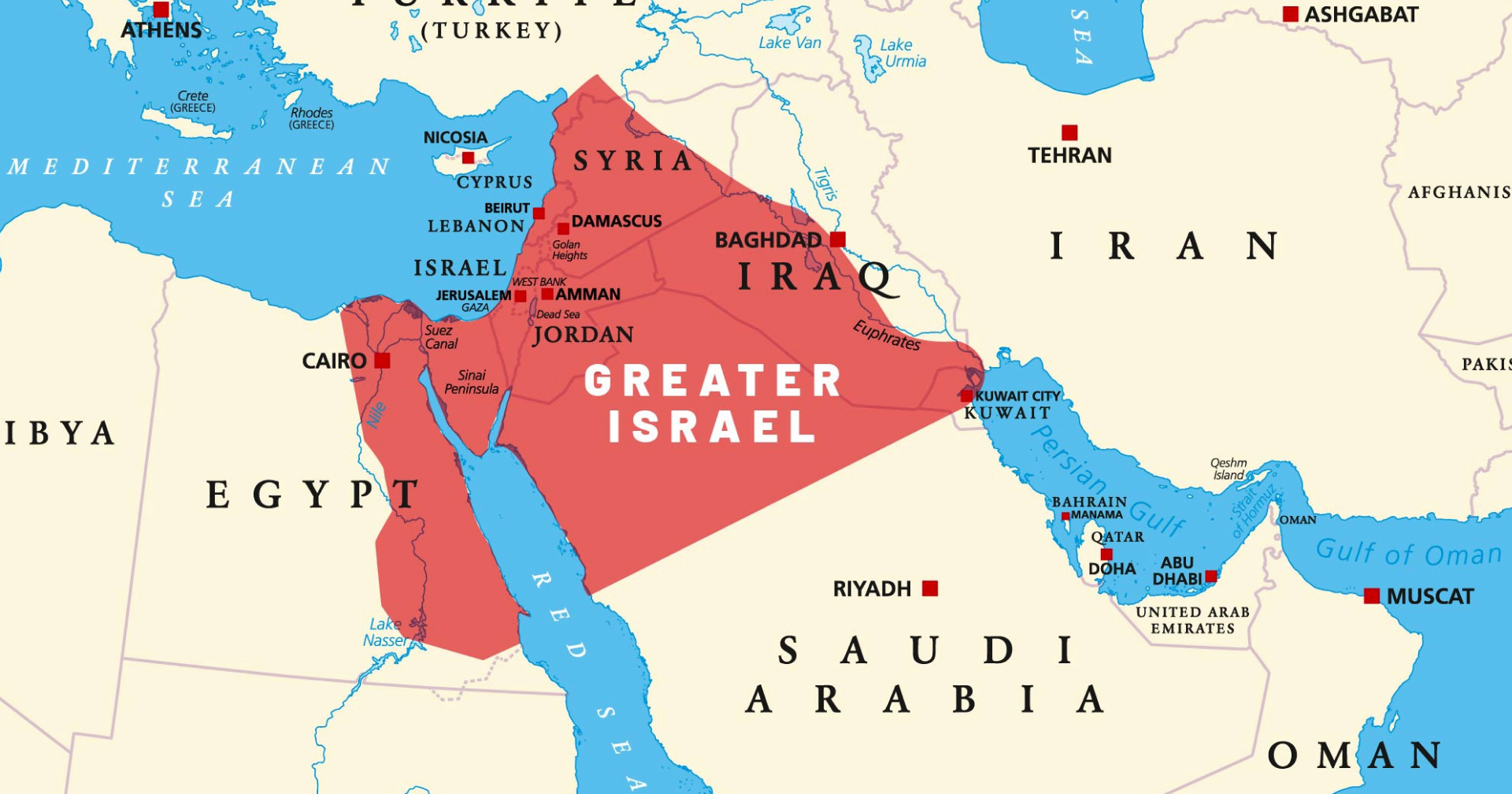
So Turkiye is in a different situation. Qatar, after being bombed, has become more worried. And so has the entire region, because now everyone sees that the Israeli regime can hit and strike anyone. Saudi Arabia, of course, when you look at the greater Israel map, large chunks of Saudi Arabia are part of the greater Israel project. Jordan would of course disappear altogether. So these countries are concerned, and the public is concerned.
There’s also another variable — for example, in the case the Emirates. The Emirates is an ally of the Israeli regime and probably by far the biggest enabler of the Israeli regime in our region. Although I would argue that what Erdogan did in Syria makes Turkiye a very close second. But inside the Emirates, even though it’s a dictatorship and very tightly controlled, all communications are monitored by the state — WhatsApp, Telegram, everything is controlled in the Emirates. It is a dictatorship.
If your viewers recall, when the Emirates and Saudi Arabia imposed a siege on Qatar, in the Emirates, I think it was if anyone said anything positive about Qatar they could go to jail for ten years and pay a fine of $100,000. Just for saying something positive about Qatar. That’s the kind of regime the Emirates is.
But the Emirates has become arrogant. Whether it’s in Sudan, Somalia, Yemen, or elsewhere — at a time when Saudi Arabia and others are becoming increasingly worried about the Israeli regime — they see that Israel’s closest ally is also behaving in a threatening way toward them.
The Emirates is a deeply corrupt country. And what you said about oil is only part of it. The Emirates, like Qatar and others, export this takfiri ideology. They enabled Boko Haram and other similar groups across Africa. The Emirates exploits these situations across Africa. Companies go into these different countries that are falling apart, take the land, and exploit the land. The people living on the land get nothing — they become slave labor.
One of the things that is extracted from these countries is gold. But the Emirates is also a center for all sorts of money [laundering] — from mineral exploitation and from the drug trade. The drug trade in Afghanistan, the money always went through the Emirates. Under US occupation, drug production in Afghanistan went through the roof, and all that money went through the Emirates.
Just recently, the president of Colombia said that the real people behind the drug trade in Latin America live in mansions close to the UN [New York]. And I would add in Los Angeles as well. The people who are responsible from the drug trade in our part of the world live in New York, Los Angeles, but they also live in Dubai. So the Emirates is behind a lot of what’s going on.
Saudi Arabia and others in the region are increasingly fearful of the Israeli regime as I said. That creates friction. We’ve already seen this play out, especially in Yemen but also on other fronts.
Does that mean Saudi Arabia will fundamentally shift toward Iran? I don’t think any of the countries in the Persian Gulf, in West Asia, (whether) Turkiye, Egypt, etc., are going to leave the US camp. These are entities bound to the United States regardless of the rhetoric. They may have differences with one another, or even with the White House, but they are in the American camp. What we saw in Egypt shows this clearly. They all went there to whitewash Trump’s role in the Gaza holocaust. That shows where they stand.
However, that doesn’t mean that they have no agency. They are concerned. So they’re trying to improve ties with Iran, Russia, and China. But there isn’t a chance in the world that any of these countries are going to choose China, let’s say, over the United States, let alone Russia or Iran. There is some room for maneuver, but I don’t think anyone should expect anything major.
But I do think that the changes are important. The Emirates in particular are in a very bad situation, and that is very bad news for the Israeli regime. Everyone knows that the Israeli regime has ambitions which include Iraq, Syria, Lebanon, Egypt, but also Saudi Arabia.
And not only are the governments concerned, but ordinary people are concerned. Even though ordinary people don’t have much to say, because these countries are very authoritarian. The West likes to call Iran authoritarian, but in Iran, you can say anything (in public). If you get into a taxi, into a bus, if you go unto the underground or on campus, people can say whatever they like. But in these (other Gulf countries), it is clear thay they cannot. But people are saying things in private about their concerns. And inside the Emirates, people are very unhappy about the UAE.
The situation today is far worse than during the Arab Spring, when a young man burned himself alive in a city in Tunisia, the entire West Asia, North Africa was experiencing an earthquake. Now the economic situation across the region is worse. The political situation is worse. The price of oil has gone down. Countries across the region in the American camp have a lot less money to play with than before. A lot of these mega projects are not doing well.
So we are in a very dangerous situation and it’s not just Iran and the United States. And if there is war between Iran and the United States, that can trigger many things. And as I said, I don’t think many of these regimes will last. The Emirates — I don’t think it will last. I don’t think Qatar will last. So many things could happen, many changes could take place. But obviously right now, in my opinion, the biggest loser as we speak is the United Arab Emirates.
Sharmine Narwani: I think (for) a lot of countries, it’s not about choosing between the US and Russia or China by any stretch. Right now, we have analysts, financial analysts at the big banks around the world in Western countries that are talking about de-risking from the US, right? Because let’s say Trump follows through with this threat to slap some sanctions on some European countries, allies, NATO allies, etc. That will have a residual effect, a major effect, throughout financial markets globally. The idea that these countries can just grab Venezuela’s assets, Iran’s assets, Russia’s assets… Well, why not take Danish assets? Why not take Belgian assets? Why not take French assets, for that matter?
So this concept of de-risking from the US is in Europe itself, let alone in the Gulf. And I’m wondering if we can even analyze along the same paths that we did before. Maybe we’re talking about some fundamental shifts.
I mean, what are people looking for today? What are the Saudis looking for today? Mohammed bin Salman has his Neom plan, which basically is about economic growth, development, but (primarily) security. Security is the number one thing, right? The US, for sure, I’ve heard you yourself say — is no longer a guarantor of security for its allies in the region. So what’s its use? So why — you don’t have to skip to Russia and China for many other things.
Dr. Mohammad Marandi: I think we shouldn’t confuse these two different issues. As things stand, these entities are not going to dump the United States. They’re very much part of the US realm of influence.
And you have to keep in mind that all these princes, their elites, their children, they go to the United States and study. And you can imagine how many of them have been involved with all sorts of different types of Epsteins. And the Americans have enormous information on all the key players in the Persian Gulf region. They’ve been deeply involved for decades. So as things stand, I don’t see some sudden shift away from the United States.
Although, as I said, there are changes. Saudi Arabia is concerned. Qatar is worried. Turkiye is worried. And that is a good thing, that can bring about some change — but we’re speaking in relative terms. If there is a substantial change in the global balance of power, yes, that changes everything. That will not just change our region, that will change Niger and Nigeria, it will change Argentina and Bolivia. That’s a different matter altogether.
And that is not impossible under circumstances where, for example, the United States goes into a dangerous economic decline. Then perhaps you will see (big) changes taking place. But as we speak, I don’t think it’s reasonable to say that leadership in these countries is going to be keen on having China or Russia — let alone Iran — as their primary ally or protector.
Again, that doesn’t mean change isn’t happening. But the Emirates in particular is the big loser because it was too ambitious, too bound to the Israeli regime, too aggressive. And now it has no friends in the region. The Israeli regime is radioactive. And people inside the Emirates — in very private conversations — are not happy with the direction Mohammed bin Zayed has taken the country.
I do agree that the global changes taking place (are significant). And if there is a war — which would be a terrible thing — the changes that will take place around the world be dramatic. The United States will no longer have an empire. Even though I already believe the US Empire is collapsing. Trump is destroying it much more swiftly than it would be brought to an end under different circumstances. But he is a very dangerous person. He is very irrational. And the people around him are Israeli-firsters. So while it is a good thing in principle (the swift collapse of the US empire), this world right now is a very dangerous time to be living in. […]
Sharmine Narwani: As you said, people are crediting Gaza for having whipped off the façade of the rules-based order. I certainly think a war with Iran would whip off another veil, or the invasion of Greenland, or any of these things that are coming so hard and fast.
I do want to ask you — I don’t know, I don’t imagine that you have many details or that you can talk much about it — but often our viewers and readers ask: why aren’t Russia and China helping Iran? I know Iran has strategic relationships, papered, signed, agreed to, with both countries, including economic and perhaps military aspects. They’ve done joint military exercises together.
What is your reading on whether there has been any acceleration of assistance or backup or support or input from these two major powers, particularly since the June war?
Dr. Mohammad Marandi: First of all, when I look online and read about Iran, China, and Russia, there’s a lot of information that’s not correct.
First of all, Iran doesn’t — well, in different ways, it works both ways. Iran purchases what it needs from Russia and China. Iran doesn’t receive aid.
Often Iran for example has limitations in its financial capabilities to purchase certain goods. It’s not necessarily because the Russians won’t give them. Sometimes the Russians won’t give them because they need them. Sometimes Iran does not want them because contrary to what you read online, that particular technology is not going to serve the purposes that people think it will. It doesn’t have those capabilities that Iran would need. And so Iran with a limited budget would prioritize other weapon systems whether local or purchased from abroad.
So a lot of people who speak about certain weapons or certain capabilities or why this hasn’t been purchased or why this hasn’t been provided… There are many calculations. Iran’s needs are not identical to Russian needs. Iran’s war is not identical to Russia’s war. And the same is true with China.
Iran and China have a growing relationship. Iran and Russia have a growing relationship. I think the Iranian-Russian relationship has grown faster than the Iran-China relationship. But that’s because the Russians were sanctioned after the war in Ukraine. And so the Russians turned to Iran. And neither side fears sanctions because both sides have been sanctioned completely. So there’s no concern… Before the war in Ukraine, the Russians were concerned about working with Iran. They were afraid of sanctions. Now that fear no longer exists, so the two sides can cooperate in full.
But as I said, there are some things that the Russians have that the Iranians… it’s not their priority. Let’s say — and I’m just giving this as a hypothetical, I’m not thinking of any (particular weapons system). Let’s say the Russians have a certain air defense system, whatever, (let’s name it) A, air defense system A. And everyone’s saying well Iran should purchase it. But the experts know that if you purchase this at this price, you’ll get these results; but if you use this money to do something else, you’ll get results that at the end of the day will be more beneficial. Let’s say you develop your offensive missile capability. That may on the whole outweigh the whatever defensive capability you think you may get as a result of this transaction.
War is a complicated affair, but the relationship between these three countries has been evolving very rapidly, and I think it’s fair to say that the United States has been the most important catalyst in helping these countries move closer.
After the 12-day war, I can say with confidence that the relationship between Iran and China has evolved much more rapidly than before the 12-day war, which I think is excellent. And I’ve always been a well-known advocate of (that).
Sharmine Narwani: In what fields, in what ways have they accelerated?
Dr. Mohammad Marandi: I mean in general, the Iran-Chinese relationship is evolving economically and in all spheres. But China, when it comes to Iran and Russia, still has problems, because many of Chinese industries are not sanctioned, so they have to find ways to do business with Iran and China that can work and can also prevent those companies from being sanctioned.
So the relationship between China and Iran is different from the relationship between Iran and Russia, because Iran and Russia are completely sanctioned. After the trade war with China and after the 12-day war, I think that relationship is changing, but it will take time for us to get where we want because sadly, Iran has been in many ways western oriented for centuries and even after the (1979) Revolution.
So moving in the right direction and adjusting to the future — and the future is Asia, it will take time but I think that the incentive today is much greater today than before, both in Beijing and in Tehran. […]
***
Note by Resistance News: During the 12-day war, Putin claimed that Iran had been reluctant to pursue an integrated defense relationship with Russia, likely referring to the period when the country was governed by Western-leaning reformists.:
Karim Talbi: The second part of my question also concerns Iran. There exists a Strategic Partnership Treaty between Russia and Iran. While it does not stipulate Russian defence obligations towards Iran, there remains the matter of weaponry. Given the current escalation, are you prepared to supply Iran with new types of weapons to enable its defence against Israeli strikes?
Vladimir Putin: You know, we once proposed to our Iranian partners cooperation in air defence systems. At the time, our partners showed limited interest, and the matter concluded there.
Regarding the Strategic Partnership Treaty you mentioned, it contains no clauses pertaining to defence cooperation. That is the second point.
Thirdly, our Iranian friends have not made such requests of us. Therefore, there is effectively nothing to discuss.
Karim Talbi: May I seek clarification?
Vladimir Putin: Yes, please.
Karim Talbi: If I am not mistaken, you have previously supplied S-300 and modified S-200 systems, meaning Russia does play a role in Iran’s air defence.
Vladimir Putin: You see, that is not quite the case. Our proposal was fundamentally different: to develop integrated systems – not individual deliveries, but systems. We ultimately… We did discuss this matter previously, but the Iranian side showed no particular interest, and the initiative consequently lapsed.
As for specific deliveries: yes, yes, we did conduct such transactions in their time. These bear no relation to the current crisis. They constituted what might be termed routine military-technical cooperation within international regulations. Neither has Iran requested anything from us that would contravene any established regulations endorsed by the Russian Federation, nor have we acted outside these boundaries. We have always remained fully compliant with both domestic and international legal frameworks.
To support our work, you can donate, share this article and subscribe to our newsletter.
 Resistance News Unfiltered