
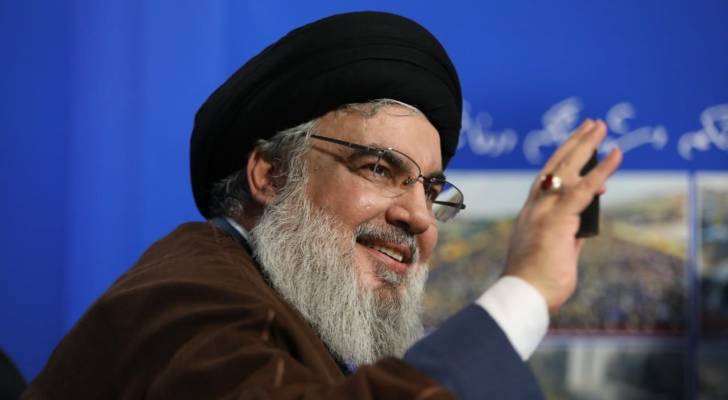
On the occasion of the funeral of former Hezbollah Secretary General Sayyed Hassan Nasrallah and his successor, Sayed Hashem Safi al-Dine—assassinated immediately after his appointment—held on February 23 in Beirut, we present, as a tribute, the final speech of the man who is and will likely remain, for his achievements, ethics, and credibility, the greatest Arab leader in modern history.
Despite the decapitation of the Party of God and the devastation of Lebanon, the Israeli aggressor was held in check by the Lebanese Resistance and was ultimately forced to request a ceasefire. His Eminence’s promise, stated below, was fulfilled: Israeli settlers were unable to return to the northern settlements before the ceasefire in Gaza—and most have yet to return.
This speech stands as compelling testimony to Hezbollah’s unwavering commitment to the Palestinian cause, which quite literally serves as its compass, even at the cost of an exorbitant price. Hezbollah had opened a front in support of Hamas as early as October 8, and it had remained active ever since. At the hour of truth, Lebanese Hezbollah proved to be Palestine’s most valuable ally.
Aimé Césaire once said that “There is room for all at the rendezvous of victory.” The liberation of Al-Quds (Jerusalem) remains inevitable despite the martyrdom of Hassan Nasrallah. However, those who claim to support Palestine while refusing to stand with its principal allies within the Axis of Resistance are either ignorant or hypocritical—just as those who profess to defend Palestinian rights while condemning Hamas and the Al-Aqsa Flood launched on October 7. When the whole of Palestine is liberated—ALL of it—there must be no room for opportunists seeking to claim this victory as theirs or rewrite their own history.
Speech by Hezbollah Secretary General Sayed Hassan Nasrallah, delivered on September 19, 2024, the day after the Israeli terrorist attack on Hezbollah’s beepers and walkie-talkies, and eight days before his assassination by 85 one-ton bombs.
Introduction
The current situation
1/ The moral and humanitarian aspect
2/ The Pager and Walkie-Talkie Attacks
• The enemy’s intentions
• An unprecedented blow
• The context since October 8
• Israel’s objectives and how to thwart them
3/ Hezbollah’s stance on these attacks
• The illusory “security belt” in southern Lebanon
• How will Hezbollah respond?
Conclusion
Source: Al-Manar
Translation: resistancenews.org
Introduction
I seek refuge with God against the accursed devil. In the Name of God, the Most Gracious, the Most Merciful. Praise be to God, Lord of the Worlds, and may prayers and peace be upon our Master and Prophet, the Seal of the Prophets, Abul Qassim Mohammad b. Abdallah, as well as upon his noble and pure family, his chosen and faithful companions, and all the Prophets and Messengers. Peace be upon you, as well as God’s Mercy and His Blessings.
The events of the past two days, particularly Tuesday [September 17] and Wednesday [September 18], have compelled me to speak today. I had initially planned my next address for the anniversary of the Al-Aqsa Flood, for which I was preparing an exhaustive, in-depth assessment of a full year of bloody confrontation between the Axis of Resistance and this usurping Zionist entity. However, the events of these past two days clearly necessitate a statement, an evaluation, and a clear stance.
Before I begin, I must naturally extend my congratulations to all Muslims on the anniversary of the birth of the greatest of God’s prophets, Abû al-Qâsim Muhammad ibn Abdallah (peace be upon him and his family), whom God the Most High sent as a mercy to mankind, the Seal of the prophets, the Master of the Messengers, and the man who became a Nation unto himself, eternal until the Day of Judgment. I also congratulate Muslims and the entire world on the anniversary of the birth of his descendant, Imam Ja’far al-Sadiq (peace be upon him), one of the most eminent masters of jurists, scholars, and Imams, who was entrusted with spreading the sciences of the Messenger of God (peace be upon him and his family) to the point of reviving Islam for centuries.
I must also point out that we had planned to hold today the fortieth-day ceremony in memory of the late Ayatollah Sheikh Hassan Trad (may God have mercy on him), but due to current circumstances, it has been postponed. With his passing, we have lost a great mujtahid, an eminent jurist, a renowned scholar, a distinguished master, and a figure of exemplary piety, morality, sincerity, and spiritual, ethical, and paternal presence. He was a father to all and a fervent supporter of the Resistance, particularly of martyrdom operations. May God grant him His mercy and satisfaction.
The Current Situation
As for the current situation, I wish to begin with the words of the Most High:
In the name of God, the Most Merciful, the Most Compassionate,
“If a wound has touched you, be sure a wound has touched the others. Such days (of varying fortunes) We give to men and men by turns: that God may know those that believe, and that He may take to Himself from your ranks martyrs (who die for His Cause), and that God is the Protector of the righteous.” (Qur’an, 3:140)
And again, God the Most High says:
“And do not weaken in pursuing the enemy. If you are suffering, then they are suffering as you are suffering, but you hope from God that which they do not hope. And God is ever All-Knowing, All-Wise.” (Qur’an, 4:104)
In addressing these recent events, I will divide my speech into three parts:
-
The moral and humanitarian aspect of the events we have experienced over the past two days.
-
What has happened and how to respond to it.
-
The global stance, that is, the political and jihadist position to adopt in light of these developments.
1/ The Moral and Humanitarian Aspect
First and foremost, I must address the families of the martyrs who have fallen in recent days—whether victims of the attacks inside the country or martyrs on the front in southern Lebanon—with my most sincere condolences for the loss of their loved ones and my warmest congratulations for the divine honor they have received in seeing their beloved ones attain martyrdom. I also pray for a speedy recovery for the wounded and ask God, by His Grace, to grant them patience and endurance. I will return later to the stance of the wounded, the families of the martyrs, and the masses of the Resistance as my speech progresses.
I extend my gratitude to the Lebanese government, the Ministry of Health, hospitals, medical centers, civil defense institutions in all their forms, rescue teams, health authorities, as well as doctors and nurses who have performed exemplary work. Many doctors have labored tirelessly, day and night. We are facing a particular challenge in Lebanon: the number of eye injuries is high, and hospitals are not adequately equipped to handle these types of wounds, leading to increased pressure and occasional delays. However, these delays are not due to negligence—far from it. Over the past two days, we have witnessed a positive, serious, and widespread commitment, along with an impressive level of mobilization and attention. For this, we are deeply grateful.
I thank all those who donated blood across different regions of Lebanon—so much so that some have described Tuesday’s mobilization as the largest blood donation campaign in Lebanon’s history. I also thank those who transported the wounded, whether on their shoulders, by car, or by motorcycle, for as you have seen, the explosions occurred on roads, in stores, and elsewhere. We will return to this point later. Finally, I thank those who expressed their willingness to donate their organs to the wounded.
Thank you to the doctors who opened their clinics free of charge, day and night. Thank you to our beloved Lebanese people, in all their diversity, who—beyond sectarian and political differences, despite disagreements and antagonisms, across all regions—demonstrated sincere and profound solidarity. Thank you to the leaders who expressed their support, from presidents to religious and political authorities, including ministers, deputies, parties, political currents, elites, media outlets, as well as social, cultural, and trade union institutions, and others.
Amid the blessings of the pure blood that has been shed and the injustice we have endured in recent days, we have once again witnessed in Lebanon a humanitarian and moral epic of great magnitude—on both a national and human scale—the likes of which we have not seen for a long time. This is one of the graces of God the Most High, and one of the blessings of this blood and these sacrifices.
We must also thank the countries that rushed to offer their support by sending medical teams and equipment, such as the Iraqi government and the Islamic Republic of Iran, which yesterday dispatched a plane to transport dozens of wounded, with more planes to follow, as well as the Syrian government, which opened the doors of its hospitals to us and arranged for the transfer of the injured to hospitals in Damascus. We also extend our gratitude to the countries that have contacted the Lebanese government to express their readiness to provide assistance, and to all those who have condemned this heinous Israeli crime—whether they be states, parties, movements, or institutions—and in particular, to the forces of the Axis of Resistance in Palestine, Yemen, Iraq, Syria, and beyond. These words of thanks are our first point.
And first and last, we give thanks to Almighty God for the affliction and trial He has imposed upon us, for His help and assistance, and for sparing us from greater calamities.
2/ The Pager and Walkie-Talkie Attacks
Secondly, let us turn to what happened on Tuesday and Wednesday. I will briefly summarize it by way of introduction, although it is well known to all. On Tuesday, the Israeli enemy targeted thousands of pagers and detonated them simultaneously. In this operation, the enemy exceeded all limits, trampled on all laws, and crossed all red lines, with complete disregard for moral, human, and legal considerations.
Some explosions occurred in hospitals because some pager owners worked there, but they also took place in pharmacies, markets, shops, homes, cars, and on public roads—where many civilians, including women and children, were present. The enemy’s targets were not limited to Hezbollah fighters and cadres but extended to the entire environment surrounding them, using a civilian device widely used by the population—not only in Lebanon but worldwide—particularly in hospitals, medical offices, businesses, and transportation services, all of which rely on these pagers. The following day, Wednesday, the enemy struck again, remotely triggering explosions through walkie-talkies, once more with no regard for the location of the devices’ bearers. It was not necessary for the target to be a specific individual—the device could be on a table, in a hospital, in a pharmacy, on the street, or in a home.
This aggression claimed the lives of dozens of martyrs, including children, women, and civilians, and injured thousands more to varying degrees of severity. The true toll will become clearer over time, as many wounded were hospitalized and discharged without being counted, while others may have been counted more than once. But the toll is undeniably heavy.
The Enemy’s Intentions
If we wish to analyze the enemy’s intentions—because what happened differs from what he had planned—the enemy targeted a series of pagers, and the time will come to discuss this in detail. He knew there were over 4,000 such devices and assumed they had been distributed among Hezbollah’s youth, both men and women, belonging to various units and organizations. When he detonated them, his intentions were clear: he deliberately sought to kill 4,000 people in one minute. At the very least, he intended to kill 4,000 people in one minute. And this does not even account for the walkie-talkie explosions on Wednesday. Here, we are speaking only of the pagers, irrespective of the number of collateral victims—whether they were in hospitals, pharmacies, markets, homes, cars, or the streets. Such was the enemy’s intention and the level of crime he committed.
The next day, he sought to eliminate thousands of walkie-talkie owners or users. To avoid exaggeration by saying “thousands,” let us instead say “at least a thousand,” since the wounded numbered in the hundreds and the martyrs in the dozens on that Wednesday.
In short, to provide a minimum estimate, in just two days—one minute on Tuesday and another minute on Wednesday—the Israeli enemy sought to kill at least 5,000 people within two minutes, without the slightest regard for anything. He gave no thought to where or how the killings would occur, relying on the fact that, amid the chaos and the hospitals’ inability to provide care, many of the wounded would eventually succumb.
How can we describe such a criminal act? It is a large-scale terrorist operation, a genocide, a massacre. From now on, we will adopt the terms “Tuesday Massacre” and “Wednesday Massacre,” or “the Tuesday and Wednesday Massacres,” to add to the long list of mass killings perpetrated by the enemy since the implantation of this cancerous tumor in our region—this absolute evil in our region. This is genocide, an unprecedented aggression against Lebanon, its people, its Resistance, its sovereignty, and its security. It is a war crime—even a declaration of war. This operation can rightly be described by any number of terms, given the unparalleled degree of atrocity. Such, then, were the enemy’s intentions.
However, by the mercy, benevolence, and generosity of God the Most High and Exalted, much of this tragedy was averted. God spared us from a great affliction. Why? On one hand, many of the injuries were light, when the wounded could have been counted among the martyrs. A number of pagers were out of service—either switched off, far from the brothers who had them, or not yet distributed. This has nothing to do with the enemy’s intentions, which are as I have described them.
By divine providence and God’s mercy, as well as through the human efforts we began by acknowledging, the extraordinary solidarity of the people ensured that no wounded were left behind in the streets. Ambulances, civil defense, the Red Cross, the Red Crescent, all health organizations, the scouts, and others mobilized. The presence and fervor of the people, the cooperation of the army, the security services, the hospitals, and the doctors—all of this helped to mitigate the catastrophe. Together, these efforts largely thwarted the enemy’s plans. If, as we have said, one of his objectives was to kill 5,000 people, a significant portion of this design was foiled, thanks to divine grace, the sincere efforts of men, courage, patriotism, and the strong involvement of all the official and popular components of our people.
As for how this act was carried out, we have established several internal technical and security investigation committees to examine all hypotheses and scenarios surrounding these attacks. We have reached an almost definitive conclusion regarding the explosions, but we still need time to confirm it. This case is subject to a rigorous investigation tracing back to the company that sold these devices, their manufacture, transport, arrival in Lebanon, distribution, and up to the precise moment of their detonation. With the grace of God, we will soon reach clear and definitive conclusions and draw the necessary consequences. I will not rush to present the technical and technological aspects at this stage. There are ongoing analyses, hypotheses, and theories, but we must wait a little longer for certain and confirmed conclusions.
An unprecedented blow
What is undeniable—for we are realistic people who neither exaggerate nor downplay facts—is that there is no doubt we have suffered a major blow, both in security and human terms, of a scale unprecedented in the entire history of the Resistance, at least in Lebanon. This level of aggression is without precedent in Lebanon’s history and may also be unparalleled in the history of the conflict with the Israeli enemy at the regional level, if not globally, given the nature of this aggression, these killings, and this crime: the use of pagers or walkie-talkies held by individuals and their detonation without regard for their location.
Yes, we have suffered a harsh and painful blow, but that is the nature of war and conflict. We know that our enemy holds technological superiority, and we have never claimed otherwise. For Israel is not alone: standing with it are the United States, the West, NATO, and all the powers that possess the most advanced technologies in the world, and they are on the opposing side. When we enter this conflict, (for our part), we rely on effort, jihad, sacrifice, time, attrition, recording gains step by step until (the final) victory. And we have already achieved several victories so far. But the nature of war has always been, throughout history and regardless of the belligerents, as Imam Ali said: “an alternation—one day in our favor, one day in favor of our enemy.” One day we endure, and one day we triumph.
Tuesday and Wednesday were two grueling days, heavy with blood and suffering. It was an immense trial. But, with God’s help—and I will return to this later—we will overcome this ordeal with pride and our heads held high. What matters is that the blow does not bring you to the ground, however great and powerful it may be. I say to you with confidence, trust, and faith in God: this strong, powerful, and unprecedented blow has not brought us to the ground, and by God’s grace, it will not bring us down. From this ordeal and the lessons it brings us, we will emerge stronger, more resilient, more resolute, more determined, and more capable of confronting all scenarios and all dangers.
The context since October 8
Why did the enemy commit this crime, this massacre? Understanding the context and objectives is crucial to grasping what happened. We must comprehend the intent behind this major attack, as this understanding is essential to counter, confront, and respond to this grave crime perpetrated by the enemy. Let us recall that “Operation Al-Aqsa Flood” was launched on October 7, 2023, and we are now approaching its first anniversary in a few weeks. An entire year has passed since that blessed Flood. The Lebanese support front opened on October 8 and has continued to this day. This front has proven effective, influential, and has exerted considerable pressure on the enemy, as evidenced by its behavior. Regardless of what some may say here and there, the debate on this issue has always existed, for from day one, some adopted the view that there was no point, no benefit, and that this effort (of support for Gaza by Hezbollah) was in vain. This is what we call (attempts at) denigration and demoralization.
But what truly matters is what the enemy itself says and acknowledges. When we listen to its current and former leaders—ministers of defense, generals, chiefs of staff, commanders of divisions and military regions, and heads of security services within the enemy entity—how they assess the situation on the northern front, that is what counts. Not the opinions of those who, from afar, without information or follow-up, are ignorant of what is happening on the front, let alone within the Zionist entity itself and what the Israelis themselves are saying—I say ignorance to give the benefit of the doubt to all those Lebanese and Arab voices denigrating Hezbollah.
For example, when a former deputy chief of staff admits that what has been happening in the north for several months constitutes Israel’s first historic defeat in that region. Others state unequivocally: “There is no doubt that Hezbollah is making strategic advances in the north.” They are the ones speaking of strategic achievements, of a historic defeat. They are the ones saying they have lost the northern region. They are the ones mentioning a security belt inside the entity, along the northern border, for the first time in 75 years—until now, Israel has imposed security belts inside neighboring countries such as Lebanon and Syria. They are the ones describing the scale of population displacements (over 200,000 Israeli settlers were forced to evacuate the Lebanese border) as well as the economic losses affecting industry, agriculture, and tourism in this region. They are the ones speaking of a war of attrition, of the gradual exhaustion of the enemy army on the northern front.
It is precisely for this reason that the enemy has been unable to withdraw all the forces it has stationed in the north since October 8, despite the extreme pressure it faces in Gaza. Even in the West Bank, it has redeployed troops to Gaza, yet it has not withdrawn from the north, where it faces a very real threat—a genuine front. Israel is facing a manpower crisis. Recently, an Israeli media outlet reported a massive shortage of soldiers, to the point that a significant number of sailors had to be converted into infantrymen to bolster troop numbers.
Their words were clear: “We have lost the north.” For 11 months, the cries of the northern settlers have exerted considerable pressure, forcing Netanyahu, Gallant, and others to acknowledge the magnitude of the problem and to turn their attention north to address the challenge posed by Hezbollah.
One of the most significant pressure points on the enemy entity in this battle is the attrition front in the north, alongside other fronts such as Yemen, which plays a major role—whether in the Red Sea, the Arabian Sea, the Indian Ocean, through weekly mass popular support, or through missile strikes, the latest of which is the “Palestine 2” missile. There is also the Iraqi front. As for the Lebanese front, there is no doubt that it exerts substantial pressure and represents one of the most critical negotiating cards currently available to the Palestinian Resistance to achieve its objectives and put an end to the aggression.
Israel’s Objectives and How to Counter Them
From day one, the enemy has sought to extinguish and suppress the support front in Lebanon using every means of pressure and intimidation. Yet, on the battlefield, it has largely—but not entirely—respected the established rules of engagement, while constantly threatening to start a war. In the past, 1% of what has occurred over the last 11 months would have been enough for Israel to launch a war. But this is the result of shifting dynamics on the various fronts and the balance of terror and deterrence, which have prevented the enemy from carrying out its threats.
The attempts to separate the Lebanese front from the Gaza front, the constant threats of war… Remember that for 11 months, Israel has brandished the threat of all-out war, even setting deadlines for it—assisted by certain media outlets in Lebanon and the Arab world that have relayed this propaganda. An all-out war will be launched in two days, in two hours, in a week… We have lived under this atmosphere for 11 months. And the goal of all this has been to pressure the Lebanese state, the Lebanese people, all factions of the Resistance in Lebanon, and especially Hezbollah, to bring an end to this (support) front. (The enemy has used every means): assassinations of individuals, fighters, and leaders; the destruction of thousands of homes; and terror inflicted on the population—such as Israeli fighter jets breaking the sound barrier in the middle of the night, particularly in the south. All of this is part of the ongoing battle, including the attack we have just suffered. But all these attempts have failed. The Lebanese Resistance has stood firm in its position, forcing the enemy to adopt an even more radical escalation—reaching the highest level of crime it is capable of committing (with the pager and walkie-talkie attacks). Israel claims to have spared civilians, yet it has struck at the heart of civilian areas, killing civilians and targeting civilian infrastructure.
This strike by the Israeli enemy—a major crime—, such was its intended objective. This is not an analysis but a certainty, because on Tuesday afternoon, just hours after the strike, we received both official and unofficial messages stating clearly: “Our objective through this operation is to make you stop your support for Gaza and end the fighting on the Lebanese front; otherwise, we have other surprises in store.” That is what they told us on Tuesday afternoon, and on Wednesday, the additional attack they had threatened us with materialized (with the explosion of the walkie-talkies).
The objective is therefore clear. Perhaps some believe the objective goes further—that it was merely a preliminary strike to be followed within hours by a large-scale military operation. That is possible. But at the very least, what we know for certain—what has been conveyed to us and to the official Lebanese authorities—is that this is the goal of the operation. Israel itself declares it: the goal is to subdue the Resistance, to force it to surrender, cease its operations, and withdraw from this battle. And, of course, some Western countries claim to be ready to offer us a way out through an agreement in the Security Council to implement Resolution 1701. The idea is simple: we would stop the war and abandon Gaza, the people of Gaza, and the Resistance in Gaza, along with the people of the West Bank and Palestine, and this entire struggle, to their fate. In doing so, all that we have offered in sacrifice and martyrdom, all our efforts, and all our harsh and bloody confrontations over the past year would be reduced to nothing. And it is impossible for us to consent to such a thing.
The aim of the attacks on Tuesday and Wednesday, and the context in which they occurred, is therefore to separate the two fronts and put an end to the Lebanese front.
Our response to this major crime is given in the name of the martyrs, their families, the wounded in hospitals, those who have lost their eyes and their hands, all who demonstrate patience and resilience, and all who have taken upon themselves the responsibility of this moral, humanitarian, and religious duty—to support Gaza, subjected to genocide, mass slaughter, famine, thirst, disease, and siege. We say to Netanyahu, to Gallant—whom Netanyahu sought to remove but who remains in office until now—to the enemy government, to the enemy army, and to the enemy society: “The Lebanese front will not stop until the aggression against Gaza stops.” We have been saying these words for eleven months. They may sound repetitive today, but they take on their full meaning after these two major strikes—after all these martyrs, all these wounds, and all this suffering. I say it clearly: whatever the sacrifices, whatever the consequences, whatever the possibilities, and whatever direction the region is heading, the Resistance in Lebanon will never cease to support the people of Gaza, the people of the West Bank, and all the oppressed of this sacred land.
This is the first response. The first response: to thwart the enemy’s objectives. He may have killed, wounded, and unleashed his monstrosity, but did he achieve his goal? He did not. Just like in Gaza, where for eleven months he has been massacring and committing genocide, yet has failed to accomplish a single one of his declared objectives.
Of course, beyond this main objective, there are other implicit aims, such as striking popular support for the Resistance. A third objective is to target the very structure of the Resistance. Regarding the second objective—striking our popular support base—where have these attacks taken place? In the southern suburbs, in the Bekaa Valley, and in the South, which is natural because that is where Hezbollah’s youth and institutions are located. Some attacks have also occurred in the North and the Keserwan Mountains region. Through these mass bombings, the enemy sought to strike this environment, to exhaust it, to weaken it, to subjugate it, and to push it to turn against the Resistance—to cry out to its leaders, “Enough!”—as some outside the circle of the Resistance are attempting to do. “Enough! We have done more than enough (for Palestine)!”
But that objective, too, has failed. It failed on Tuesday, and it failed on Wednesday. When we listen to the wounded in the hospitals—those still there or those who have been discharged—when we see, as everyone has witnessed, and as I myself have seen on television, their high morale, their immense patience, their unshakable will, their determination to return to the field, to rejoin the fronts, to resume the fight—their insistence on continuing this action, this role, and on bearing this responsibility—it is a direct answer to the enemy, who is failing in this objective. Anyone who listens to the families of the martyrs, anyone who hears the families of the wounded, feels their strength, listens to their words, perceives their determination, patience, and steadfastness, and receives the messages they send and the speeches they deliver in the media, cannot help but be struck with respect for their endurance, their resolve, their courage, their faith, and their resilience—to the point of feeling ashamed (for not doing enough for Palestine).
The message is just as clear in the mass funerals of the martyrs held in every village, town, and city the day before yesterday, yesterday, and today. The slogans and chants of the funeral processions are the response of the popular environment of the Resistance, as well as of the entire nation through its solidarity and compassion. If the enemy thought these massacres and crimes would lead to greater division, fragmentation, or abandonment at the national and Lebanese levels, precisely the opposite has occurred.
One of the enemy’s objectives was also to undermine the very structure of the Resistance. He believed that a large part of the pagers and walkie-talkies were held by senior leaders and key sectors of the Resistance—which was not the case, as they have old pagers, with the new ones distributed elsewhere—and he intended to eliminate as many leaders and officials as possible, strike key sectors, destabilize the entire structure, disrupt the command-and-control system, and sow chaos, confusion, weakness, and fragility within the structure of the Resistance and Hezbollah. But this did not happen. I assure you, it did not happen even once. Not once. From the very first moments, command and control remained operational; the leaders and various echelons closely followed events and announced their readiness on the front lines, where all weapons and forces were prepared, as an Israeli attack was possible and we had to take every precaution against a potential offensive.
Today, I can tell you with certainty: the structure of the Resistance has not been shaken. And I will tell you even more: by the Grace of God the Most High, through the accumulation of efforts, and by the blessing of the blood of the martyrs and the sacrifices of the fighters, the wounded, the leaders, and the cadres at every level from 1982 to this day, this structure possesses a strength, robustness, capacity, readiness, manpower, and firmness that no crime, however great, can shake. Be assured of this. To all our friends and supporters around the world who are worried—and rightly so, because what has happened is significant—I wish to reassure you from a position of clarity and responsibility, and in no way out of arrogance, that our structure is vast, strong, robust, and firm; our capabilities are great, and our state of readiness is high. Let the enemy know that what has happened will not affect our structure, our will, our determination, our cohesion, our capabilities, our command-and-control system, or our presence on the front lines and our readiness—on the contrary, it will only strengthen them. You can be certain of that.
So much for thwarting the enemy’s objectives. If the enemy’s aim is to separate the two fronts, he is deluding himself. If his aim is to weaken the environment of the Resistance, he is dreaming. So far, he has shown himself to be unbelievably stupid and foolish. Some among them have declared that, while they possess advanced technology, they have demonstrated to the entire world through their actions just how profoundly stupid they are, because they have failed to achieve their objectives. Up to now, this enemy has understood nothing of the depth of the morale, culture, and spirituality of this environment, this Resistance, and this people—and the same holds true for the national level and the structure of the Resistance.
3/ Hezbollah’s position in the face of these attacks
The final part of my speech is a kind of synthesis—I will return to our retaliation at the end. In recent weeks, there has been much discussion about the North. They have begun to speak of shifting the weight (of Israeli military force) to the North, of war in the North, and of other pressures. The statements vary, but there is talk of military escalation. Some speak of a limited war, others of battles lasting several days, and some even go so far as to mention all-out war. I will not analyze this now, both for lack of time and because it is pointless, as the coming days will reveal the facts. But one thing is certain: everything being said about the North has a declared objective. As we have always said, the essential thing is to thwart and foil the enemy’s objectives. The enemy is defeated by preventing him from achieving his goals. This is the nature of the battles of the Resistance and of all popular resistances throughout history.
What is the stated objective of the enemy government of Netanyahu and Gallant for the northern front? It is to restore security so that the “inhabitants of the North,” in their words, can return to their settlements. This has become a fourth objective, in addition to the three already announced in relation to the war on Gaza. In our words, this fourth objective is to return the occupying settlers usurping Palestine to the border areas with southern Lebanon. That is the objective.
Well, Netanyahu, can you achieve this goal? Can you? Yesterday, you were euphoric. You, Gallant, your government, your army, and your entire entity are facing a challenge. We accepted this challenge on October 8, and today, we accept it once again. I say this to Netanyahu, to Gallant, to his army, and to his entity: you will not be able to bring the northern settlers back to their settlements! You will not be able to return the occupying settlers to the settlements in the north of occupied Palestine—no matter what you do. You will not succeed. Do whatever you want. This is a major challenge between us.
The only solution, as we have said since October 8 and as we repeat now after almost an entire year, is to stop the aggression and the war against the people of Gaza, against the Gaza Strip, and consequently against the West Bank. That is the only solution. Without it, nothing else will happen. No military escalation, no assassination, no all-out war will ever bring the population back to the border—not now, not ever, by God’s grace. On the contrary, what you are about to do will only increase the displacement of the northern population and make any possibility of a safe return even more remote. You know this well.
I will not raise my voice, because for eleven months, we have been fighting—and we continue to fight with a certain level of capability. That is our commitment as well.
The Illusion of a “Security Belt” in Southern Lebanon
Now, there is something else that must be said clearly: this fool, the commander of the northern region, claims he wants to establish a security belt inside Lebanese territory. First of all, we would love for them to enter our territory—we hope they do. And do you know why? Because at the border, they are holed up in their positions behind massive fortifications. Their tanks barely move. The moment a tank makes a move, it is immediately targeted by Resistance fighters. For eleven months now, they have implemented strict protocols to conceal themselves and move undetected. Day and night, we track their soldiers and tanks across plains and valleys. Every single day, we engage in continuous intelligence efforts to locate and strike them.
But if they dare to enter our territory—welcome! What they see as a threat, we see as an opportunity. A historic opportunity that we hope for—fervently. Because it will undoubtedly have major consequences for the battle. That is our principled position.
Secondly, he claims to want to establish a security belt. He thinks that by creating this belt, he will be able to bring the settlers back to live in safety. He is deluding himself! He is basing this on the experience of 1978, when they established a security belt in the south, later expanding it in 1982 until the year 2000, when this belt was known as the “occupied border strip” in Lebanon. But his reasoning is flawed, and his analogy is false!
Why? Because in 1978, the resistance that existed at the time, as well as the resistance that continued or emerged after 1982—such as Hezbollah—, the Amal Movement, the factions of the National Resistance Front, the Islamic Resistance factions, the Islamic Group, the Islamic Unity Movement, and others, all of them considered the occupied border strip in Lebanon to be a battlefield. Their objective was to liberate it. Thus, between 1982 and 2000, we did not conduct operations inside occupied Palestine. All Lebanese resistance factions focused solely on the occupied border area, working to wear down the enemy army and its collaborators, forcing them to leave our land. Yes, after 1992, a new equation was established: targeting settlements in northern Israel in retaliation for attacks on civilians in southern Lebanon. This led to the agreements of July 1993 and April 1996. But at no point did we conduct operations against the north of occupied Palestine per se.
But today, the situation is different! If you believe that by establishing a security belt—if you even manage to—you will force the Resistance to fight solely within that zone and focus its attacks exclusively on it, you are mistaken. If you enter this belt, strikes against military positions, barracks, and military centers will continue, as will those against the settlements, in response to attacks on civilians in northern occupied Palestine. And these operations will only escalate further! This so-called security belt will turn into a quagmire, a trap, an ambush, a pit, and a hell for your army. If you want to enter our territory, go ahead! You will find hundreds of fighters there—the very ones who were wounded on Tuesday and Wednesday, but who today are even more determined to fight you and bleed you dry. Israel is making a serious miscalculation. Try and see for yourself!
How Will Hezbollah Respond?
In any case, here is my final word: there is no doubt that this latest aggression is significant and, as I have said, unprecedented. It will be judged harshly and punished severely, receiving a just and relentless retribution—both from where they expect it and from where they do not. However, since this new battle has been waged in secrecy by the enemy, I am taking a different approach today. I will not speak of the timing, the form, the location, or the moment of our response. Set that aside. Our retaliation is what you will see, not what you will hear. The hour of reckoning will come, but we alone will determine its nature, its scale, its location, and its execution—within the tightest circle possible. For we are at the heart of the most precise, the most sensitive, the most profound, and the most decisive battle.
Conclusion
In conclusion, I pray to Almighty God to envelop our martyrs in His mercy and raise them to the highest ranks. I pray that He grants patience, strength, and serenity to the families of the martyrs—the same serenity they themselves display—and that He accepts their sacrifices and their unwavering stance. I also pray for the swift and complete recovery of our wounded, so they may return to their families and resume their fight. I ask God to fortify the hearts of all Lebanese, this united and steadfast people, and to help us preserve the positive momentum born from the blood of the martyrs. I hope that certain frivolous politicians, media outlets, and social media figures will not succeed in tarnishing this extraordinary national, human, and moral scene, because today, more than ever, Lebanon needs unity in the face of the enemy. This cohesion is a source of strength, one that deters the enemy from continuing its aggression or waging war against Lebanon.
We pray to God to support our brothers in Gaza, the West Bank, and occupied Palestine, who endure daily bombings, massacres, and genocide before the eyes of the world. We pray for all the fighters and resisters on every front of the Axis of Resistance to stand firm in their struggle, with absolute certainty that the outcome of this battle will be a great, divine, and historic victory.
Netanyahu, Gallant, Ben Gvir, and Smotrich are leading their entity into the abyss—they are steering it toward its third destruction, by their own admission. These reckless, selfish, narcissistic, and irrational leaders will plunge their entity into a deep chasm.
As for the future of this great battle, I say to you: the coming days, nights, weeks, months—even years, because the struggle against this entity is long and arduous—have a clear outcome (victory). The mujahideen, the believers, the steadfast, the fighters, and the wounded will witness it. And as for the martyrs, they will bear witness from above.
May God’s peace, mercy, and blessings be upon you.
To support our work, you can donate, share this article and subscribe to our newsletter.
 Resistance News Unfiltered